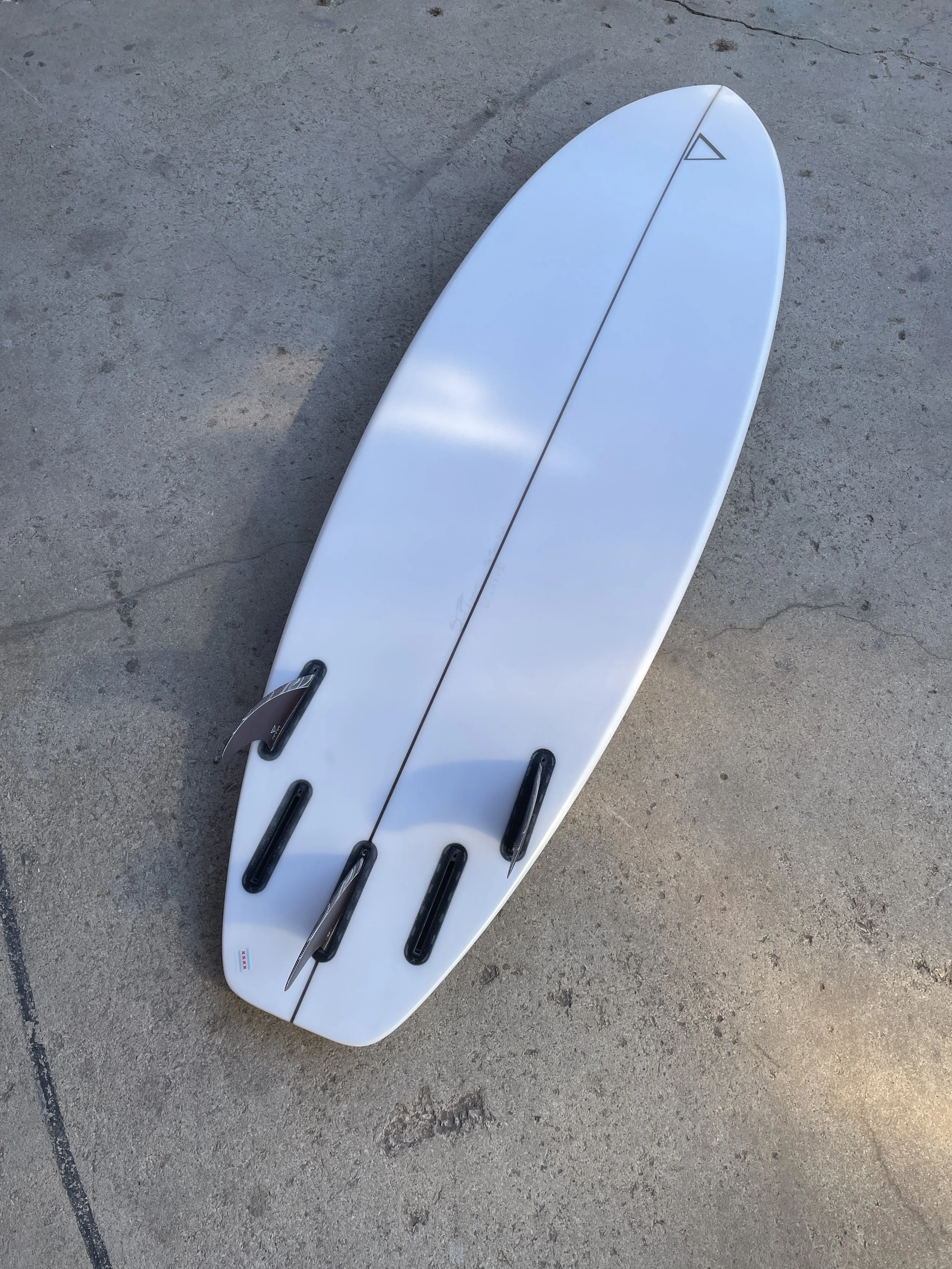
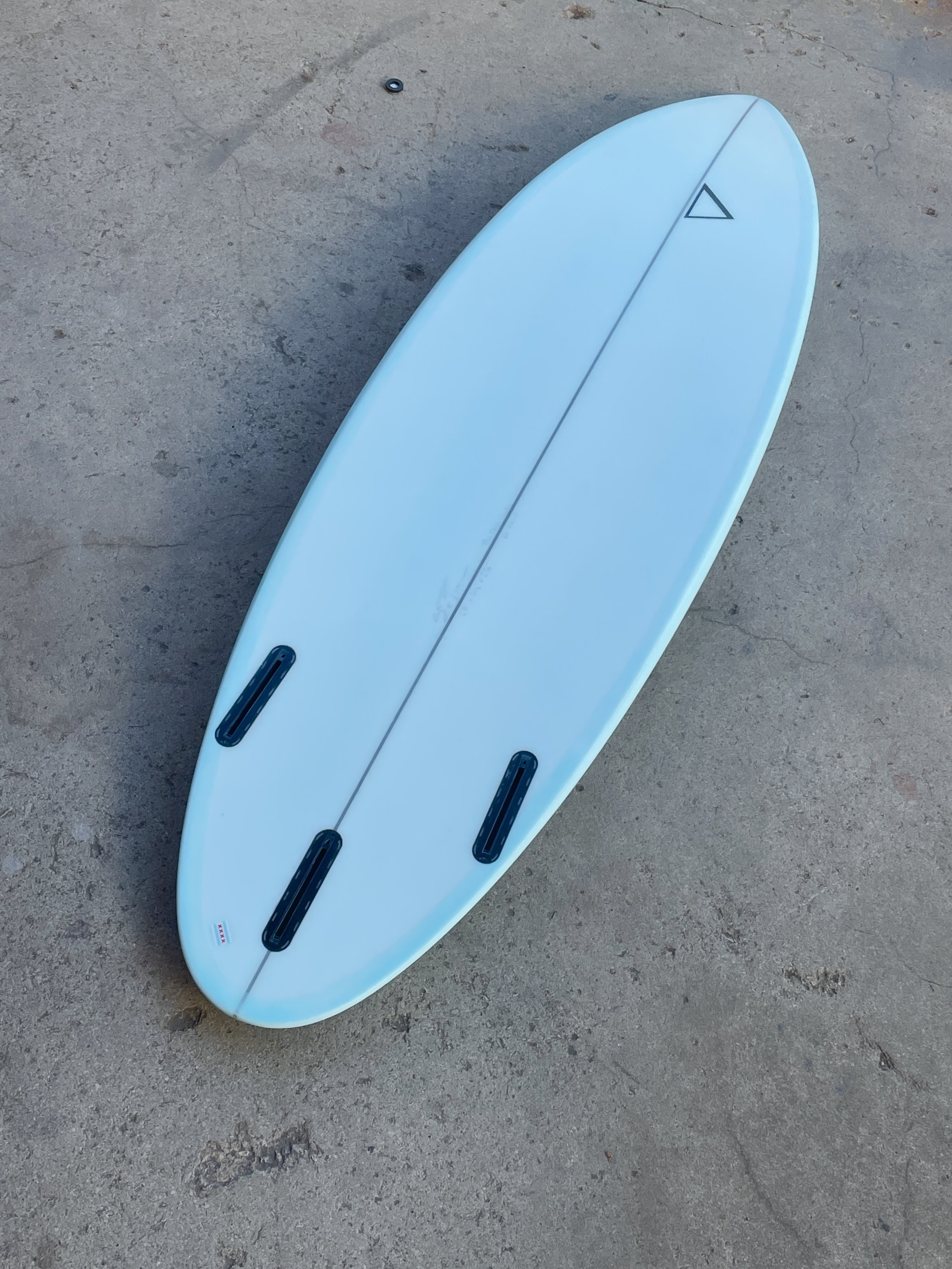
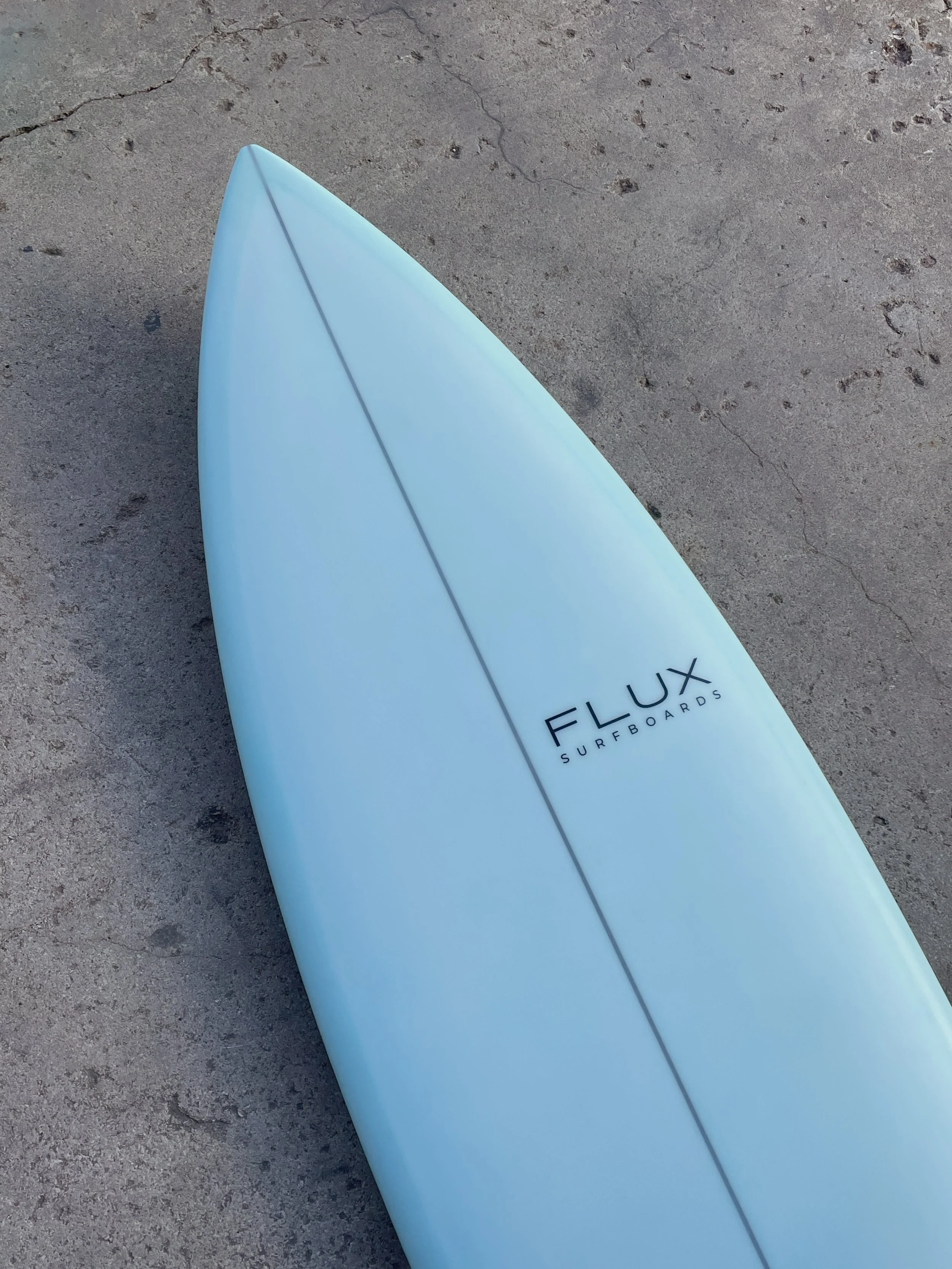
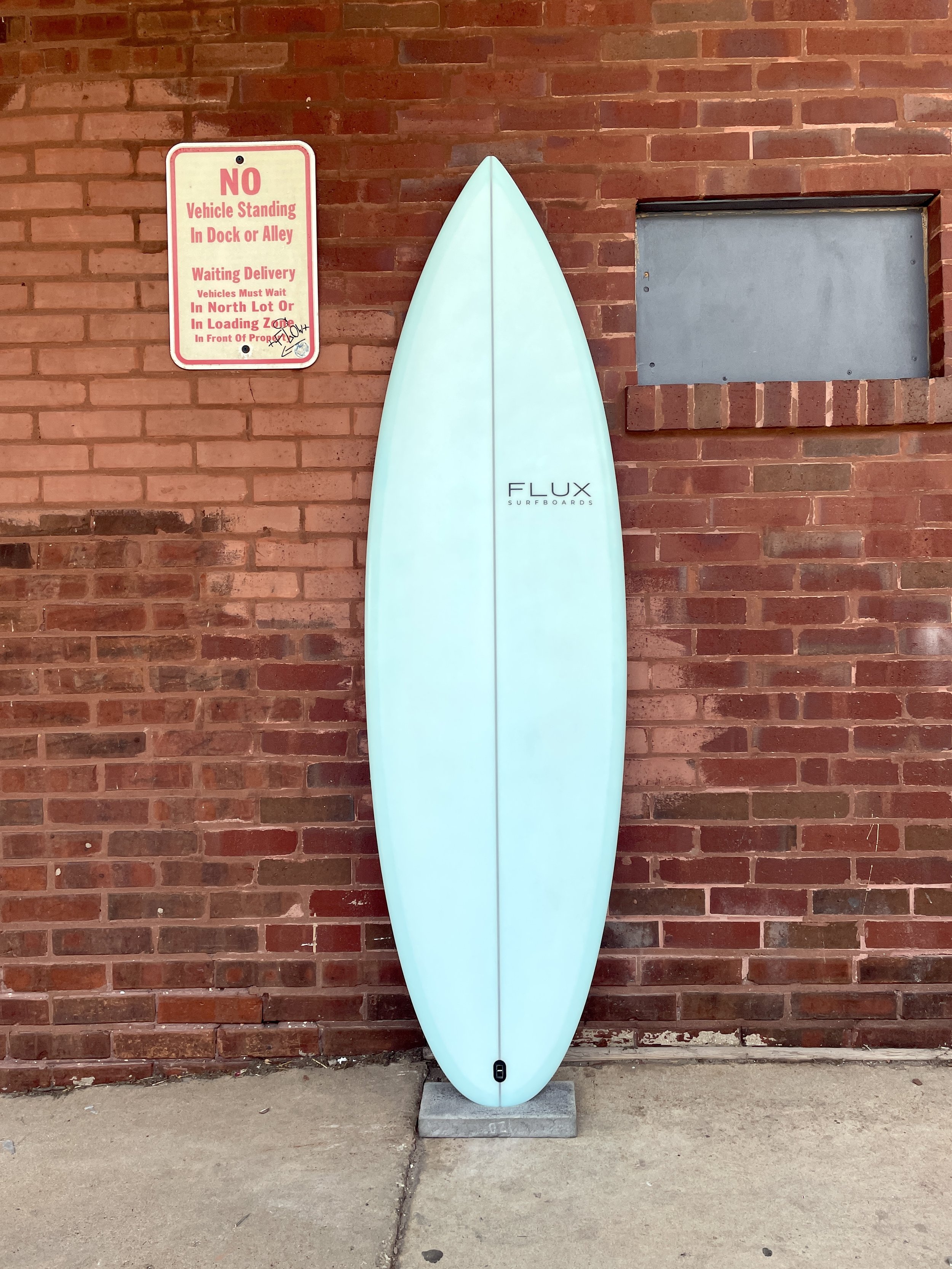
Trash Panda
A high-volume, high-performance shortboard for the Great Lakes.
As someone who has been on a shortboard since I was able to stand up on one, developing a viable high-performance shortboard design for the lake has been a goal of mine since I moved back from California.
The challenge has been finding a combination of design elements that generate an incredible amount of speed in the softer surf we get most days on the lake without hindering maneuverability. Which, in surfboard design terms, is a bit like trying to bottle lightning.
It’s taken quite a bit of trial and error, but at the risk of sounding hyperbolic, I feel like I’ve achieved just that with the Trash Panda.
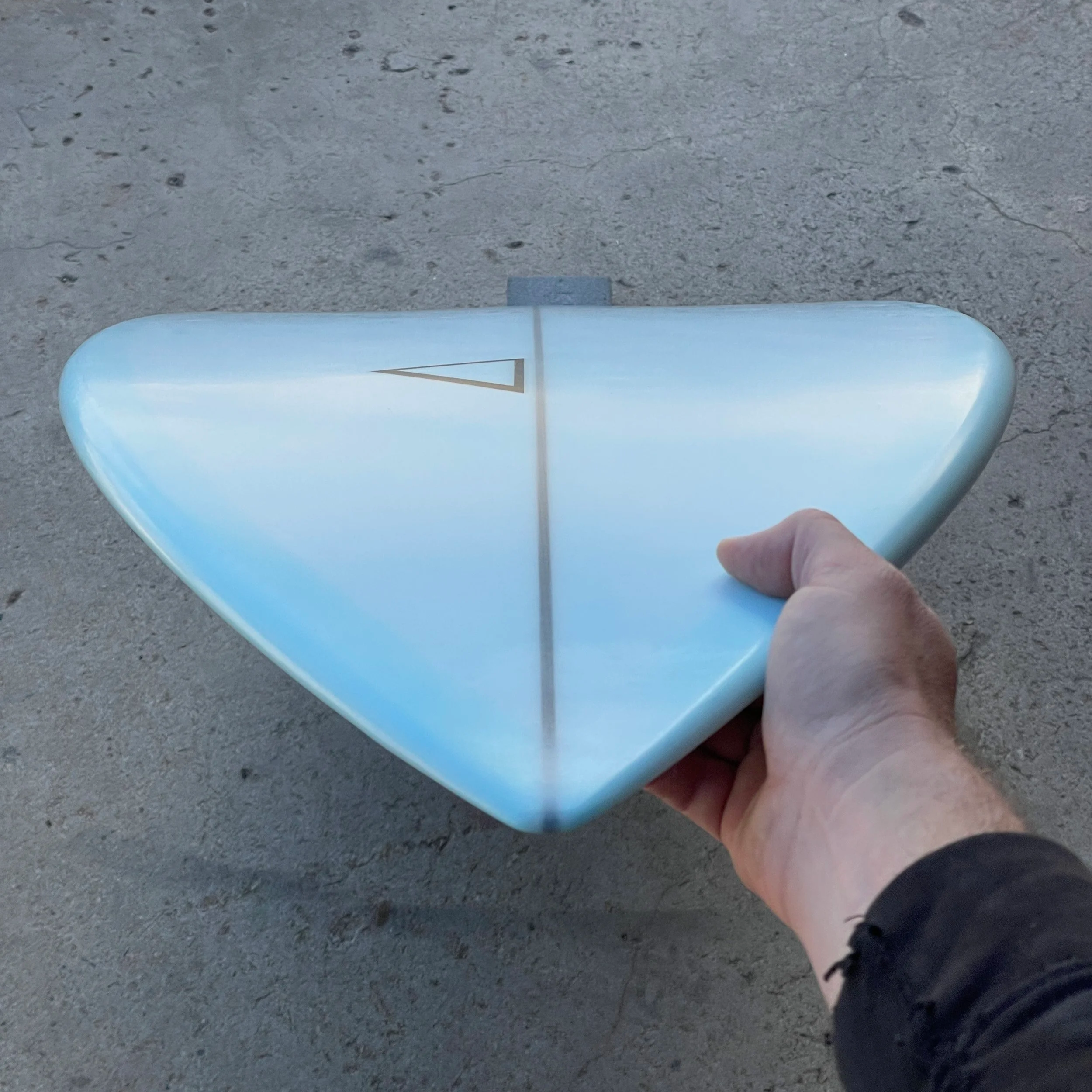
The secret that makes this board work is that it is essentially 2 boards in 1. There is a thick, flat board along the stringer for paddle power/speed and a refined, high-performance board along the rail.
There is no single concave in this board — the back half is all spiral vee (vee with double concave cut into it). The setup is almost identical to the very first thruster that Simon Anderson won Bells on back in the early 80s.
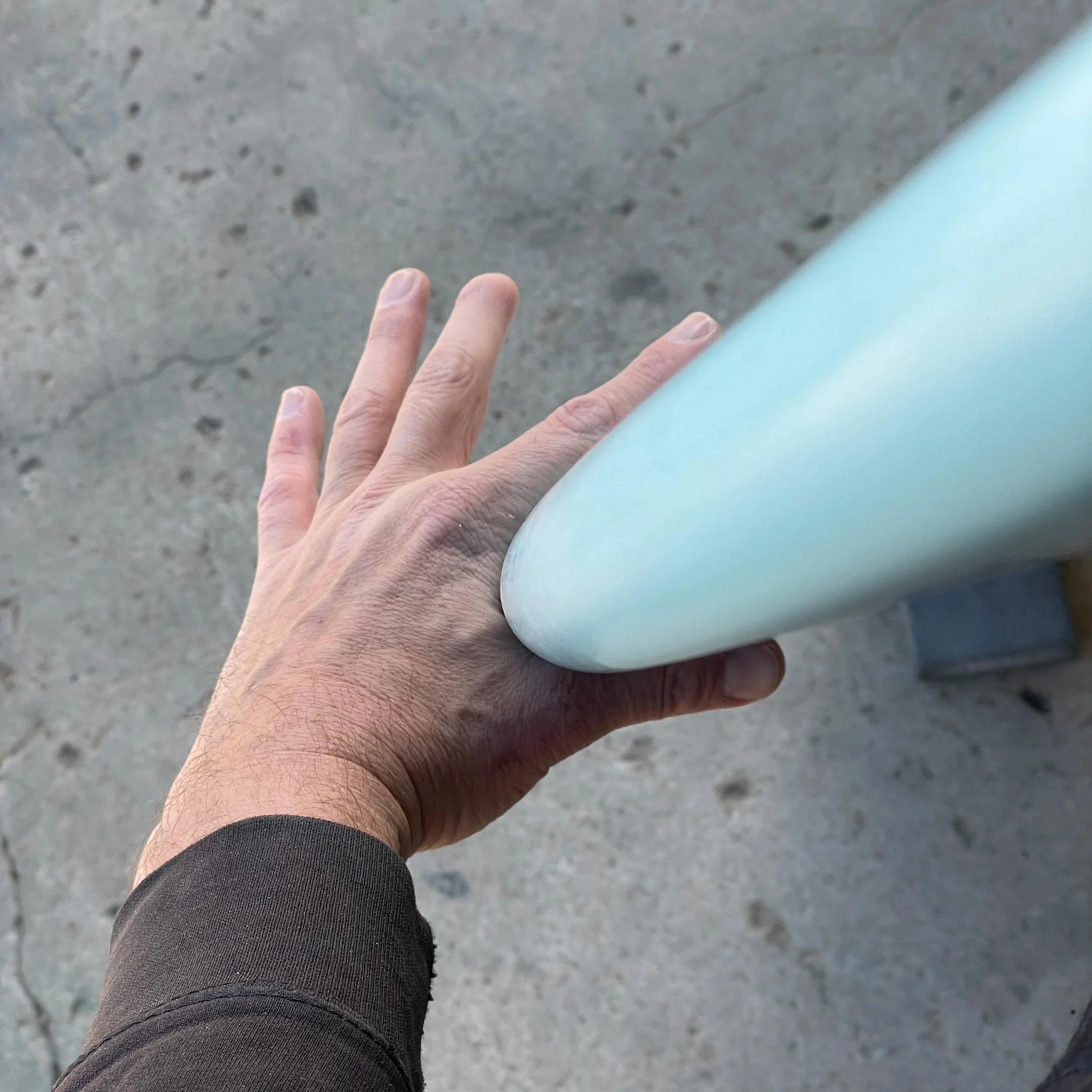
Unlike boards from that era, the deck on the TP has a very subtle dome to it that drops sharply into a true HPSB rail at the very edge of the template. This helps the board paddle into and drive through softer waves on rail like a HPSB without feeling bulky or bloated.
This one is for the rippers. Enjoy!
-
This board is designed to work as your good wave board on the lake or your groveler if you want to go on a trip to get salty.
Lake: 2-3ft+
Ocean: 1-3ft
Wave Shape: Versatile
-
Ride it around your height, ~1” wider and ~1/8”+ thicker than your go-to ocean shortboard.
I’m 6’3” 210lbs and ride my Trash Panda @ 6’3” x 21” x 2 7/8”.
For contrast, my high-performance shortboard for really good waves (Indo, Hawaii, etc.) is 6’3” x 20” x 2 3/4”
-
Setup: Thruster or Quad
Recommended Template: This board likes an neutral or pivot template. I ride the JJF Scimitar fins from Futures.