

4 Cheat Codes for Becoming a Proficient Surfer at Any Age
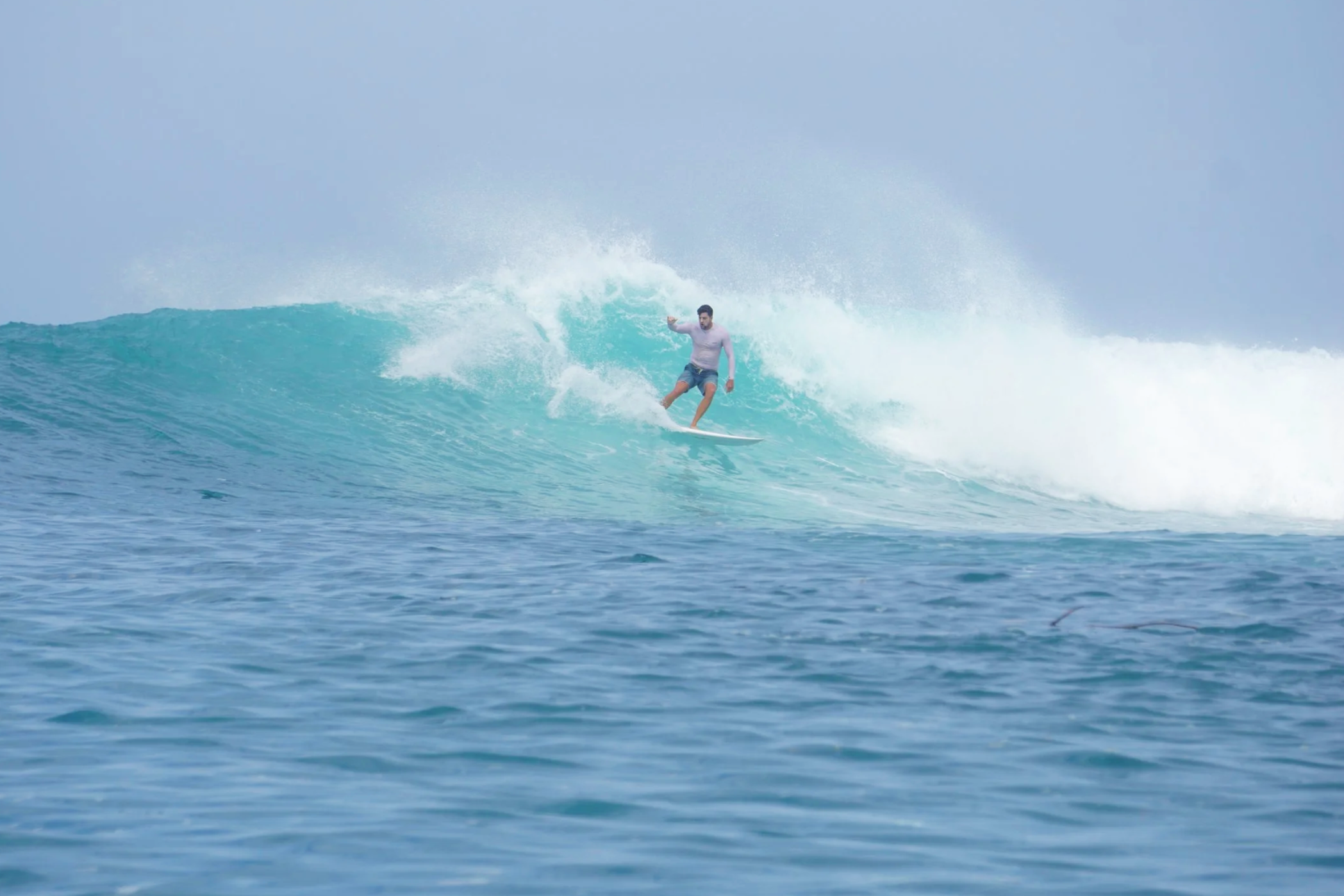
I was chatting with a guy from Santa Barbara while in Indonesia over the summer when he paid me one of the highest compliments I’ve ever received about my surfing:
“Wait, only 6 years? You surf way better than most people who have been surfing that long.”
I didn’t start surfing until I was 31. And when I started, pretty much everyone told me “you’ll never get good if you don’t start when you’re a kid.”
I’m not saying I’m a pro now (far from it). But I surf pretty ok for the amount of time I’ve been doing it. And when I look back on how I got to where I am, I probably could have saved myself a lot of frustration if I had known what I know now.
Here’s what I wish I had known back when I started (that no one teaches you) and how you can use it to go from total beginner to proficient in far less time than it took me.
1. Spend More Time Studying Waves Before Each Session
Watch any surf competition and you’ll realize pretty quickly that wave selection is probably the most important factor in determining who will win a heat.
This is true at your local break as well. The best surfers are almost always on the best waves of the day, and it’s a big part of the reason they make it look effortless.
“Learn to read the ocean better. A big part of my success has been wave knowledge.”
- Kelly Slater
I didn’t realize this fast enough to avoid earning the nickname “Onshore Scotty.” But I’ll never forget the day I figured this out.
My surf sessions for the entire week leading up to this realization were incredibly frustrating. I could catch waves, but I couldn’t seem to get myself down the line fast enough before they closed out.
And then suddenly, the next day, everything clicked. I was making every wave I went for and having a blast.
I remember saying to myself “Ok, this isn’t a skill issue. I didn’t magically get better at surfing overnight. It’s just the ocean and the waves that were available that day.”
From that moment on, I started studying waves like it was a second job.
I pored over forecast data, studied the way different breaks reacted to the tides and swells, and spent a lot of time just sitting on the beach before each session to figure out where the sandbars were.
To absolutely no one’s surprise, I started getting better rides and more opportunities to actually do something on the wave (even when it was onshore 😉).
My Pre-Surf Study Routine
It doesn’t matter if I’m surfing in Indonesia or Indiana — I still take at least 5-10 mins before every session to study where and how the waves are breaking that day.
Especially if it’s my first time at a particular spot, because it often takes that long for a few sets to roll through.
When I do this, I’m looking for patterns. Things like:
Is there a particular spot where the best waves have broken 3 or more times?
What angle do the best waves come in at?
Where do the longest rides start/stop?
How is this all likely to change as the tide rises and falls based on what I’m seeing now?
Are there waves breaking in spots that the crowd might not realize?
I’m also correlating this information with swell data so I can better forecast that particular spot in the future.
Now, forecasting is beyond the scope of this article. But it’s worth noting that learning how to do it is essential if you want to find the best waves.
The point is, the more you study waves (and specifically, different types of waves like reefs/points/beachies), the easier it becomes to find good ones.
Prioritize Wave Shape to Progress
One of the most important “Aha!” moments for me regarding wave selection was when I realized how much wave shape impacted my ability to improve as a beginner.
The skill and timing required to stick a drop on a steep hollow wave of any size is much different than the skill and timing required to catch a mellow peeler.
If you’re still a beginner and you want to progress quickly, I highly recommend seeking out mellower, peeling waves that crumble, not pitch. These waves give you more time to get to your feet and down the line so you can build the feel and muscle memory required to progress.
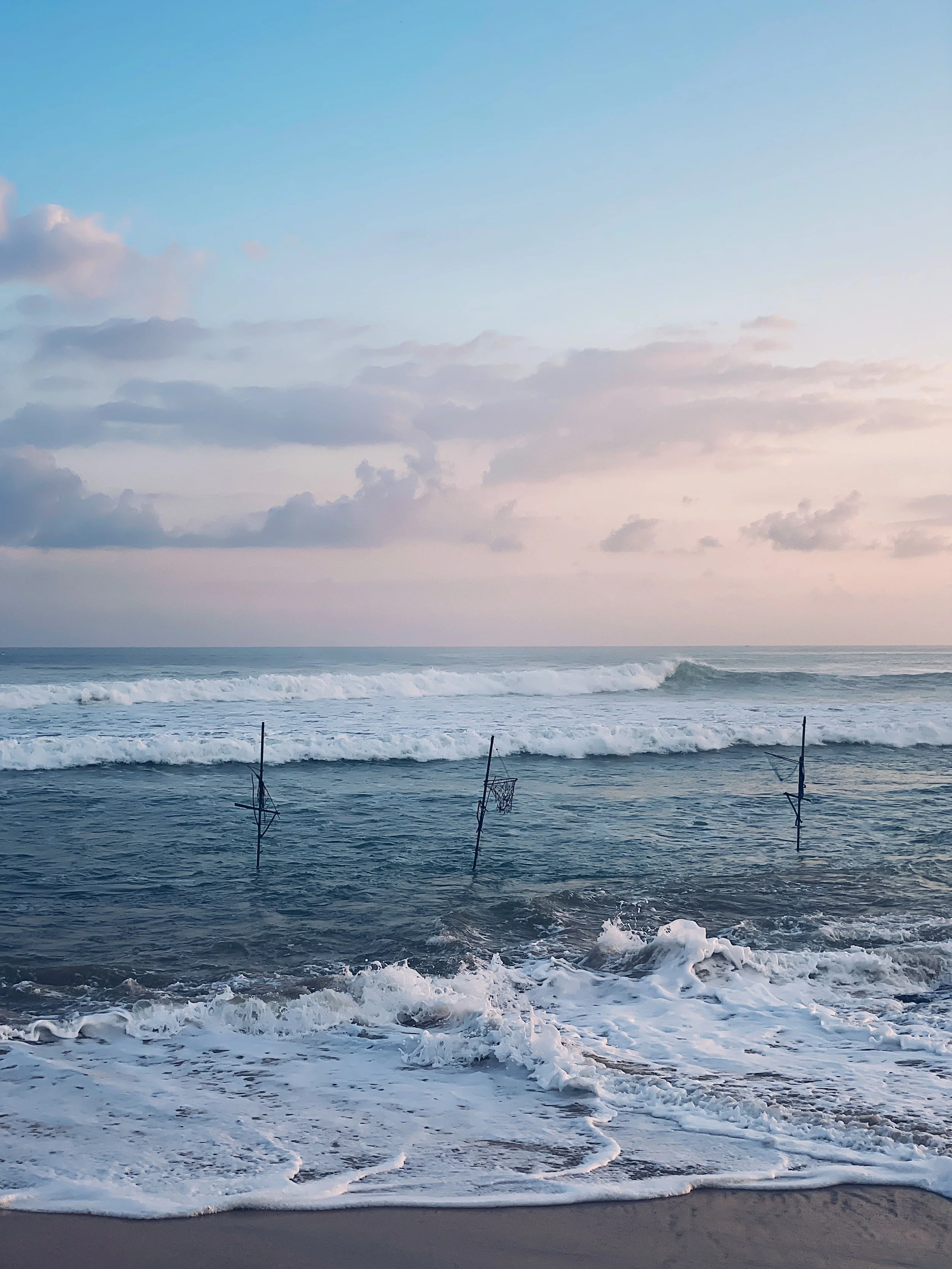
Mellow waves like this one I surfed in Sri Lanka are perfect for learning.
If you’re surfing a beach break (which you should be when you’re learning), this typically means surfing closer to high tide.
As an aside, not accounting for wave shape is probably the greatest failure of most surf schools in my opinion.
I’ve seen far too many instructors take surfers out for a lesson in closed-out, low tide beach breaks and then be surprised when their students are discouraged after getting slammed into the sand a few times.
You’ll have much better success (and way more fun) if you pick mellower conditions to learn in.
2. Isolate Skills and Practice Them One at a Time
When I first started learning to surf, I watched every YouTube video that was out there. Which I thought was great at first, because I was learning all the tips and tricks that were going to help me rip (eventually).
But applying this information became overwhelming when a wall of water was threatening to slam me into the sand:
Is this a good wave?
Arch your back.
Am I positioned too far forward on the board?
Don’t forget to look down the line.
Am I going to get in someone’s way?
Angle the board.
Remember, paddle two extra strokes.
Should I pop up now?
F*ck.
Then one day I came across a video of Jamie O’Brien talking about how he used to paddle into close outs at his local beach break to practice and build confidence for waves like Pipeline:
It all clicked for me after this video: I needed to isolate one thing at a time, perfect it, and then layer in the next thing.
So that’s exactly what I did, starting with the most embarrassingly simple thing you can imagine: catching waves prone.
For weeks, I started every session by padding for a wave and riding it on my stomach just to feel out how and when the board would actually catch a wave that day.
Then, I’d layer in the popup and focus on making it to my feet until I got the hang of it.
Next, I’d start introducing things like angling the board and turning down the line, one at a time.
And once I finally figured out how to pick the right waves, it all came together.
This is How You Develop “Flow”
To say that I felt like a total kook breaking things down one at a time like this would be an understatement. I’m sure it looked weird from the beach.
But within a few years of applying this approach to every aspect and stage of my surfing, I was getting barreled.
Surfing 15ft waves.
And most importantly, I developed a natural feel for waves that I don’t think would have been possible with 37 things in my head from YouTube at all times.
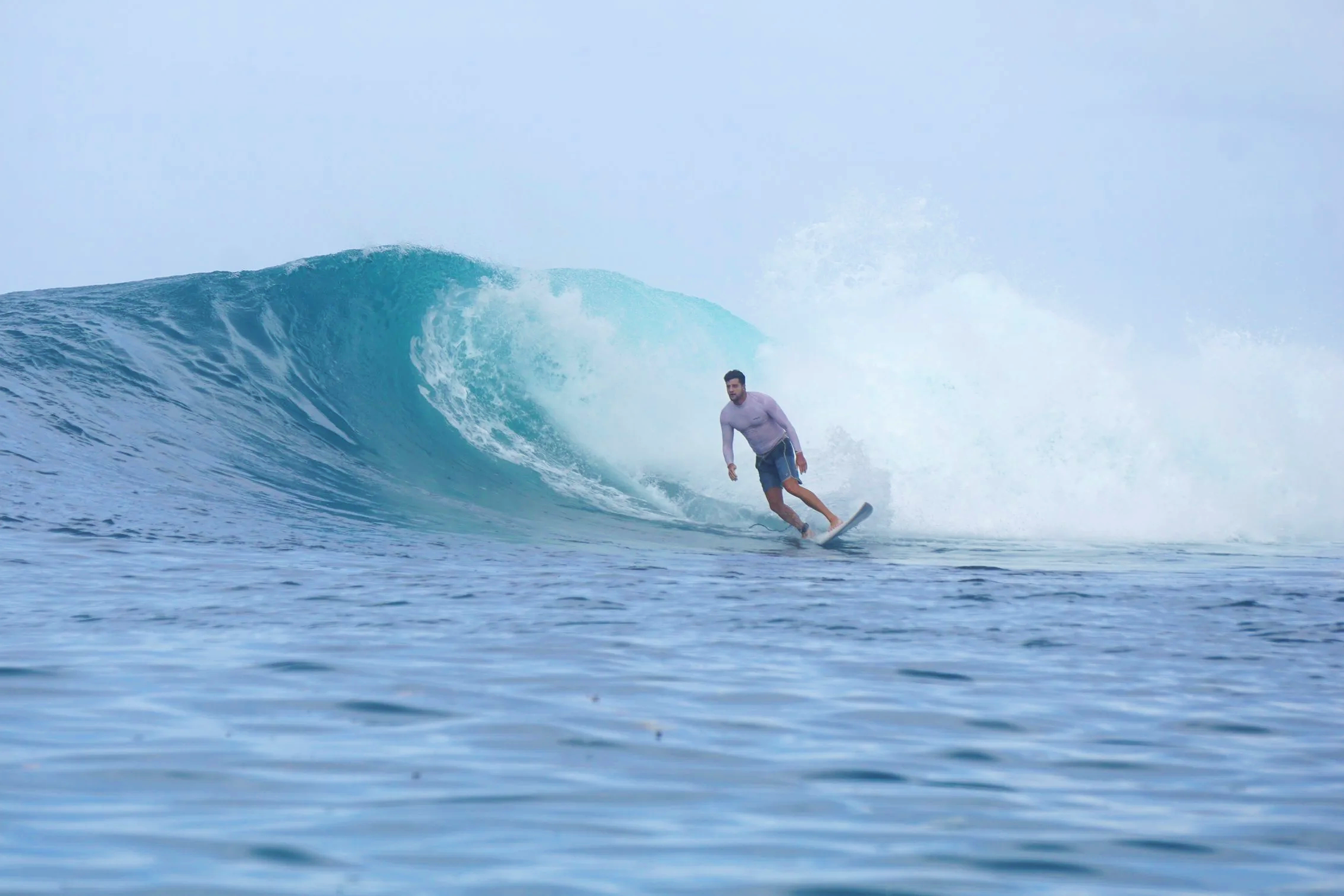
A nice little 4ft wave from my Indo trip.
In fact, it was so effective that I still use this approach when I surf a new spot, especially at reefs and points.
While I’m not catching waves prone anymore, I still typically ride the first wave I catch at a new spot straight down the line, just feeling out how it breaks, before adding a turn, taking off deeper, etc.
I’ve found that taking time to learn the wave like this helps my surfing look more fluid than it probably is because I’m in sync with the wave and not trying to force things.
Which, in my opinion, is where good style originates. But I digress.
So my recommendation is this: if you’re really serious about developing your skills as a surfer, don’t try to do it all at once.
Find an empty stretch of beach break at mid to high tide, focus on one thing at a time, then layer in the next thing.
Do that for with everything you’re working on, and you’ll develop “intuition” naturally.
It isn’t sexy. But it works.
Besides, even JJF and Slater still paddle closeouts:
3. Learn Your Equipment
Most people drastically underestimate how much better they will surf by learning how to pick the right surfboard for the right waves.
I’m not saying this because I’m a shaper — I’m saying this because it’s the reason I am a shaper.
I started shaping in my second year of surfing because I realized that the board I chose and how well it matched up with the waves I was surfing had the ability to drastically alter how well I could do things like:
Paddle and catch waves
Generate speed and flow
Make sections
Do turns I wanted to do
And much much more.
So I decided to learn as much as I could about my equipment at the source: shaping and design.
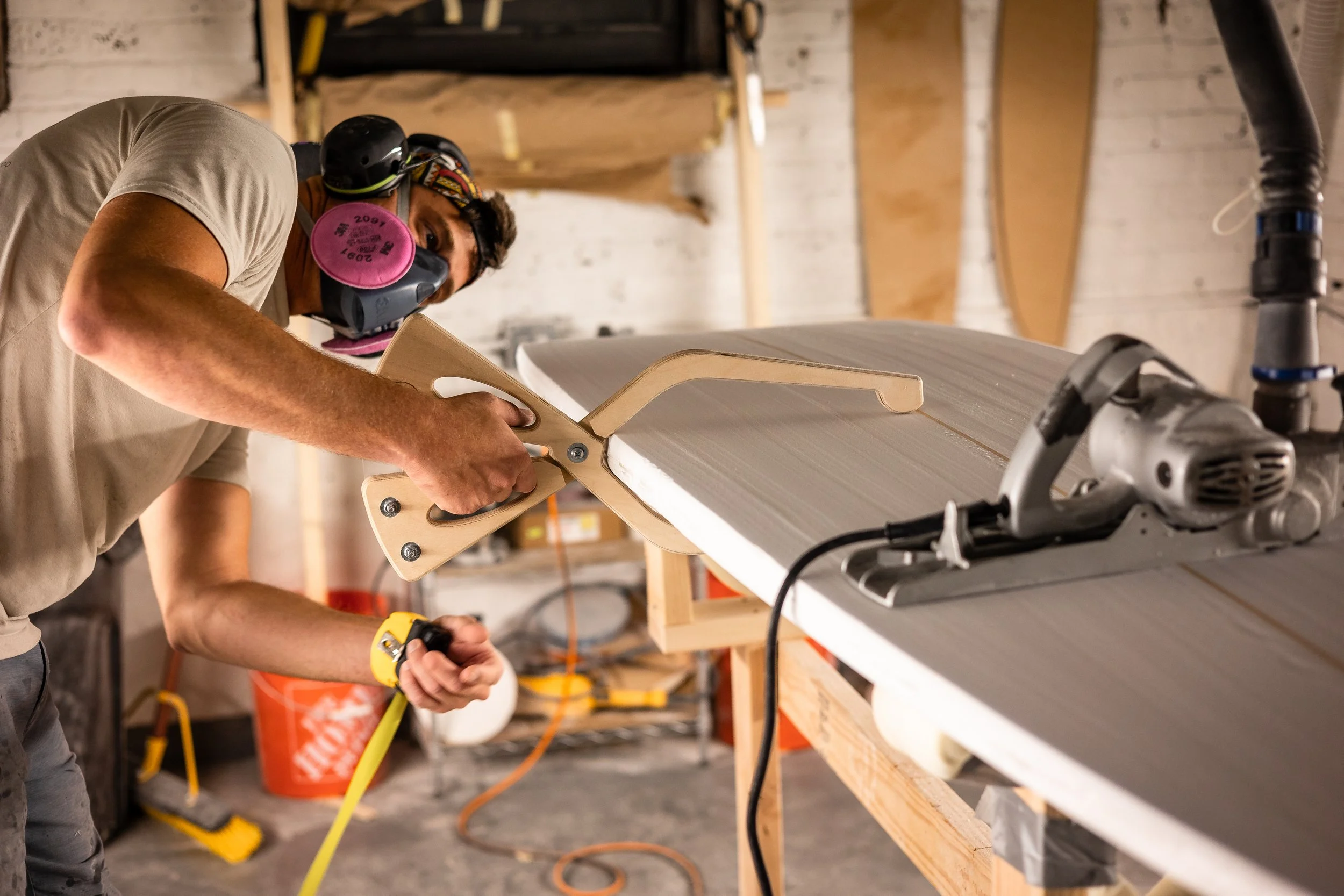
Now, I’m not saying you need to become a shaper to figure out your equipment.
But I am saying that a basic understanding of board design and selection can drastically accelerate or hinder your ability to surf the way you want to (and ultimately have more fun).
Watch this clip of Dane Reynolds and Jordy Smith bogging rails in South Africa if you don’t believe me:
If you do want to learn more about your equipment by shaping you’re own board, I can’t encourage you enough to do so. It has been a game changer for my own surfing, and I’m building a course to teach you the ins and outs of board design and shaping — join the waitlist here.
Navigating the Maze of Surfboard Options as a Beginner
Figuring out your equipment is really hard as a beginner, because a lot of the selection process comes down to personal taste and understanding the waves you want to surf.
And when you’re first starting out, both of those things are still very nebulous.
So my recommendation is, start with a board in the ~8ft+ range that is fairly flat and then go seek out mellower waves to practice the fundamentals.
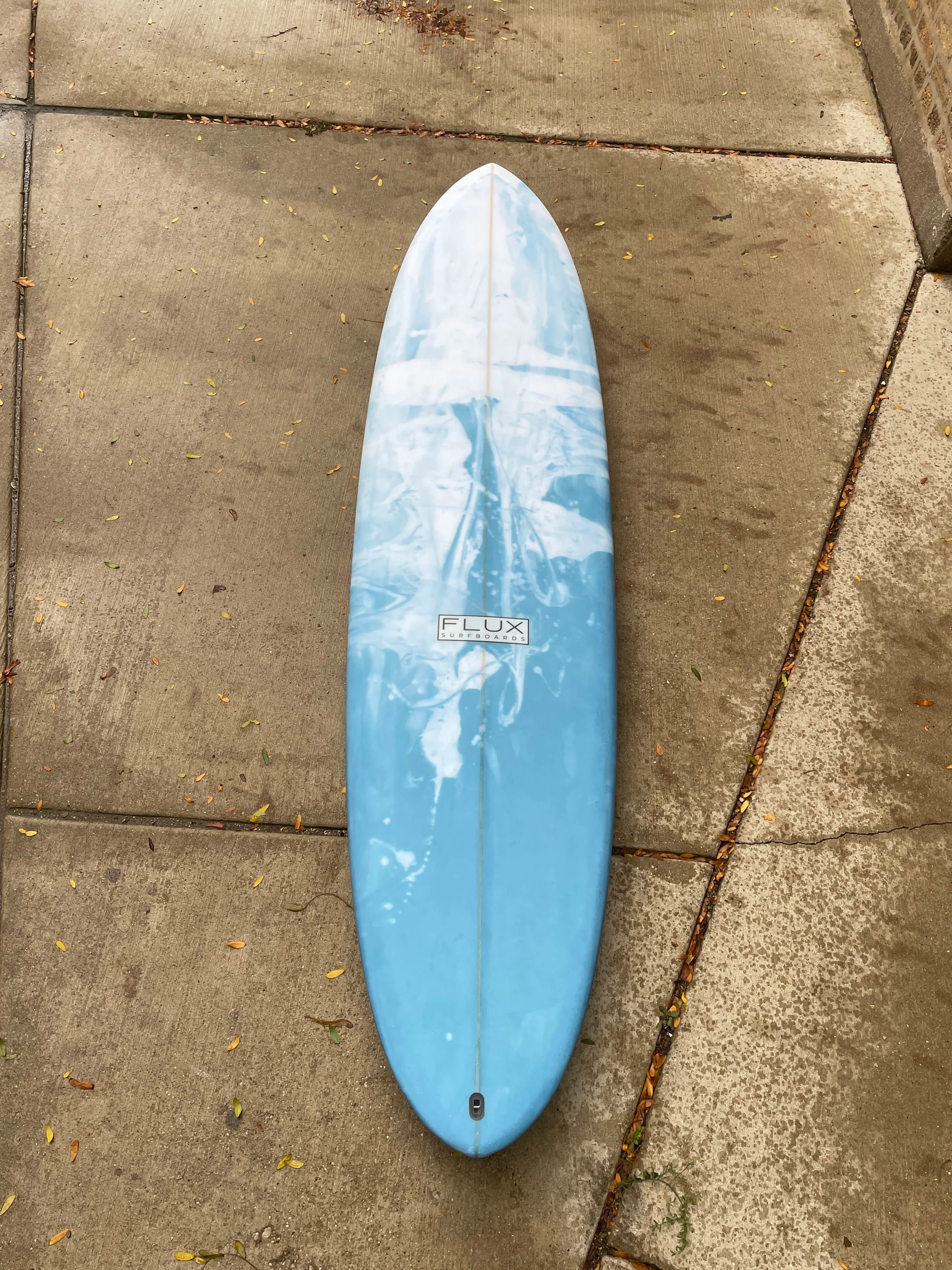
Start with a board like the Flux Egg (pictured) or Thor’s Hammer
Talk to a shaper or someone at a surf shop that isn’t in too much of a hurry to sell you something if you're unsure.
Hell, hit me up, I’m happy to help you even if you don’t want to buy a board from me.
Then, stick with that board until you master it and learn what waves it likes. Once you’ve done this, think about your next surfing goal and adjust from there.
Once you’ve mastered a board or two, go full steam and try every single board you can get your hands on, like a chef trying to educate their palette.
More information is better once you have your feet under you. But not before.
If you live in a place with a well-established surf scene, I highly recommend rummaging around the used market. You can find some gems for nickels on the dollar.
4. Invest in Your Fitness
I don’t need to tell you how important your fitness is for progressing. If you’ve tried to surf, you know.
I’ll be honest — I am not the best resource for fitness information. I did it the way everyone always says to (lots of time in the water).
But I can tell you that when your fitness level gets there, it changes your entire experience.
I wish I had made it more of a priority back when I started, because I don’t have the luxury of surfing as often as I used to anymore and building that habit after the fact is not easy.
So if you’re serious about progressing, my recommendation is at the very least, start doing yoga. Specifically, vinyasa.
Even just 15 mins a day helps a ton (which is what I do).
And if you want to develop strength faster, check out SurfStrengthCoach.com. I have Cris’s bodyweight program and it’s great.
The Unsexy Truth About Rapid Surfing Progression
Your ability to improve quickly is directly related to your ability to delay gratification and focus on the fundamentals for a little while.
I know that sounds boring and discouraging, especially when the goal is to have fun and you only have a few hours on the weekend.
But if you reframe what success looks like in the short term and focus on the fundamentals for a few months, you can get there faster than you think.
And I can tell you from personal experience, the payoff is 100% worth it. Surfing gets exponentially more fun the more you progress.
Build the right foundation, and you will reap the rewards for the rest of your life.
See you out there!
Scott