

How to Choose a Surfboard for the Great Lakes
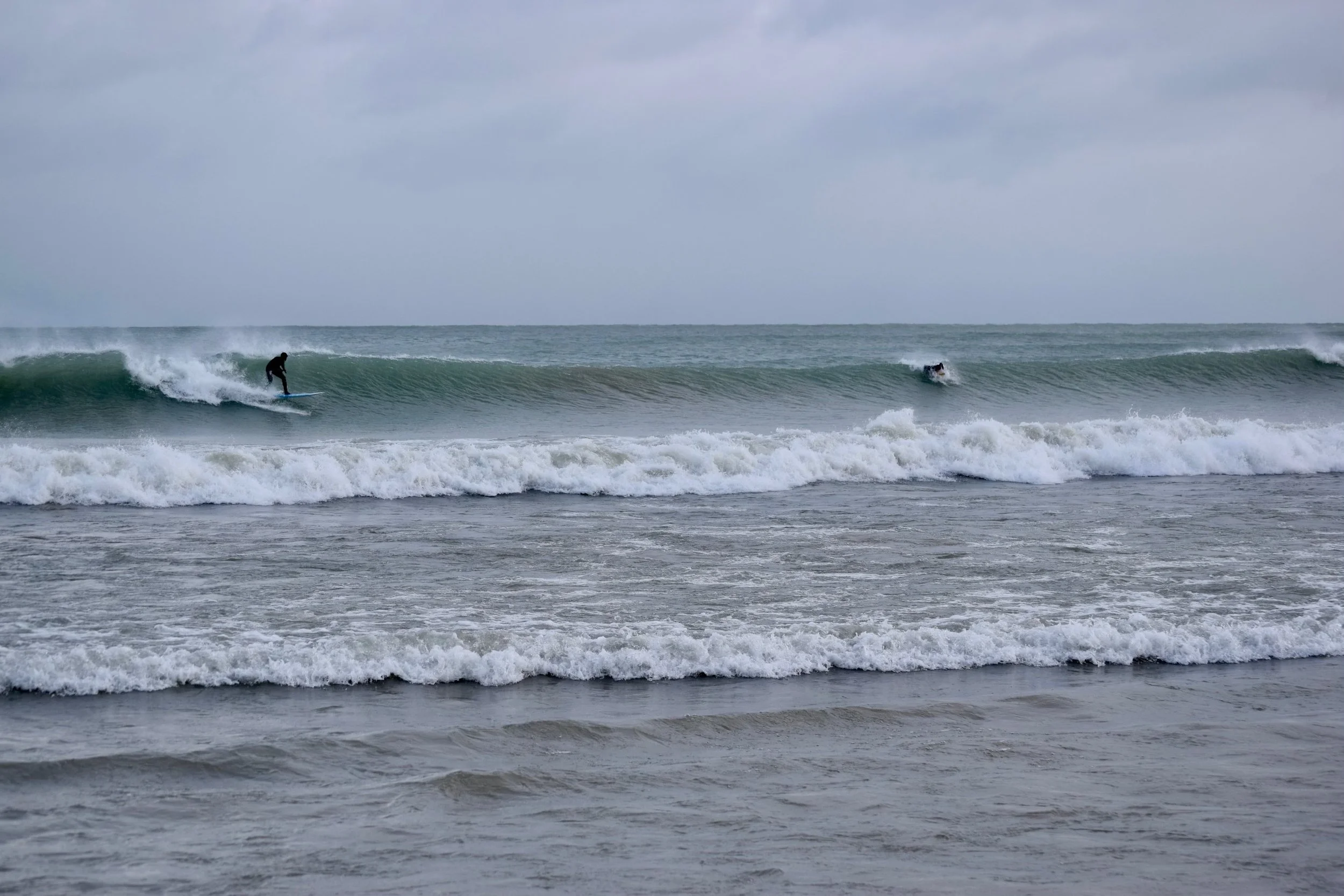
As a shaper based out of Chicago, one of the questions I get a lot is “what’s the difference between a surfboard that’s ideal for the Lakes vs. once that works for the ocean?”
What I’ve concluded so far through shaping and testing over the last 3+ years is that the boards that are ideal for the Lakes are not really all that different from the ocean at all.
In fact, as long as you pick the right base design to start with, there are just a few specific tweaks that need to be made to any particular design in order to make it more suitable for the Lakes.
Here’s what you should consider when you’re trying choose a board for surfing the Great Lakes and some specific recommendations that have worked well for me and my customers over the last few years.
Surfboard Design for the Lakes vs Oceans: The Difference That Actually Matters
Many surfers I talk to think we need different equipment for the Lakes because of the lack of salt. But it’s actually because the waves have less power than the ocean.
The difference in buoyancy between salt and fresh water is practically negligible once you’re up and riding, because hydrodynamic lift takes over as the dominant force.
An extreme example of why this is true and how it works is an airplane.
For example, a Boeing 747 has zero buoyancy in air and weighs over 750,000 lbs. Yet, it can fly because of the lift that is generated by its wings once it’s up to speed.
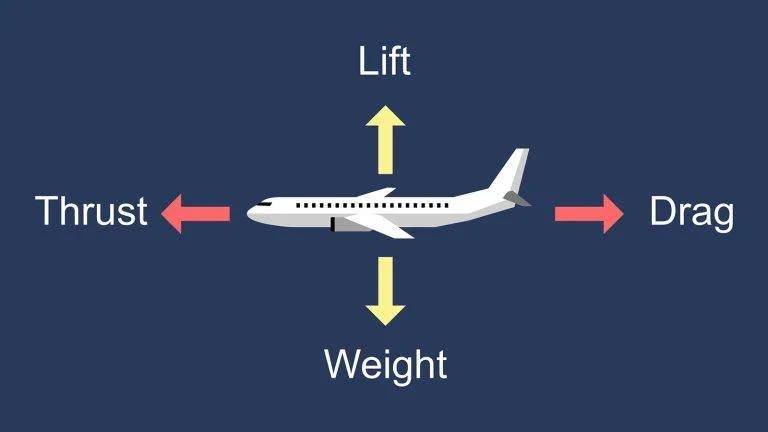
If you throttle back the engines, however, it starts to drop out of the sky. Which is exactly what happens with surfboards on the Lakes — they naturally generate less lift than they would in the ocean because the waves we have here generally have less power than the ocean.
So to counteract this, we need to select a board that will generate more lift on its own in order to get the same performance on the Lakes as we would in the ocean.
Design Attributes that Determine the Amount of Lift in a Surfboard
A surfboard is basically just a wing you’re riding on top of: the rocker is its airfoil and the outline determines its surface area.
When shapers design a board, they tailor each of these elements to the amount of lift the board needs to generate, similar to how an aerospace engineer would with an airplane.
For example, surfboards for powerful waves like you find in Hawaii need less surface area and more rocker because the board is generally traveling at a faster speed, which generates more lift per square foot.
This means generally speaking, when compared to surfboards for the ocean, surfboards that will work well on the lake will have more surface area and less rocker.
Or in other words, tuning any given surfboard design for the lake means you would go:
Longer. The quickest way to increase the surface area of a surfboard is by increasing its length.
Flatter. A flatter rocker creates more pressure under the board and makes it easier to harness power from waves and translate it into forward momentum.
Wider. Increasing width increases surface area and means more paddle power and speed.
There’s no hard and fast rule as to how long/flat/wide you should go. It really is personal preference.
But if you’re unsure, start with what you know and adjust from there based on what you want to achieve in your surfing.
Thickness and Volume
The most common advice that is offered when someone asks about selecting a lake surfboard is “get a board with a lot of volume.”
This advice is technically correct, but misleading without the right context.
Like surface area, the quickest way to increase volume is by getting a longer board. So telling someone to just “get more volume” isn’t super helpful unless you know how the volume is being added.
The better advice is “get a thicker board.”
Adding thickness to any part of a board makes it harder to sink that part of the board into the water, which helps offset the lack of hydrodynamic lift at the speeds most boards travel on the Lakes.
In other words, thicker boards “push back” and make it easier to translate downward force from your feet into forward momentum.
If you’re having trouble envisioning what this feels like in the water, don’t worry — it’s not intuitive.
Just know that what you want on the lake is a board that is thick down the stringer (especially under your back foot) with flatter deck than you’d ride in the ocean.
Fuller rails through the middle of the board also provides a little more forgiveness, but you don’t have to go crazy with it. Most of my lake boards have the exact same rails as my ocean boards.
I usually go ⅛” to ¼” thicker overall on my Lake boards than my ocean boards.
Where The Lack of Salt Actually Makes a Difference
I’m not saying the lack of salt is completely negligible. It does make a difference, but only when:
You’re paddling around the lineup
You’re paddling into a wave
Essentially, paddling around in freshwater wears you out faster and increases the amount of work you have to do to actually catch a wave.
This is because boards sit lower in freshwater, which creates additional friction/drag you have to overcome to get them up to planing speed.
To counteract this, you can select a board made with lower density foam so it sits in the water like it would in the ocean. This makes it easier to get the board moving when you’re scratching into a wave or when you’re paddling around the lineup (the tradeoff is that your board won’t carry as much momentum or cut through chop quite as well).
And you don’t have to go with an ultra low density foam (like 1.0lbf EPS) to see a noticeable difference. I’ve found that all it takes is going one density rating lower than I normally would on the PU blanks I order.
Note: I put together a guide to surfboard construction if you’re interested in learning more about how construction affects performance.
My Recommendations for Lake Surfboards
There is no right surfboard for the Lakes. But to get you pointed in the right direction, I’ve shared the board styles and shapes that work well for me and my customers on the Lakes below.
TL;DR — any board that fits into the groveler, midlength, hybrid, or longboard categories is a good starting point for any surfer of any ability.
These types of surfboards have rockers and dimensions that are appropriate for the lakes and pretty much anything in these categories 7ft+ could act as a one board quiver depending on your ability and how many days a year you want to get wet.
For more advanced surfers, a groveler or fish style surfboard is also a good choice for the better days we get if you want to rip.
My only recommendation is to stay away from shortboard designs other than grovelers. These boards do not have rockers or templates suitable for the lake (unless you enjoy the Huntington Beach Hop).
1. Best Overall: Classic Eggs
Classic eggs are the most versatile surfboard for the Lakes because they are typically designed to handle good surf but are also wide enough, thick enough, and flat enough to catch small waves as well.
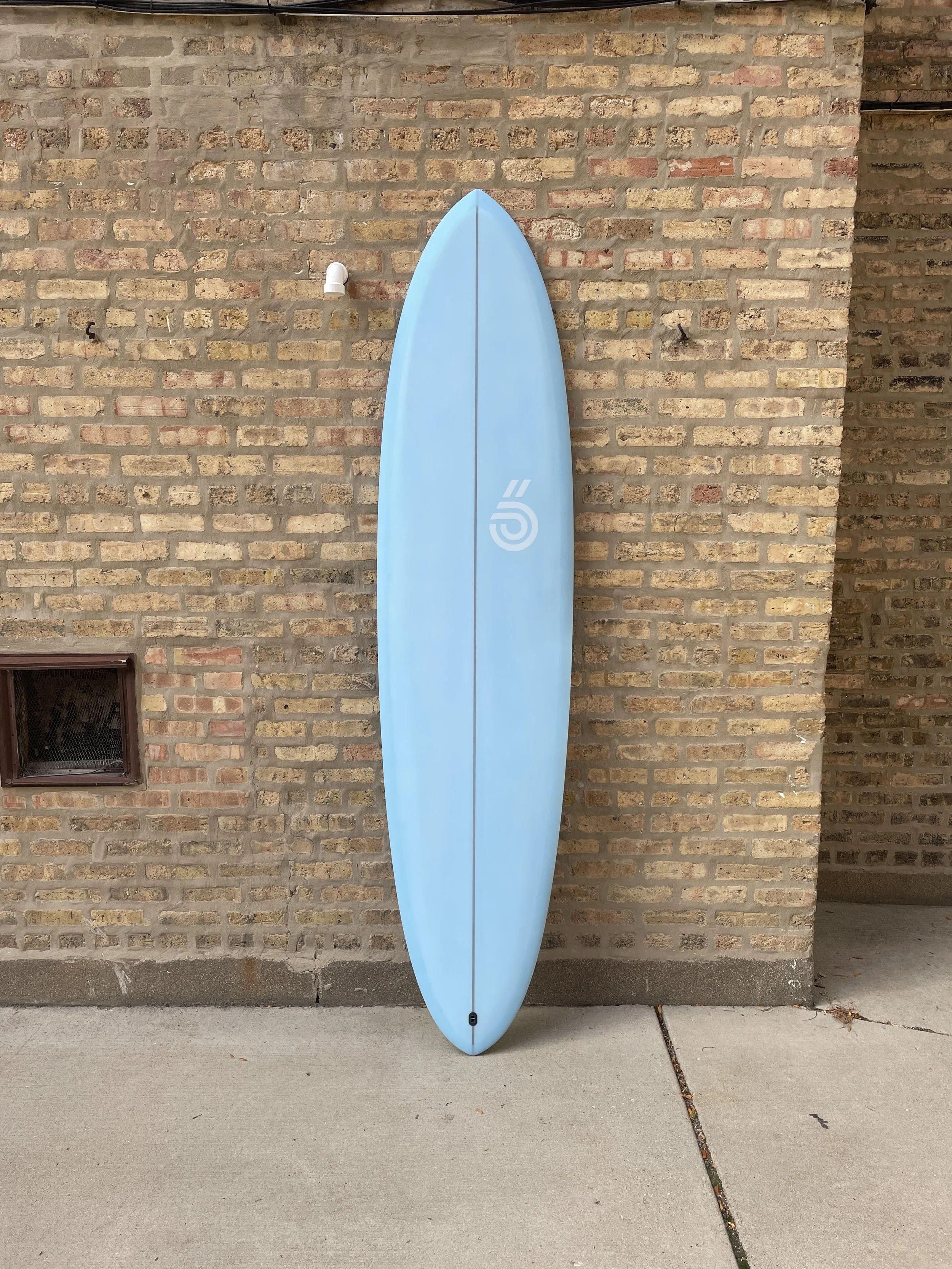
The Flux Egg
I typically ride shortboards when I’m surfing in saltwater. But my go-to lake surfboard for most days is an 8’0” x 22 ½” x 3 ⅛” classic egg. I could ride this board on the Lakes for the rest of my life in any wave on any day without ever wishing for anything else.
My version of this design (pictured above) is my best seller.
Recently, I’ve started making more compact versions of this design in the mid-6ft range that paddle almost as well as the bigger versions, but are even more nimble.
2. Best for Beginners: Longboards
If you’re at that stage in your surfing where you’re just trying to catch waves, a trusty longboard (something 9ft+) is the best possible choice you can make.
Not only because it’s going to give you the paddle power and speed you need to progress, but because you could honestly surf it for the rest of your life on the Lakes and never wish for another board.
A good longboard never goes out of style on the Lakes. Ever.
The only choice you’ll need to make when you select a longboard is the style of longboard you want to get.
At the risk of pissing off longboard purists, there are essentially two different styles of longboards: a nose rider style (logs) and trim/glide style.
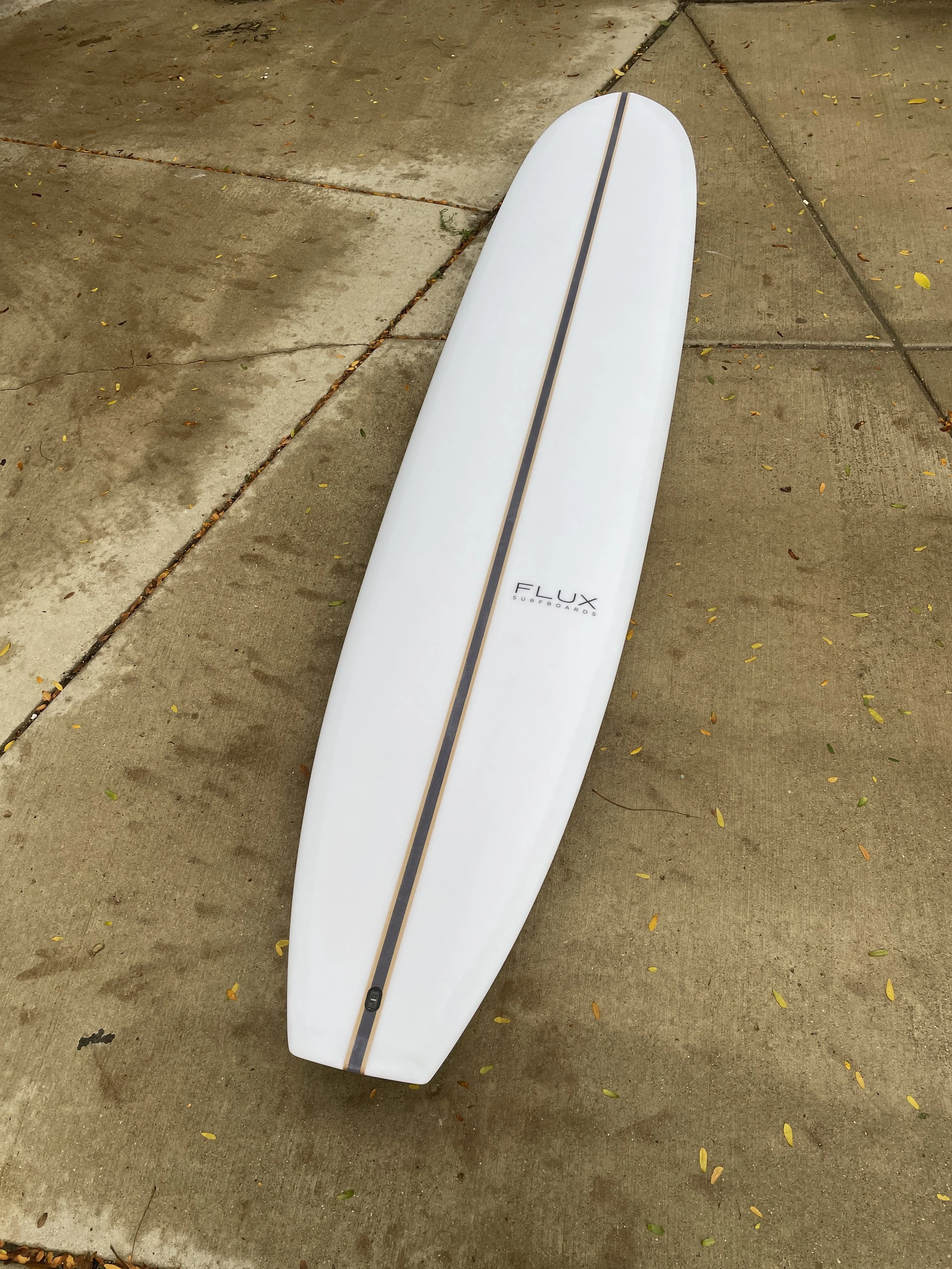
Flux Cali Plank
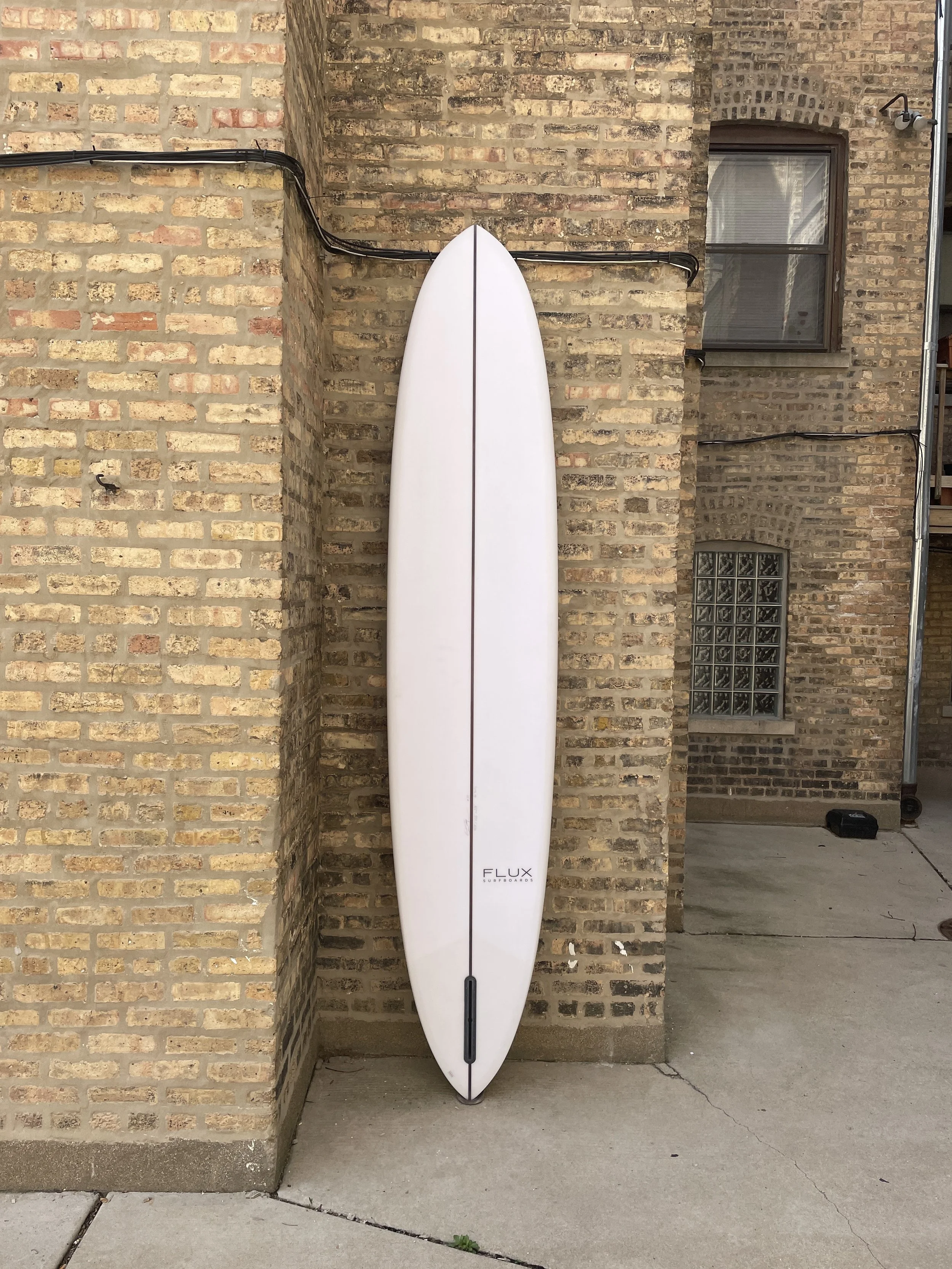
Flux Thor’s Hammer
For beginners, I do not typically recommend noseriders because they take a little more experience to figure out. Stick with a board designed for trim and glide, like my Thor’s Hammer model.
3. Best for Advanced Surfers: Hybrids and Groveler Style Boards
If the Lake is pumping and your skills allow it, a shorter board like a fish, a sub-seven foot hybrid, or even a groveler shortboard can be incredibly fun on the Lake.
There are so many boards that fit in this category it is impossible to name all of the types and varieties you could consider. But here are a few that I make as examples:
My Trash Panda design is an example of a high-volume, high-performance groveler that would fit into this category:
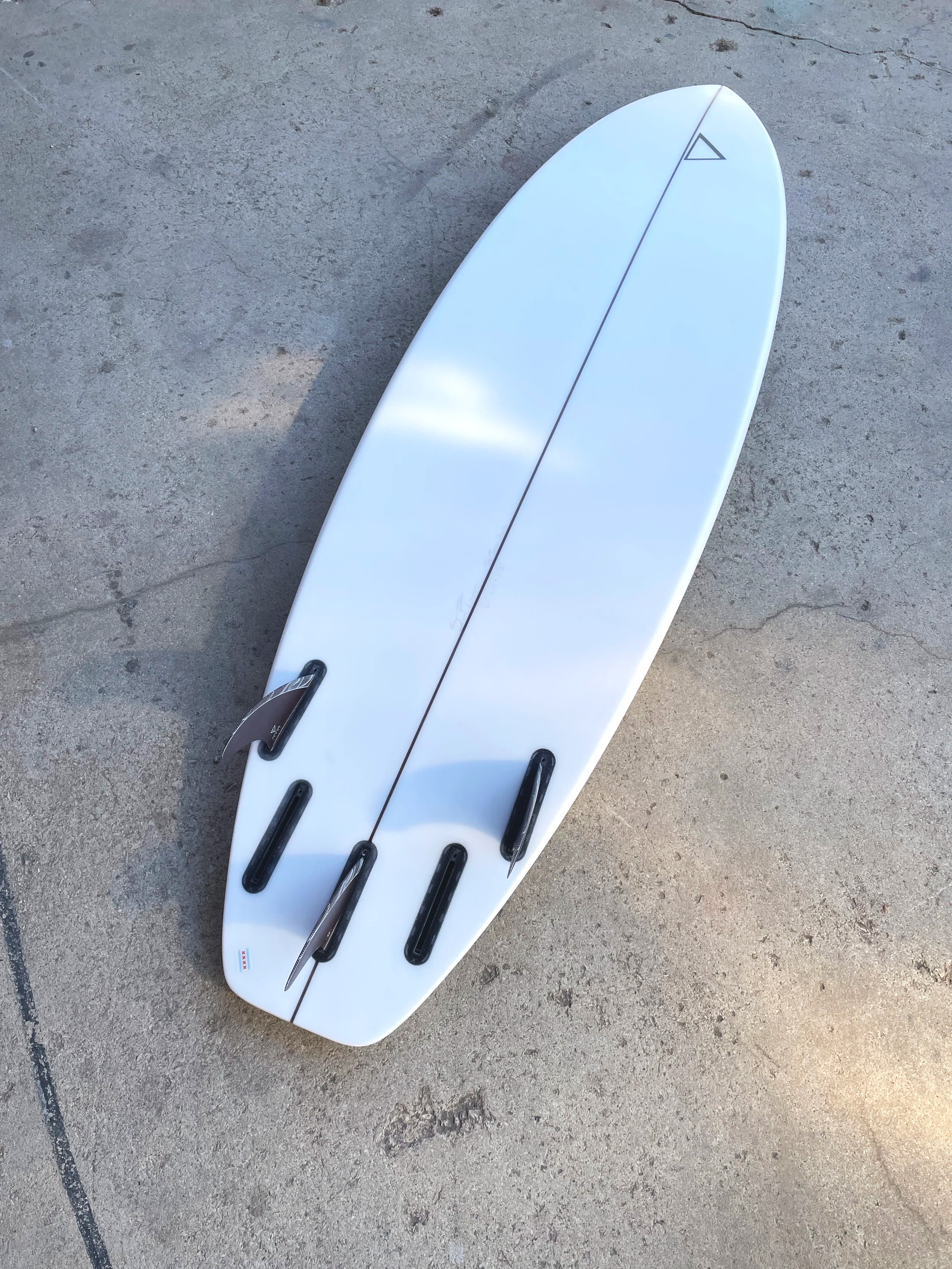
Flux Trash Panda
My Muse model (classic fish) can be tailored to work on the lake and would be in this category.
My egg design, when squashed down into the mid 6ft range, would also fit into this category as well (hybrid).
If you’re going to order a board in this category that isn’t from a Great Lakes shaper, just make sure you order it a little thicker than standard.
Talk to Your Shaper
There are no bad surfboards for the Lakes — only boards that prevent you from surfing the way you want to.
So if you’re staring at boards on a rack in a surf shop or on a website and aren’t sure what you need or what you’ll like, talking to a local shaper who knows the waves in your area will help clarify things.
A shaper’s job is to translate what you’re trying to achieve with your surfing into a physical design. Or in other words, to engineer the experience you’re after in the water.
That’s why every board I make starts with a conversation — it’s the only way to ensure that the board I make for you is tailored to what you like.
If you’re ready to dial in a board for the Lakes (or ocean), I’m here to collaborate as little or as much as you’d like.
Reach out here when you’re ready to start a board!
Cheers,
Scott