

Surfboard Construction: What to Consider Before You Order
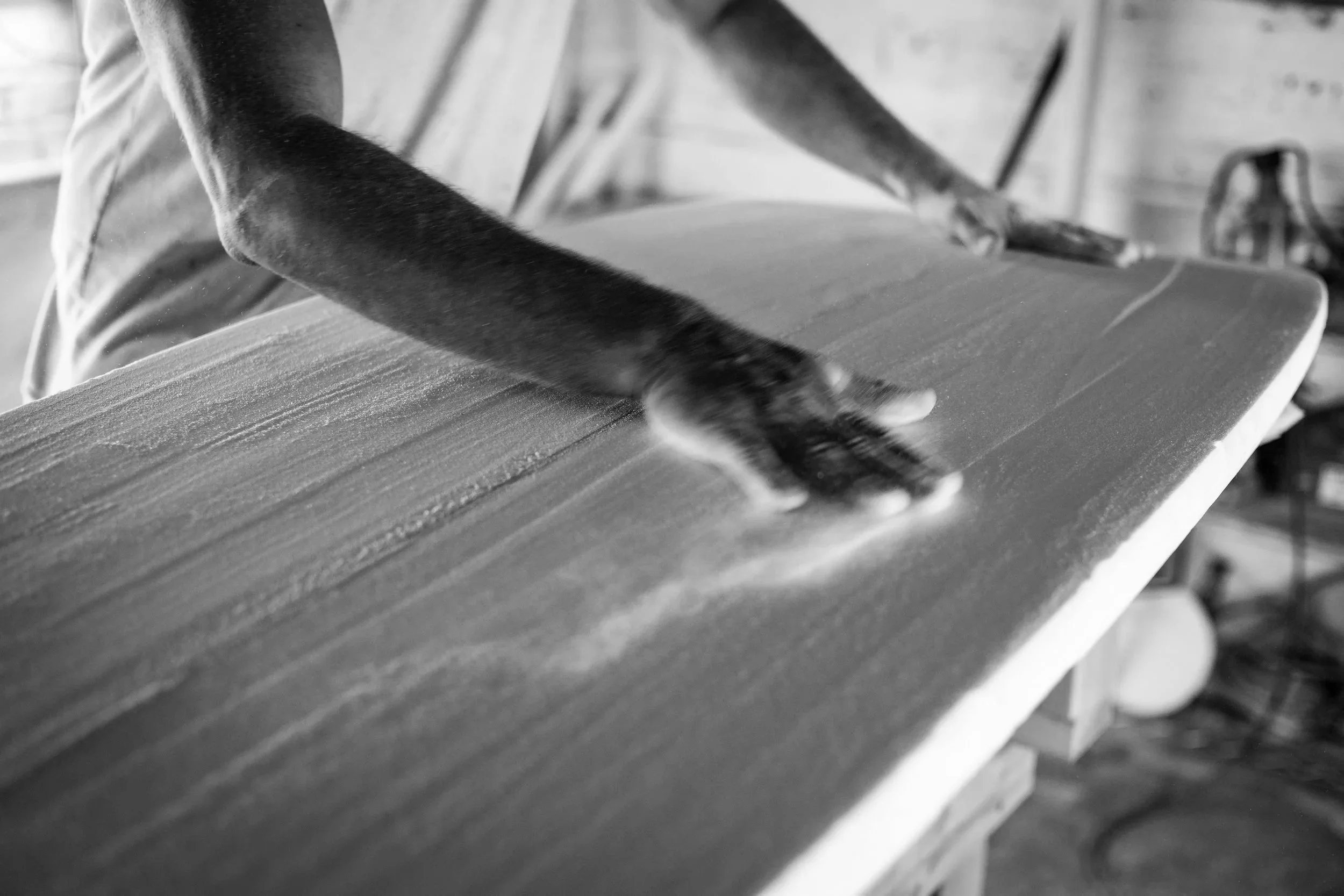
If you've ever looked at a surfboard order form and been unsure of your construction choices, you’re not alone.
I’ve been there myself, trying to decide between PU or EPS, what glassing schedule I should go with, etc. all while having no clue what was best or if I’d even notice a difference.
So I decided I’d figure it out on my own the expensive way — buying boards I ended up loving/hating, building my own, and slowly piecing together an understanding of surfboard construction that I wish someone could have just handed me at the start.
What I learned is that most of the information on the internet is frustratingly simplistic and weirdly misleading.
And also, surfboard construction is incredibly subjective. What feels great to one person may not to another, even in the same waves. And what feels great in one board design might not in another.
So how do you decide what's best?
This guide is designed to help you understand your choices, what they will feel like in the water, and pick the construction that is right for the board you’re ordering and the surfing you plan to do.
How Much Does Construction Actually Matter?
The short answer is, quite a bit. But it’s secondary to the design of the board itself.
In other words, a different construction won’t fix a board you don’t like. But it can accentuate one you do like.
For example, I have two Pyzel Phantoms in two different constructions: one in traditional PU and one in Varial (RIP).
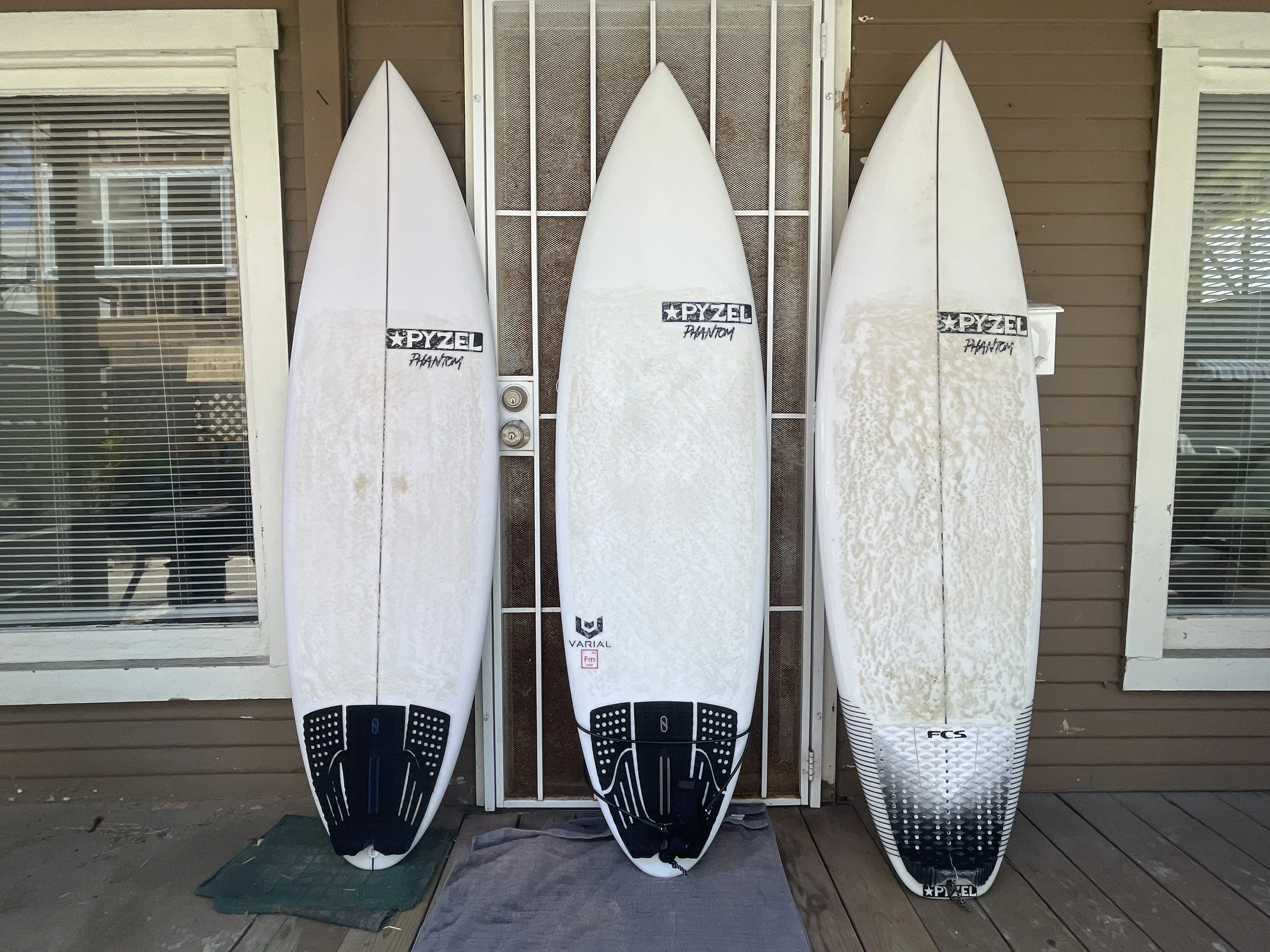
I tested a round tail PU version that I eventually sold as well.
I love both of these boards. But they surf very differently.
The traditional PU/PE version is light and rigid. It sits up on the water and responds immediately when you engage a turn. I like it in cupped out beach breaks that are around head high for snappy, high-performance surfing.
The foam in the Varial board feels slightly denser than the PU version, so it sits down in the water a bit more. It’s also stringerless, so the flex pattern is totally different.
In fact, it took me ~5 sessions to figure out how to time my turns with the flex of the Varial. But when I finally figured it out, I realized that this construction actually allowed me to push this design harder in serious surf because I could flex it into the face of the wave (i.e. increase the rocker of the board by how hard I pushed it).
Same design, but with a different feel and performance due to differences in construction.
Surfboard Components and How They Translate to Performance/Feel
At its most basic level, a surfboard is 3 parts: a core and a resin/cloth composite that creates a shell around that core.
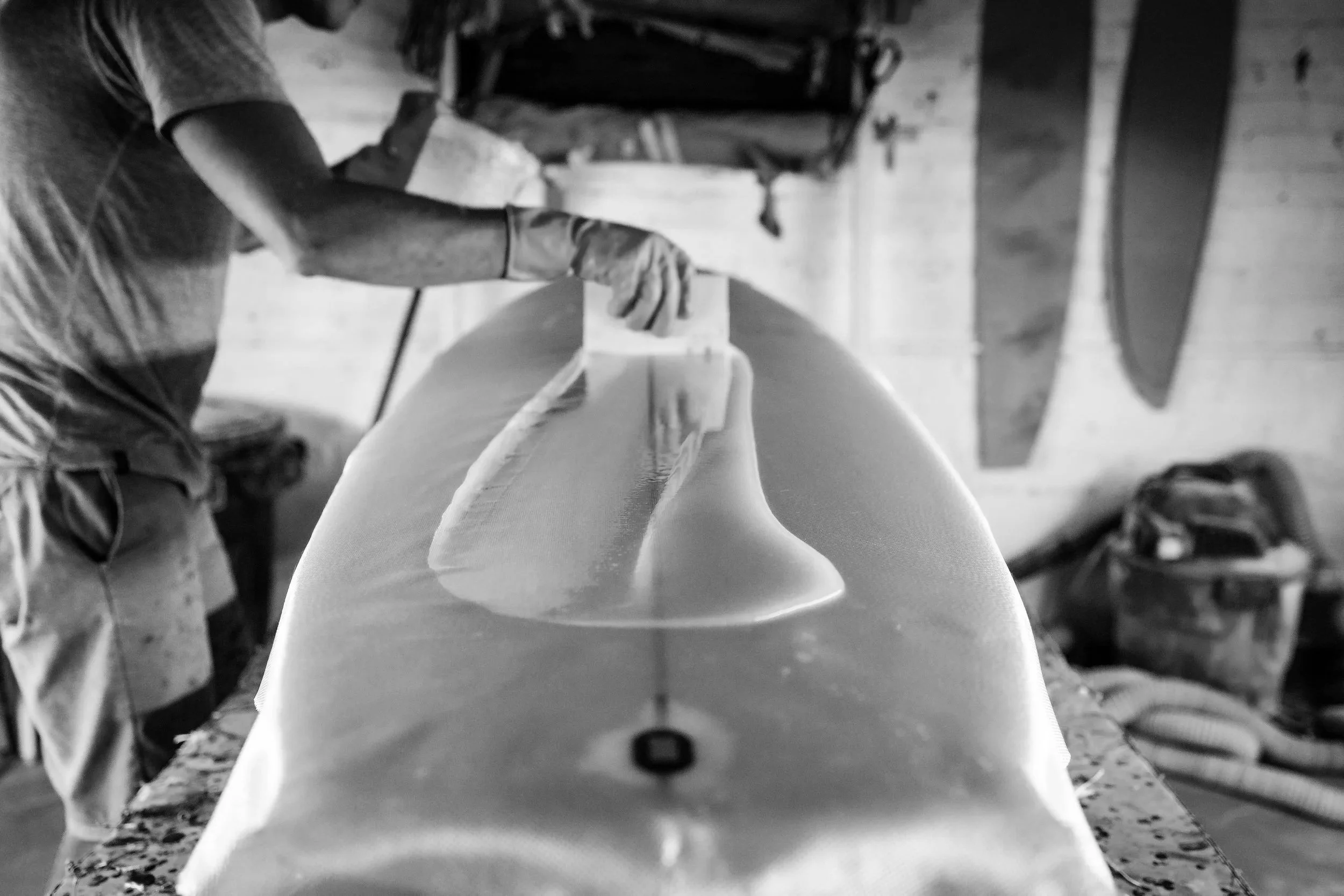
Creating the shell around the core.
Individual manufacturers will put their own spin on the configuration of these elements, sometimes adding layers of cloth, filler materials, etc. But in almost every case, they’re still using the same basic three elements: core, resin, cloth.
Here are the most common options for each of these three categories and what they mean for your surfing.
Surfboard Cores
For most modern surfboards, the core is made of some type of foam. And the type of foam used has a significant influence on how the finished board feels — how it sits in the water, how it responds to your input, and how it carries momentum.
I’d say the core is the most important part of any surfboard after design for those reasons.
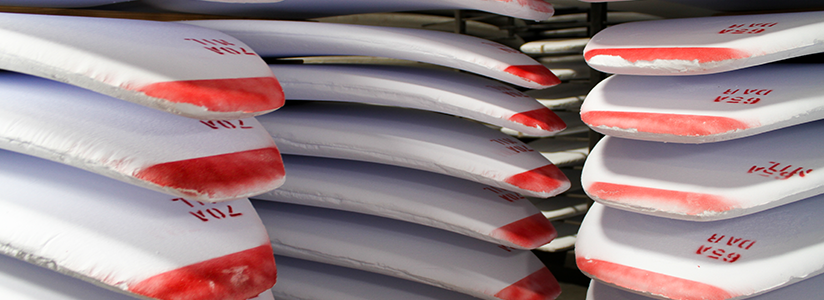
Polyurethane foam blanks from US Blanks
PU (Polyurethane)
PU has been the standard in surfboard construction for decades, and for good reason. It surfs smoothly in all conditions, dampens vibration, and carries momentum nicely.
PU comes in a variety of densities, ranging from lightweight for shortboards to ultra dense for big wave tow boards. PU blank manufacturers don’t usually share the actual density measurements of their foams, but from what I can tell, a standard weight PU foam is somewhere around 3lbs per cubic foot.
PU is water resistant and the preferred material for most shapers because it's easy to shape with precision. It will likely be around forever for these reasons.
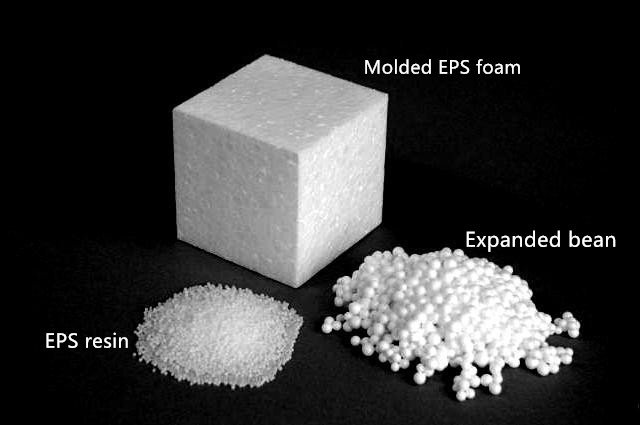
EPS (Expanded Polystyrene)
EPS is beaded styrofoam that’s compressed together into a shape. It also comes in a variety of densities, but the EPS that most shapers use in surfboards is typically less dense than PU (1.5lbs - 2.0lbs), which means it sits higher in the water and feels more responsive underfoot.
Some surfers love the performance they get out of EPS — the board reacts much quicker to every movement you make, which is great if your goal is “snappy” surfing.
The tradeoff is that it doesn't carry momentum or handle choppy conditions as well as PU, which can reduce the versatility of the board. And for some surfers EPS’s responsiveness ends up feeling “twitchy.”
Note: EPS's extra buoyancy also makes it well suited for freshwater conditions like you find in wave pools or on the Great Lakes (provided you get clean-ish waves at your spot).
XPS (Extruded Polystyrene)
XPS is made from the same base material as EPS but extruded into a single block of foam rather than beaded and fused together. This results in a denser, “closed-cell” foam that isn’t porous like EPS.
XPS sits somewhere between EPS and PU in my experience — closer to PU in feel, but similar in buoyancy to EPS.
It's less common than either of the above and generally only available through XTR these days, but it’s worth knowing about and considering. I’ve had a few XTR boards over the years and they’re great.
Varial Foam
Varial deserves a mention here because it was, in my opinion, the most significant leap forward in surfboard construction since PU foam was originally introduced.
Varial is an aerospace-grade foam — used in rockets — that is completely waterproof, extraordinarily strong, and remarkably light. The boards it produced had a flex and feel unlike anything else I've ridden.
Unfortunately, Varial went out of business after the company they licensed the foam technology from pulled the plug. Keep an eye out for used Varial boards if you can find one, they are incredible.
Wood
Before foam, balsa wood was the core of choice for surfboards. And in some applications, it’s still relevant.

Photo courtesy of Surf Research
Balsa is light for wood, but much denser and heavier than foam you find in surfboards these days. So it’s most commonly used in boards where density and weight are an asset rather than a liability (big wave guns, longboards, tow boards, etc).
Agave is also becoming more popular as a core material these days, as it’s properties are similar to balsa.
However, wood is generally much more expensive than foam and harder to source, so most blank companies have developed PU foams that have a similar weight and density to woods like balsa as a cheaper alternative.
Resin
Most foam cores are too delicate to be surfed on their own. So once a blank is shaped, the foam has to be protected with a shell around it.
The most common material for creating this shell is resin.
However, you can’t just use resin alone — it’s not strong enough by itself to protect the core. So we have to use a cloth of some kind to reinforce it.
I’ll explain cloth choices in a second. But first, let me walk you through the two resin choices you’ll have and why you’d choose one over the other.
Polyester (PE)
Polyester (Silmar 249) is the most common resin used in surfboard construction. It's cheap, readily available, and easy to work with in a wide range of temperatures and climates.
It has a nice rigid flex pattern and is cosmetically beautiful when finished correctly.
However, it's also a brittle resin, meaning it dings easily and is prone to cracking when it contacts a hard surface (like a door frame in your house).
It’s also somewhat toxic to work with.
Epoxy
Epoxy resin is 7x stronger than polyester, and is more flexible as well, meaning a board made with it resists dings and retains its flex longer than a board made with PE. It’s also less toxic than PE.
The tradeoffs are cost and cosmetics. Epoxy is typically ~2.5x more expensive than polyester and has a plastic look to it, so finished boards generally look less “high end” than they would with polyester.
Epoxy also takes longer to cure than polyester, which slows down board production. And since the surfboard business is generally a volume game, this is less desirable for most manufacturers.
Resin-Core Compatibility
It’s worth noting that you can’t use polyester with certain core materials. Specifically, EPS or XPS — it will melt the foam. This video illustrates what happens when you try to:
Epoxy, however, can be used with any core material on the list above. Which brings up an important point that needs to be addressed.
You'll often hear EPS boards referred to as "epoxy boards," making it sound like the foam and the resin are the same thing.
They're not. The foam core and the resin are two separate decisions.
The reason EPS boards are often associated with epoxy is that epoxy is the only resin compatible with EPS foam. But you can also glass PU foam with epoxy resin and the results are great. I glass all of my boards this way.
Reinforcement Cloths
As I mentioned above, resin is not strong enough to create a shell around the core of a surfboard on its own. So we need to add cloth to the resin to reinforce it.
The most common cloth used for this purpose is fiberglass, because it provides the best strength to weight (to cost) ratio. However, it is far from the only cloth available or in use these days.
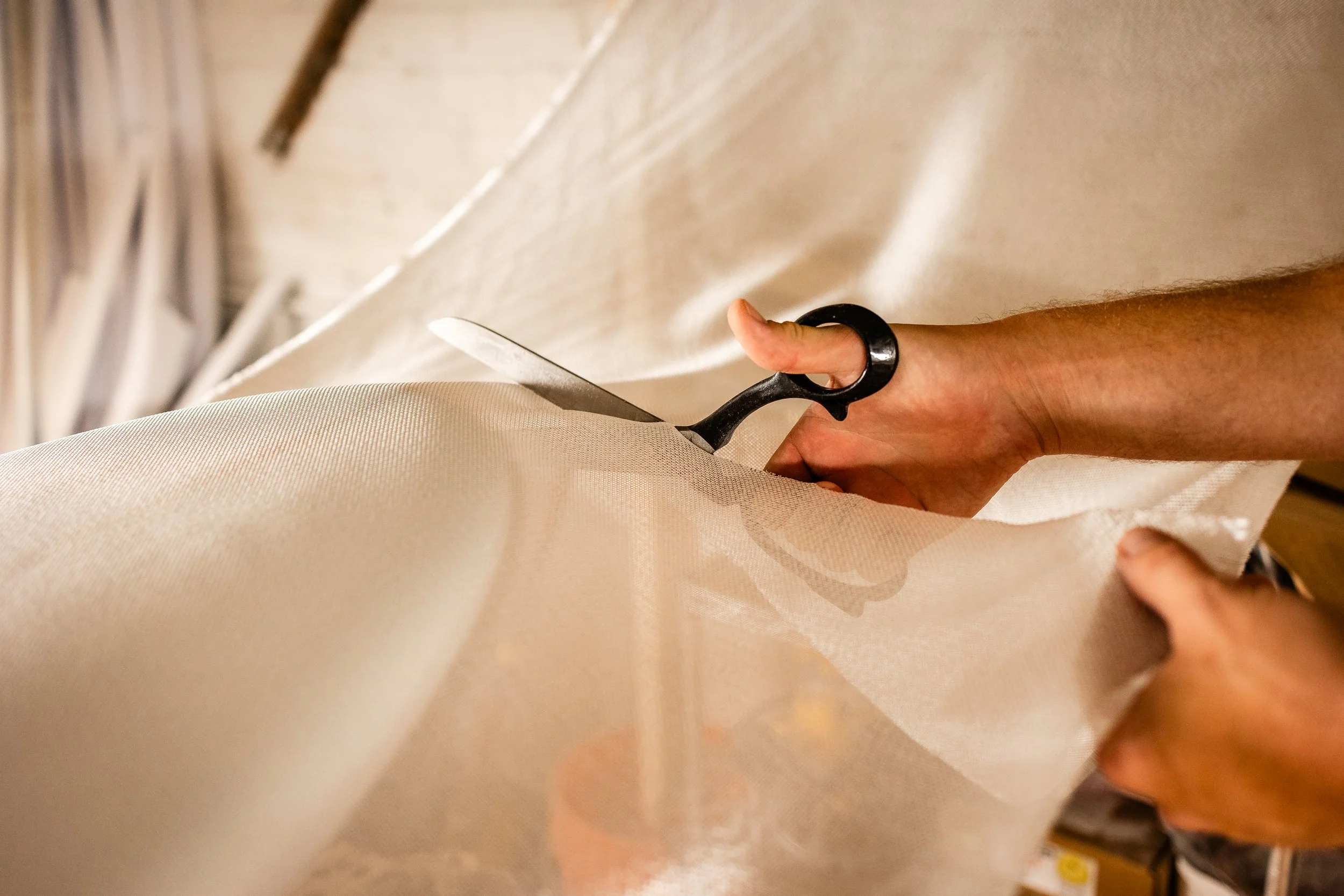
Trimming fiberglass cloth for lamination
Here’s an overview of what you’ll have as options and what you need to know about those options:
E-Glass: E-glass is the standard fiberglass cloth used in most surfboard construction. It's widely available, affordable, and produces a board with good flex when used with polyester resin. Most boards you've ridden were probably glassed with E-glass and polyester.
S-Glass: S-glass is roughly 20-30% stronger than E-glass, which means more durability without adding weight. All of my boards are glassed standard with S-glass, and the durability difference is notable.
Carbon Fiber: Carbon fiber cloth has become increasingly popular in recent years, either added to the rails, layered into the deck, or as the main cloth for a glass job. It adds stiffness and strength without adding significant weight, and is often used strategically to engineer a specific flex pattern in a particular part of the board.
Eco Cloths: A growing number of shapers and brands are experimenting with plant and mineral-based cloth materials as the industry looks for more sustainable options. Flax and hemp are plant-based fibers that produce a slightly more flexible laminate than fiberglass with a lower environmental footprint. Basalt fiber, derived from volcanic rock, is often used for strength and vibration dampening properties.
Each of these cloths come in different weights, measured by how much each square yard weighs in ounces. For fiberglass, the most common weights are 4oz, 6oz, and 8oz. Alternative cloths vary.
Manufacturers will typically combine different cloth weights to reinforce and shape the flex of the board.
Stringers
Most boards also have what is known as a stringer (a spine that runs down the middle of the core) which reinforces it, giving it extra strength.
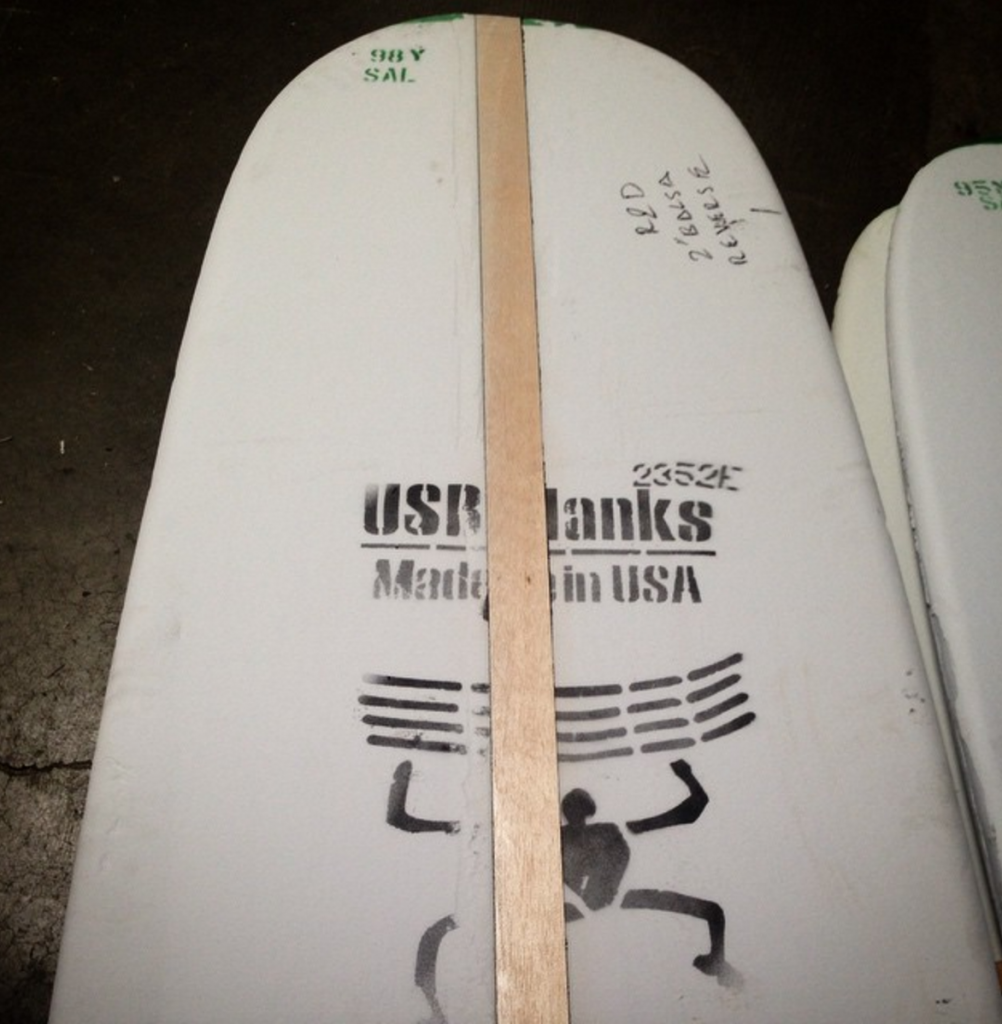
A gorgeous 2 inch balsa stringer in a longboard blank
Most traditional PU boards have a single stringer, and it's a big part of what gives them that familiar, stable feel. Some longboards and guns will have three or more stringers for aesthetics and strength, because more stringers mean more rigidity (and look cool AF).
Some shapers also experiment with stringer placement — moving them toward the rails rather than the center, for example — to engineer a specific flex pattern.
Stringerless boards remove that spine entirely, which tends to give boards an interesting “twang” if you’re used to riding boards with stringers.
Personally, I’ve found that when you get the right shape for the waves you’re surfing, having a stringer is generally an asset, not a liability for the average surfer.
Alternative/Hollow Constructions
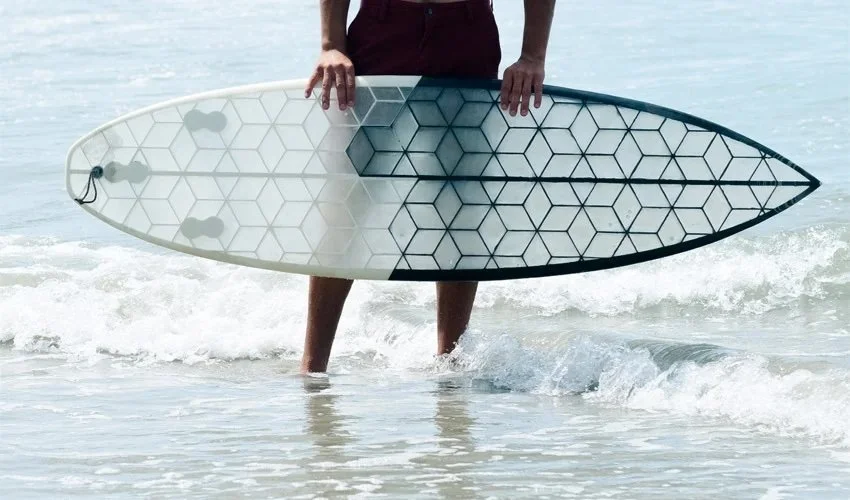
A 3d printed surfboard from Wyve
Some manufacturers are experimenting with uncommon construction techniques. For example, 3D printing is beginning to make inroads into surfboard manufacturing. And some shapers exclusively build hollow-core, wood-veneered surfboards.
Hollow constructions like these tend to share the same performance characteristics as ultra light weight foam cores — responsive, almost to a fault, depending on what you’re looking for.
Choosing a Construction
There’s no wrong choice on any of the above when you’re ordering a new board. But here is generally how I approach construction selection whenever I’m building one for myself, helping a customer, or ordering one from another shaper.
1. Start With The Core
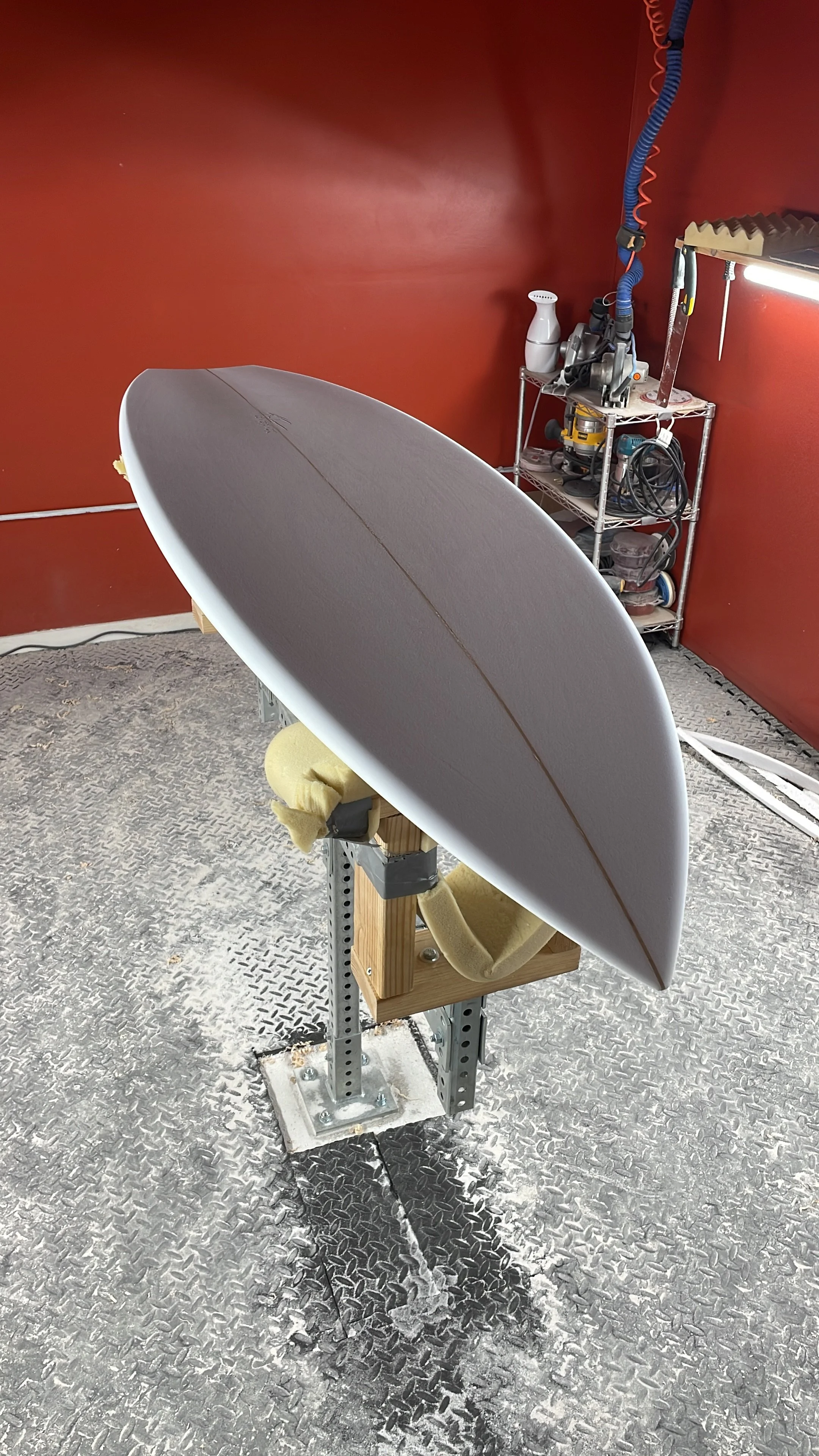
Freshly handshaped PU core soon to become a Flux Barracuda
The core is the most important part of the board and I generally choose it by considering the goal of the surfer and the board design itself.
If you want board that is responsive (immediate feedback, the board reacting to every movement you make), a lighter, less dense core is the way to go.
EPS or low density PU are a good choice. EPS will generally be lighter and more responsive than low density PU, but PU will feel better when there’s some texture on the surface of the wave.
If you want to be a bit more of a passenger on the board (i.e. a board that carries you rather than reacts to your every movement), you want a denser core. PU foam for sure, generally “standard” weight or heavier (check out US Blanks foam densities here).
This isn’t a hard and fast rule — you can surf smooth on a light core. It’s mostly a “feel” thing. And it’s worth noting that bigger boards will carry more momentum because they’re heavier by default.
But all else being equal, this is what to expect.
EPS vs PU
One thing worth understanding is that the difference between EPS and PU is largely a density difference.
Most manufacturers use low-density EPS because it's cheaper and because ultra-light is often the goal when you're building with EPS. But EPS actually comes in a range of densities, and if you gave most surfers two boards built from cores of the same density — one PU, one EPS — the difference would be harder to detect than most people think.
XPS vs EPS
EPS is a great choice if you’re trying to go ultralight weight. But one of its major disadvantages is that when you ding your board, the small air gaps between the beads of foam often soak up water like a sponge.
XPS doesn’t have this problem because it is extruded into a solid block — no beads, so no air gaps allowing water to penetrate the core (PU has a similar cell structure that prevents most water absorption, but not as much as XPS in my experience).
So density considerations aside, it’s worth thinking about the durability of the board from this perspective when you’re ordering. With XPS, you can keep surfing if you have a ding. But not with EPS.
2. Pick A Cloth Layup Schedule
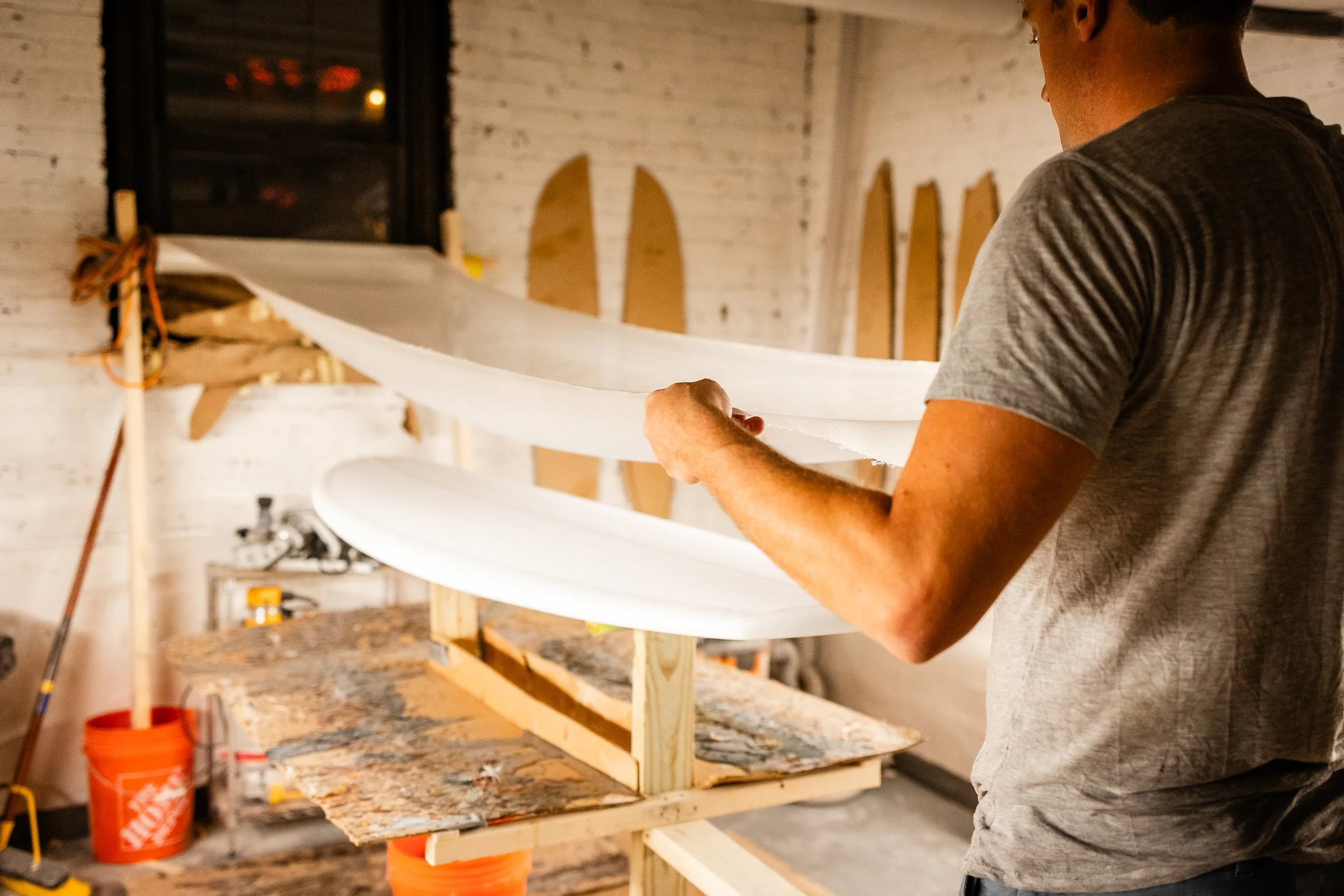
Pulling the cloth on a custom handshape for the Great Lakes Surfcraft project.
Once I know what core density I’m going with, I typically pick the layers and weights of the fiberglass cloth I want next.
Lighter glassing schedules produce a lighter weight board with more flex that will ding and dent more easily. Heavier glassing weights produce a more durable board that holds up better over time but carries more weight and sacrifices some flex.
Lighter = more responsive. Heavier = more momentum.
Here's how most manufacturers approach glassing schedules for different board types you’ll see on the racks at your local surf shop:
Shortboards: 4oz+4oz on the deck, 4oz on the bottom (4/4-4). Sometimes 4-4 on pro builds.
Step-ups/hybrids: 6/4-4. A bit more substance for more powerful waves or extra durability.
Midlengths and single fins: 6/4-6 or 6/6-6. These boards are built for momentum and durability.
Longboards: 8/8-8. The extra weight works with the board rather than against it, adding to the glide and momentum that makes longboarding what it is.
I glass all my personal boards 6/4-6 regardless of shape or purpose. I’ve found that the durability and flex this layup provides works well for me with the resin and cloth types I typically use (epoxy + S-glass).
But this is a personal choice for someone who is 6’3” 210lbs and very heavy footed. A lighter surfer could go for a board that’s glassed lighter for similar performance.
Note: It’s worth mentioning that while the glassing schedule has a big influence on the durability of the board, the best way to reduce pressure dents is to pick a denser core. Think about it like this: if you put fiberglass and resin over concrete, would it dent?
3. Choose a Resin
Depending on the core you’ve chosen, resin choice can be pretty straightforward. If you went with EPS or XPS, epoxy is your only choice. But if you went with PU, you have options.
The way to think about the differences between the epoxy and poly is by considering the properties of glass versus plastic.
When glass bends, it cracks almost immediately. There’s very little room for deflection. And that’s similar to how polyester resin behaves. Assuming everything else equal, a PE board will feel more rigid. And when you dent the board, the resin cracks, reducing the strength of the board.
Epoxy behaves more like plastic — it flexes, absorbs impact, and returns to its original shape to a greater degree before it gives out. This means epoxy will feel more lively by default, and will hold its flex pattern even when the board dents up a bit (prolonging its life).
Beyond performance, it’s really about cost and appearance. If you don’t want to spend the extra $$ on epoxy or want that glossy candy coated look, poly is the way to go.
S-Glass vs E-Glass
You’ve probably noticed me hint at S-glass being stronger or my preferred cloth multiple times now. And the reason for that is because I’ve found that when combined with epoxy resin and a PU blank, it creates a surfboard that’s really the best of all worlds.
Epoxy is a stronger resin, but less rigid. It can bend without breaking, but it also bends easier than poly resin as a result. So the decks of boards made with epoxy and E-glass tend to dent up quicker than poly and E-glass.
I’ve found that pairing S-glass with epoxy solves this. You get a board that flexes like a traditional poly/E-glass board, but resists pressure dents and dings way better.
For example, one of the first Trash Panda’s I made got blown out of my hands before a session and bounced off the parking lot. I picked it up expecting the worst, and to my surprise, the only damage to the board was a few scratches in the hotcoat.
How to Talk to Your Shaper About Construction
If you've read this far, you're already ahead of most people who are ordering a custom. And this knowledge gives you the ability to ask better questions and have a more informed conversation with whoever is building your board.
That said, at the end of the day, you’re probably not going to spec out every component in this article from scratch. Nor should you. Shapers have spent years — often decades — figuring out what works and why. And that experience is worth leaning on.
But, if you know what you like or want to try something different, don’t be afraid to ask for it. There have been times when I’ve insisted on a lower density core or a heavier glass job than would typically be used for the design of the board and I’ve almost always been pleased with my decision because I knew why I was asking for it.
So always keep in mind why you're buying the board and what you're hoping to get out of it. The best board you'll ever ride may not be the one everyone else is riding.
Cheers,
Scott