

Surfboard Tail Shapes: How They Affect Performance and Feel
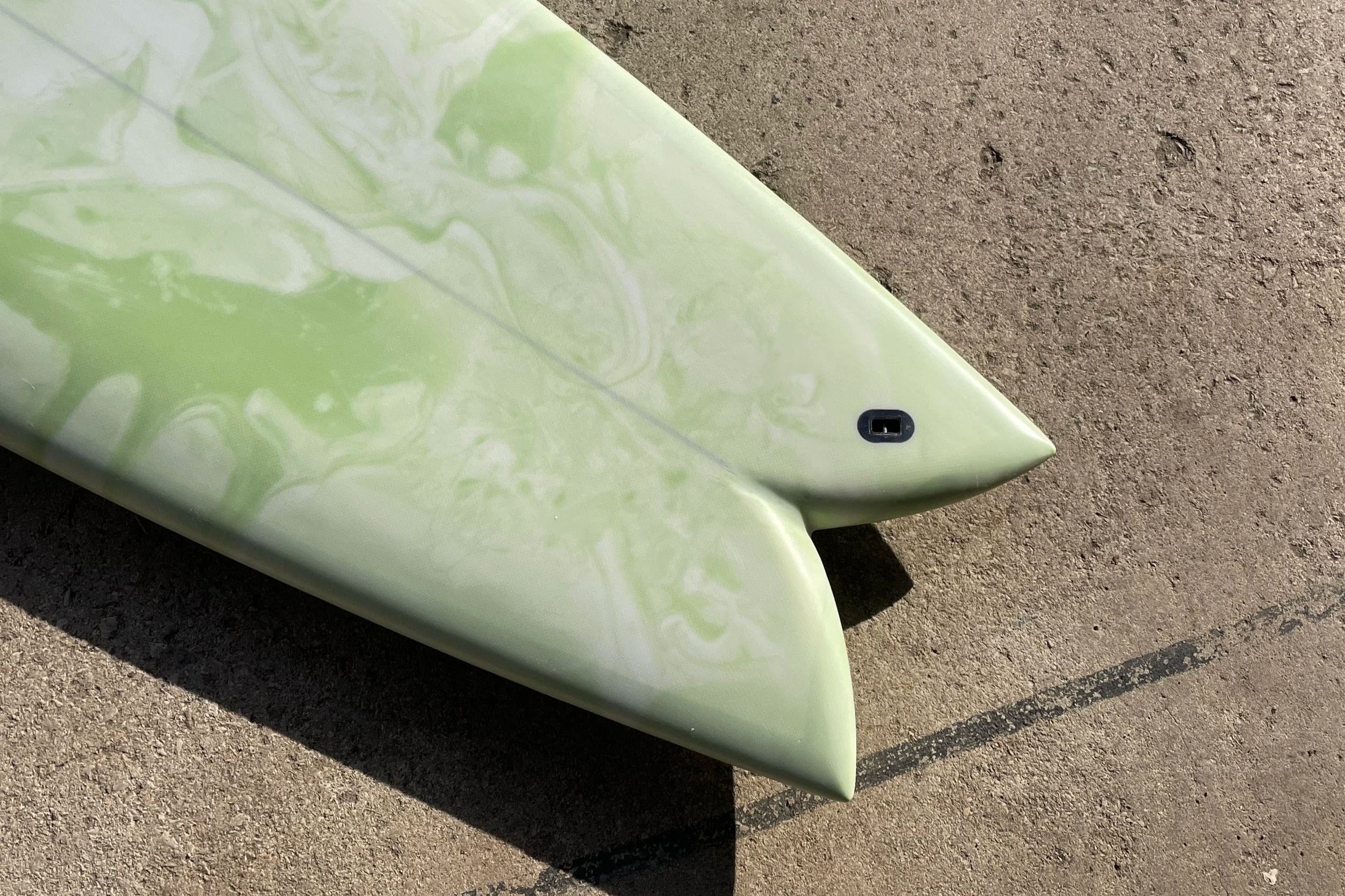
A surfboard’s tail shape is often one of the first things people notice. But it’s also one of the most misunderstood parts of a board because of this.
While the shape of the tail does impact performance and is important, it has a more specific effect on how a board feels/works in the water than most people think.
In reality, the difference between one tail shape to another on any specific model is less important than most shapers often care to admit for the average surfer.
I know that’s a bold claim. And, I’m not saying it doesn’t matter — just that it’s not as important as it’s visual significance would suggest.
Here’s what you need to know about how a surfboard’s tail shape affects performance before you order your next board.
How Surfboards Turn, and the Role of the Tail
In order to understand how the tail shape affects surfboard performance, you need to first understand how a surfboard actually turns.
That’s determined by two specific elements working together: the template and the rocker.
Think of the board’s template like the rudder on an airplane and rocker like its flaps.
Template controls the yaw axis — the side to side pivot of the board. Rocker controls the roll axis — how the board rolls over on rail and the arc a board follows through a turn.
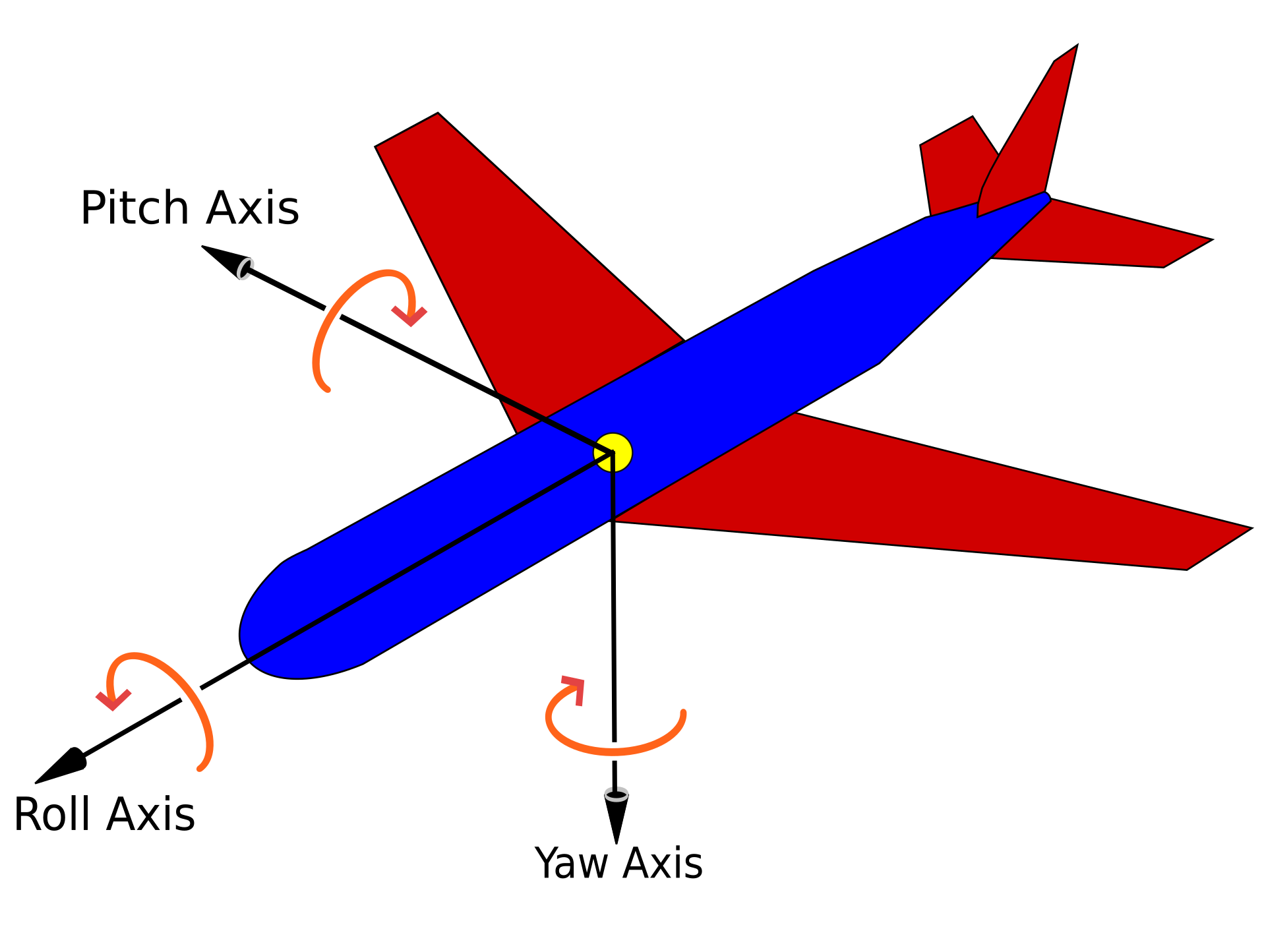
The tail shape is part of the template, so it impacts the yaw axis (side to side motion) of the turn — but in a very specific way.
Whereas the template as a whole controls the overall way a board turns, the tail shape primarily controls what happens when you load your back foot in a turn.
Think about the difference between a carve and a snap. In a carve, your weight is distributed fairly evenly between both feet and you're driving off the rail between your feet. But in a snap, you drop your weight back and pivot off the tail. That's when the tail shape really has an impact.
So when we talk about tail shape affecting how a board turns, what we really mean is: tail shape controls the way a board releases on the yaw axis during a back foot-heavy turn.
And much like a curvier template means a tighter arching turn, a sudden curve change in the tail — like the corner on a squash tail — creates a release point on the yaw axis. So when you load the back foot and the board reaches that point, it swings around quickly off that point.
A gradual curve change in the tail, like a rounded pin for example, means there is no sudden release point until the very tip of the tail, so the board holds its line and draws a longer arc even when you go back foot heavy.
You can apply this logic to literally any tail shape to understand how it might affect a board’s performance (which we’ll do a bit later).
The Role of Tail Width
Before we get into the different types of tail shapes, it’s important to differentiate shape from the overall width of the tail (the last 12 inches of the board), because width actually has a much greater impact on performance than shape alone.
For example, if you have a really narrow tail, with a tiny little squash/square shape on the end, it’s going to pivot more like a rounded pin than an ultra wide wide squash tail would.
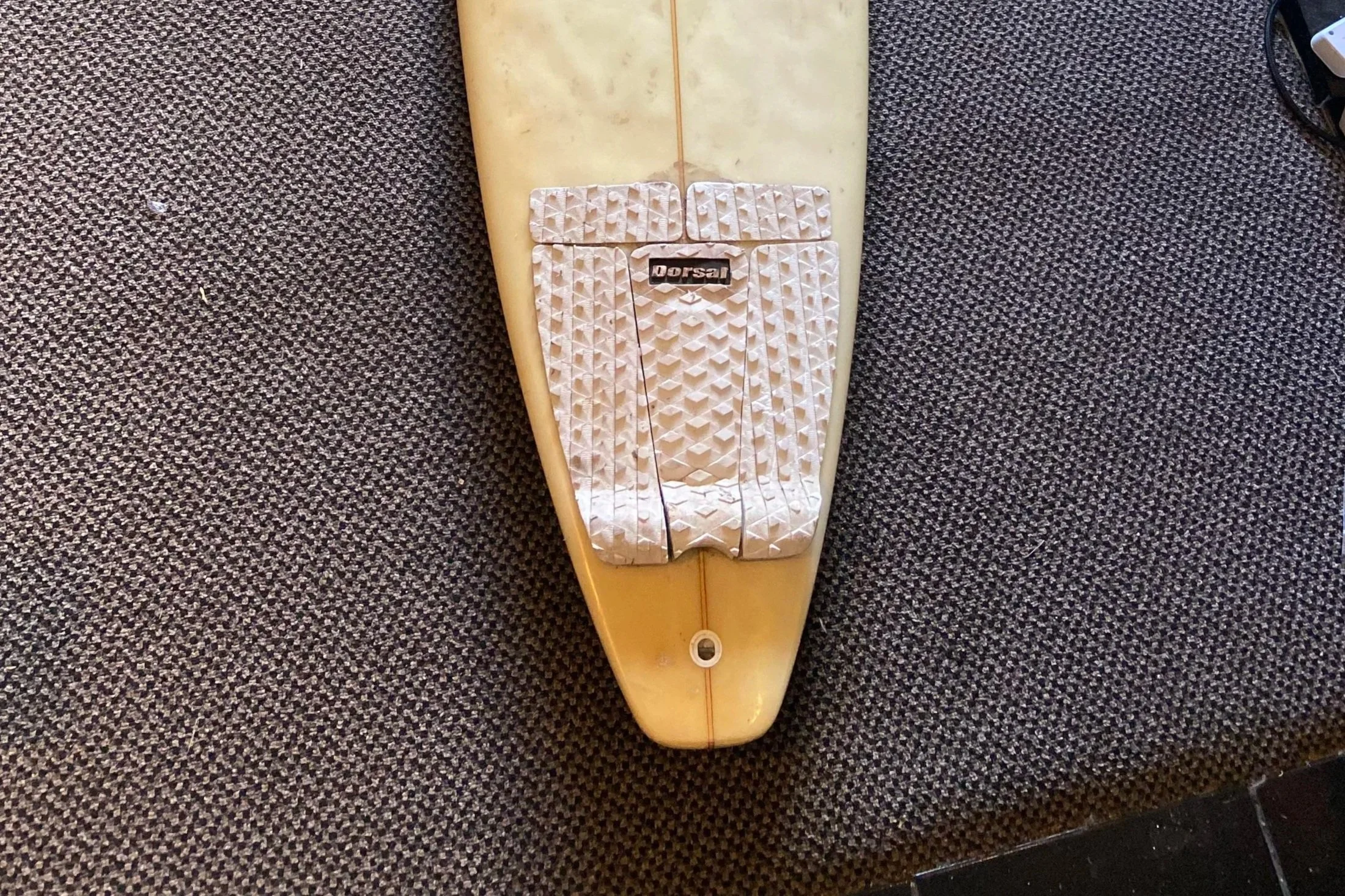
This ultra-narrow squash tail will act more like a rounded pin with a little extra pivot than a traditional wider squash does.
This logic applies to any tail shape. The narrower the tip of the tail is, the more it’s going to feel/perform like a rounded pin/pin tail (assuming the curve is unbroken from nose to the tip of the tail of course).
Tail width also controls more than just how a board turns. It’s an important element when you’re tuning a board for powerful vs weak surf. But for the sake of this article, I’m explaining it from the perspective of how it affects the turning radius of the board.
The Tail Shape Performance Spectrum
One of the most useful frameworks I’ve found for thinking about tail shapes is as a spectrum from most pivot to most hold.
The spectrum runs like this: square → squash → diamond → round → pin. Each shape has less release than the shape before it, but more release than the shape after it when you load up your back foot.
I want to be clear that this is a framework for reasoning through performance, not hard science. It assumes tail width and rocker are constant across the comparison, which in the real world they never quite are unless you’re deciding between tail shapes for a specific model/design. And there are of course shapes that blur the line between these.
But, it gives you a way to think through any tail shape you encounter, and that's the point.
Also: swallow tails are a bit of a different animal — they branch off the square end of the spectrum rather than sitting on it, so I’ll start with the classic square tail, work through the spectrum, and address swallow tails in their own section at the end.
Square Tails
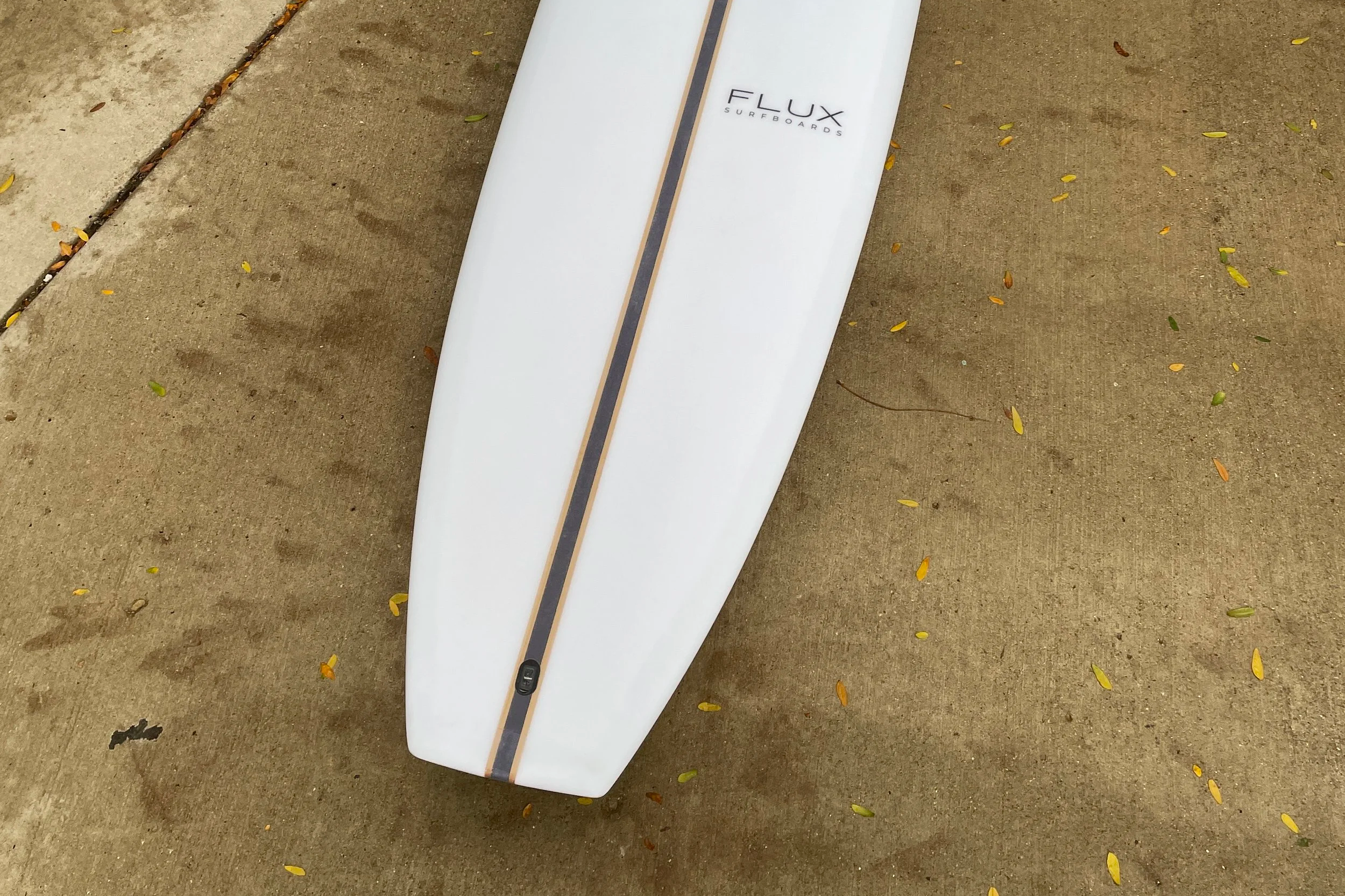
A classic square tail on a Flux Cali Plank
The hard, 90-degree corners on a square tail provide the most defined release points of any shape — maximum pivot/snap when you load the back foot.
The tradeoff is that those same hard corners can make it squirrely at speed. The release point that feels great in a snap can catch you off guard when you're flying down the line.
Square tails are less common in modern surfing for that reason — most shapers migrate towards a squash tail. But it's worth understanding because it anchors the spectrum and explains where both squash and swallow tails came from.
You most commonly find square tails on classic longboards these days to enable those quick pivots to reposition the board in the pocket.
Squash Tails
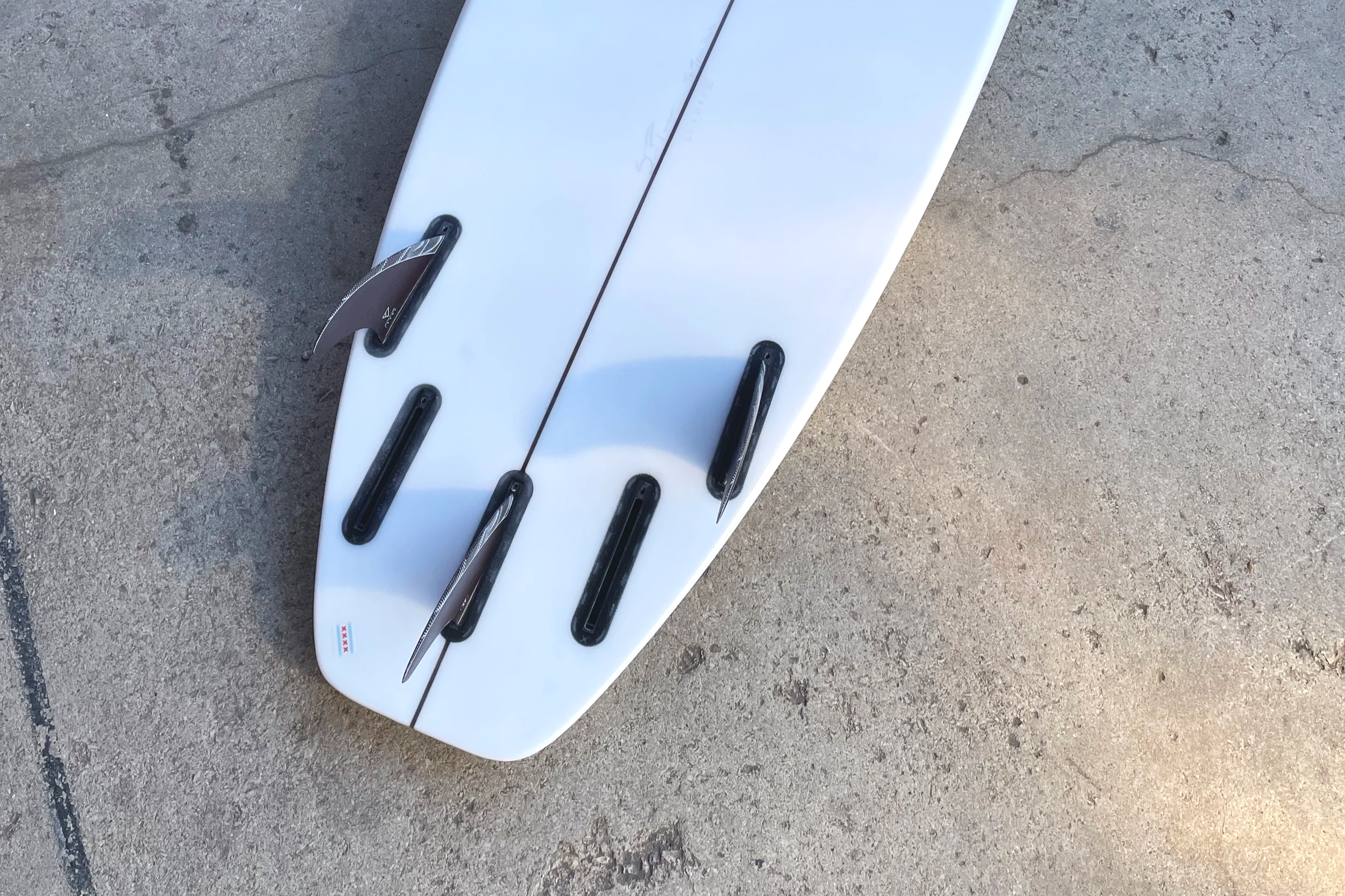
A wide squash tail on a Flux Trash Panda
A squash tail is just a square tail with the corners rounded off. This smooths the release slightly, but maintains the straighter rail line behind the fins, which gives you projection, and a defined curve change at the corners.
You'll hear squash tails described as the most versatile shape out there. I fundamentally disagree with that. In my experience, they need a wave with a defined pocket to work well, because the pocket gives the pivot somewhere to go.
You load the back foot, the board snaps around, and you drop right back down, like coming back down from the lip of a half pipe.
But that quick pivot can become a liability in mushy or hollow surf. For example, in flatter face surf, or if you’re way out on the shoulder, and the board pivots too quickly, there’s nowhere to go (no pocket to drop back into). And in hollow surf, sometimes the tail can release when you don’t want it to.
So while it’s a great tail shape for snappy performance surfing, they do take a little bit of experience to surf well in my opinion.
Diamond Tails
Diamond tails pull in the corners slightly compared to a square/squash, which softens the release point without eliminating it entirely.
This makes a diamond tail a bit more predictable than a squash or square across a wider range of conditions, but with a little more snap than a round tail. So if you want something between those two — a touch of pivot without the squash's dependency on a specific type of wave — the diamond is worth considering.
The diamond tail doesn't get much attention, which is a shame because it's actually a very functional shape. It's underappreciated mostly because it's not the most of anything. But that's also kind of the point.
It’s also worth noting that the overall feel of a diamond tail will depend on how smooth/sharp the points of the diamond itself are (similar to the performance differences between a square tail and a squash tail). Softer points yield less aggressive pivots and vice versa.
Round Tails
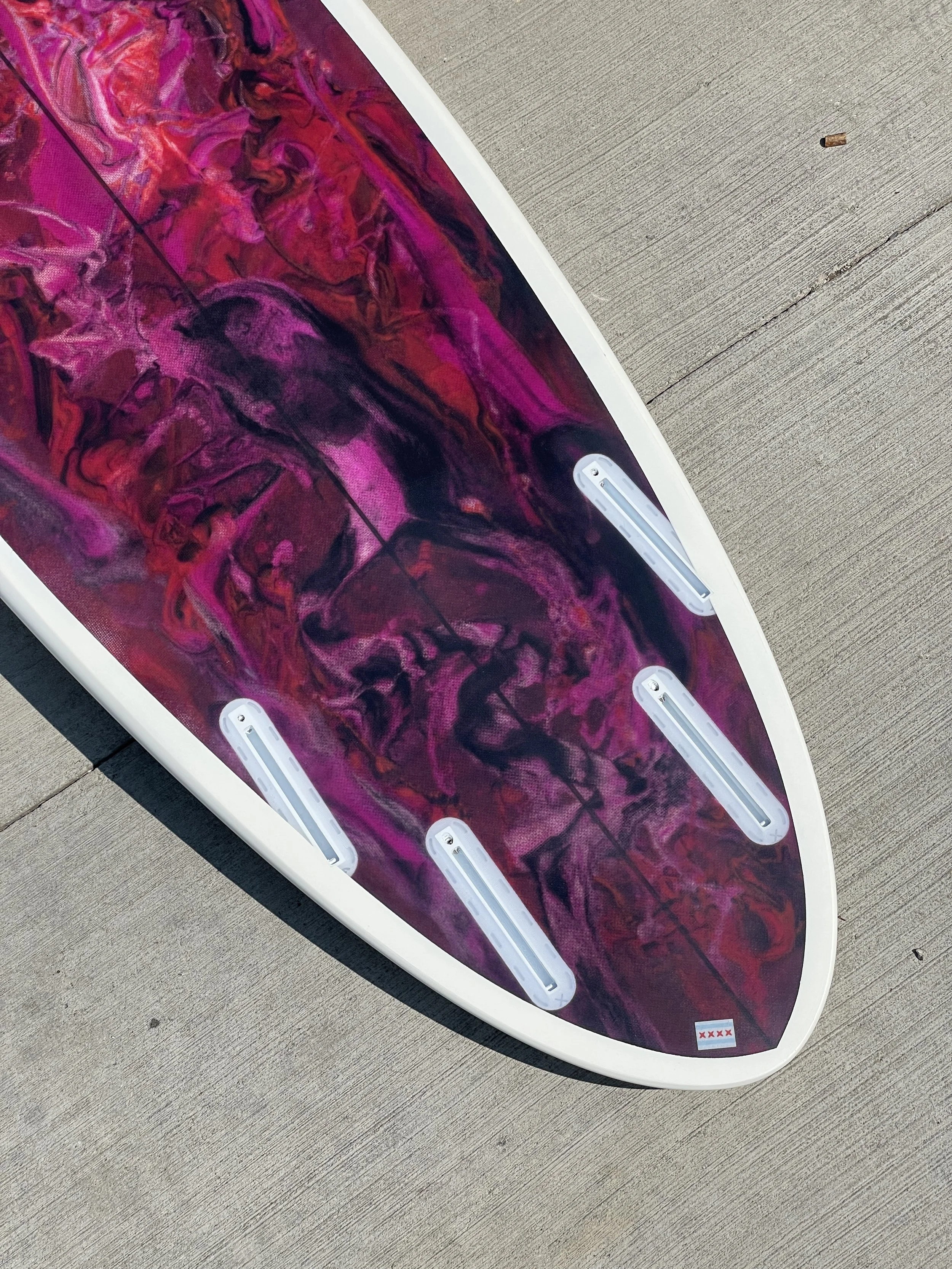
A round tail on a Flux Tobiko
Round tails have a smooth, continuous curve all the way to the tip. No hard corners, no sudden curve changes — which means no sudden release points. When you load the back foot, the board doesn't snap around. It draws a smooth, predictable arc.
Some people find that boring. Personally, I think it’s the most versatile tail shape out there.
Because there's no sudden release point, a round tail doesn't pop out in mushy surf the way a squash does. So the lack of a pocket doesn't matter as much. And in hollow surf, it holds a line rather than releasing when you need it to stay put.
But, round tails still release off the lip when the rocker and tail width are right for the waves you’re surfing— just not as aggressively as the square/squash/diamond tails.
I ride round tails on most of my own boards. They suit the way I surf and they work in the widest variety of conditions of anything on this spectrum, while still allowing for enough pivot to keep things interesting when there’s a pocket on offer.
Pin Tails
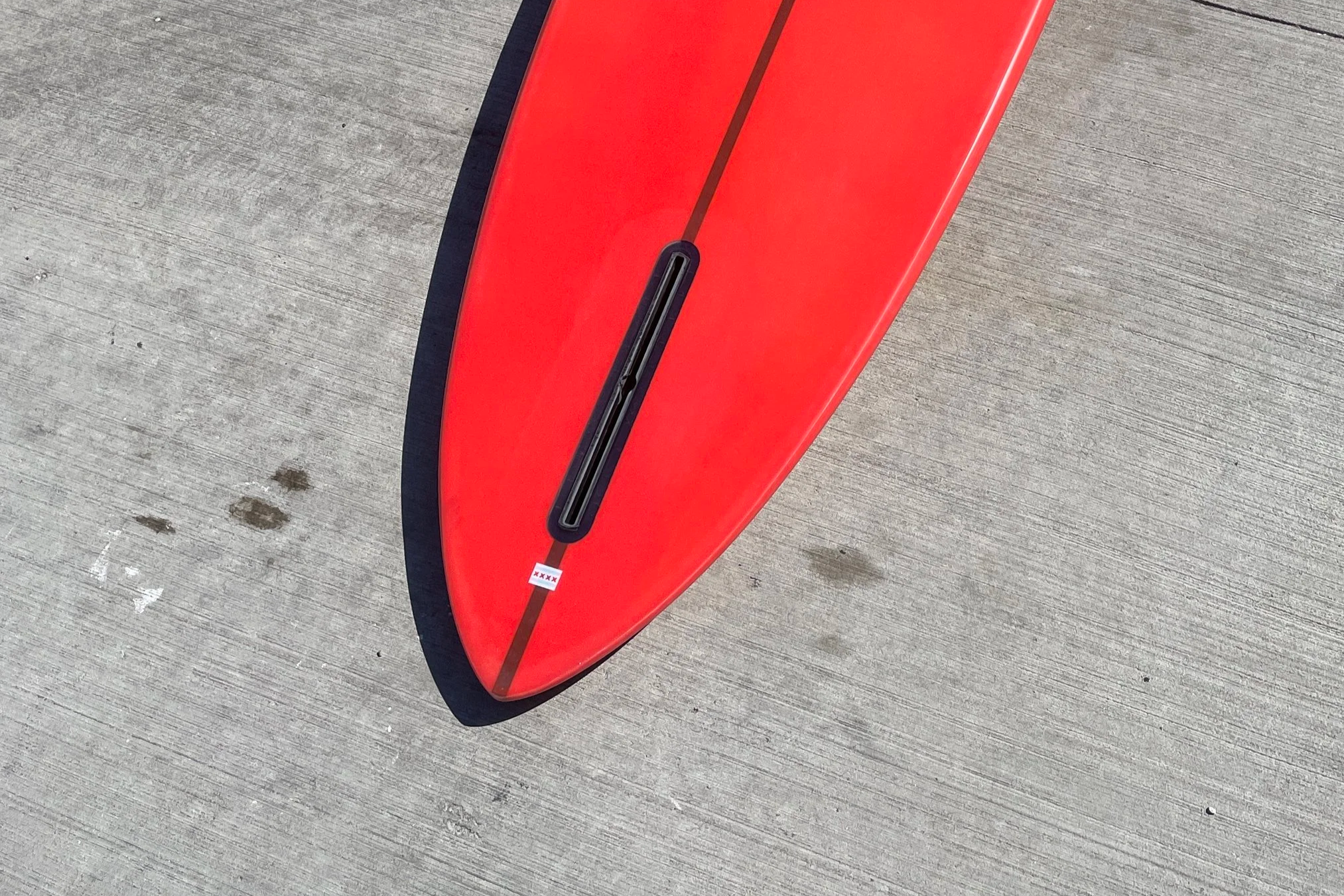
A wider/fuller pin tail on a Thor’s Hammer
The pin tail takes the round tail logic to its extreme. The curve runs all the way to a sharp point — no sudden release points whatsoever. Maximum hold, minimum pivot.
Pin tails are generally most useful in powerful surf. When you're in big, fast, powerful surf, you already have more speed than you need — the problem is controlling it. So you want a tail shape that is going to hold a line.
However, I also like pintails that carry width further back on midlengths and longboards as well when I just want to cruise. You’re generally not doing snaps on these kinds of boards anyway, so having the extra hold in the tail when you’re trying to manage a lot of foam can be an asset.
Swallow Tails
A classic wide swallow tail on a Flux Muse
A swallow tail is basically a square tail with the middle cut out of it, leaving the pivot points but sharpening them into dual pin tails. So instead of those corners releasing, they bite into the wave.
The result is an entirely different feeling from any tail shape mentioned above: projection and hold simultaneously on rail, rather than pivot and release.
They do pivot. But the points of the tail stay down in the water more than they would with a square tail or squash tail. They claw into the wave, rather than redirecting the water flow off the tail.
I used to ride swallow tails almost exclusively. I love that drivey, down-the-line feeling when you're on rail. But eventually I switched to preferring round tails because they give me similar projection through turns but with a rounder, more complete arc.
Asymmetrical Tails Explained
Asymmetrical tails exist because of a simple mechanical reality: you turn differently on your heel side than your toe side.
On your toe side, you have more leverage. You can really drive through a turn, engage the rail, and generate projection. On your heel side, you have a little less leverage.
Asyms account for this by giving each side of the board a different tail shape. The heel side is typically pulled in more for control. The toe side stays wider for projection.
A common example would be a rounder tail on the heel side and a swallow point on the toe side — more hold where you need it, more drive where you can use it.
The easiest way to think through how any asym tail will feel is to just apply the spectrum to each side independently. Whatever shape is on your heel side, that's how it'll behave on a heel side turn. Same for the toe side. Once you have that framework, an asym stops being a mysterious specialty item and starts being a pretty logical solution to a real problem.
Note: A common misconception about asyms is that they only turn one direction. They don't. They turn both ways — they just turn differently depending on which side you're on. Which is actually the whole point.
How to Choose a Tail Shape
It really comes down to one question: when you load your back foot, what do you want the board to do?
When you order a board, you're trusting that the design is right for the waves you're surfing it in. So tail width isn't really your call — it's set by the shaper based on the conditions the board is designed for.
And, for this reason, slapping a squash tail on a step up or a gun isn’t going to make it suddenly work in small waves. Similarly, putting a pin tail on a groveler won’t instantly make it a barrel board.
But if you’ve picked the right design for the waves you want to surf, the tail shape can augment the performance of that design to make it perform differently:
If you want snap — a quick, defined pivot off the top — you're looking at the square end of the spectrum.
If you want drive and projection on rail with some bite, a swallow is worth considering. Particularly if you surf a lined-up, down-the-line kind of wave.
If you want a smooth, predictable arc that works in the widest variety of conditions — hollow, mushy, small, overhead — you're looking at the round end of the spectrum.
If you want to surf waves with serious size and power behind them — and the design will work in those waves — go with a pin tail.
If you're not sure where to start or what you’re looking for, I’d highly recommend a round tail.
I ride them on most of my own boards and I recommend them to most of my customers. They're the most forgiving, the most predictable, and the most likely to work well no matter the conditions.
That said, you can’t reduce performance — even back foot performance — to a single design element. Rocker, width, and rails all interact with the tail’s shape in ways that are specific to every board.
So use this as a starting point, then have a conversation with a shaper. That's how you actually dial it in.
Cheers,
Scott