

How much does it cost to build a surfboard (and is it worth it)?
I started right where you are 7 years ago.
Since then, I’ve built 150+ surfboards and my own (small) factory.
In my experience, the only real answer to the questions “What does it cost to build a surfboard?” and “Is it worth it?” is “it depends”:
It depends on the size of the board you make
It depends on the materials you choose to build your board from
It depends on how many tools you have
It depends on how many tools you want to buy
It depends on whether you want the board to last or not
It depends on whether you want the board to surf well or not
It depends on why you’re building your own board in the first place
I could go on, but I think you get the picture.
Here’s what I will say: building a surfboard is not a cheap endeavor. Material costs alone will run you $200+ on the low end. So if you’re doing it to save money, don’t.
But it is 100% worth it if you’re in it for the experience and the board you make ends up being really fun in the water. Surfing well on a board you made yourself is one of the best feelings in surfing!
Here’s an honest look at the math behind building your own surfboard from someone who built his own and kept going.
Surfboard material and tool costs
There are two different processes (and costs associated with them) to consider when you’re trying to calculate the cost of building your own surfboard: shaping and glassing.
I’ve broken out the costs you should expect for both (materials and tools combined). The exact number will depend on the specific board you want to build, but it will land somewhere in these ranges:
Shaping Total: $264.00 – $369.00
Glassing total: $306.50 – $441.50
Total cost to build your own board: $570.50-$810.50
I’ve broken down how I’ve arrived at these numbers in the following sections.
You can absolutely go cheaper. And the bulk of the cost is tools, so if you have some of the tools listed below, the costs start dropping rapidly.
But take it from someone who has f*cked around and found out — skipping items on the lists below will test your sanity and your board likely won’t turn out as nice.
Here’s what you need and what it costs to build a board that’s “worth it” on your first try (in my experience).
Shaping costs
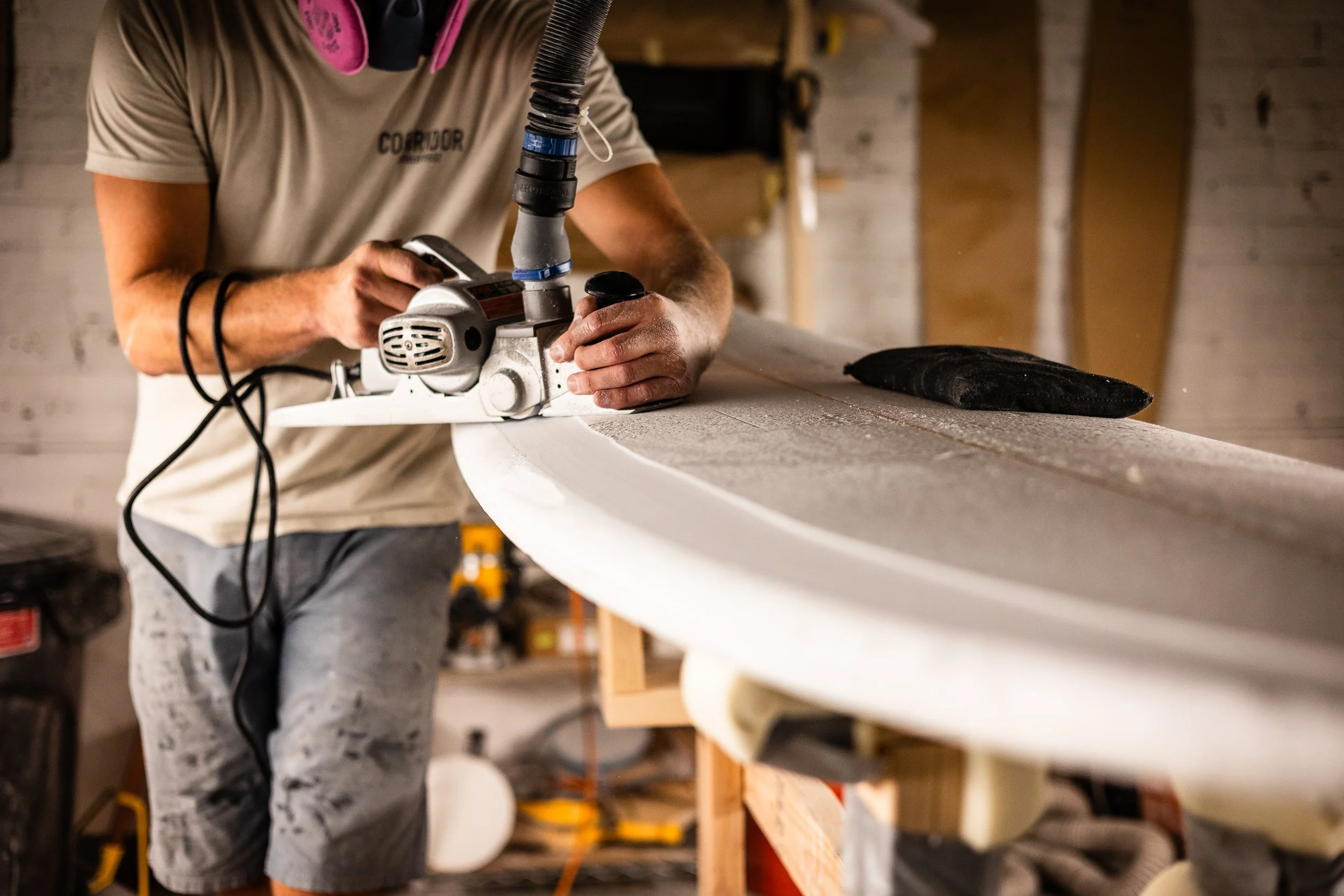
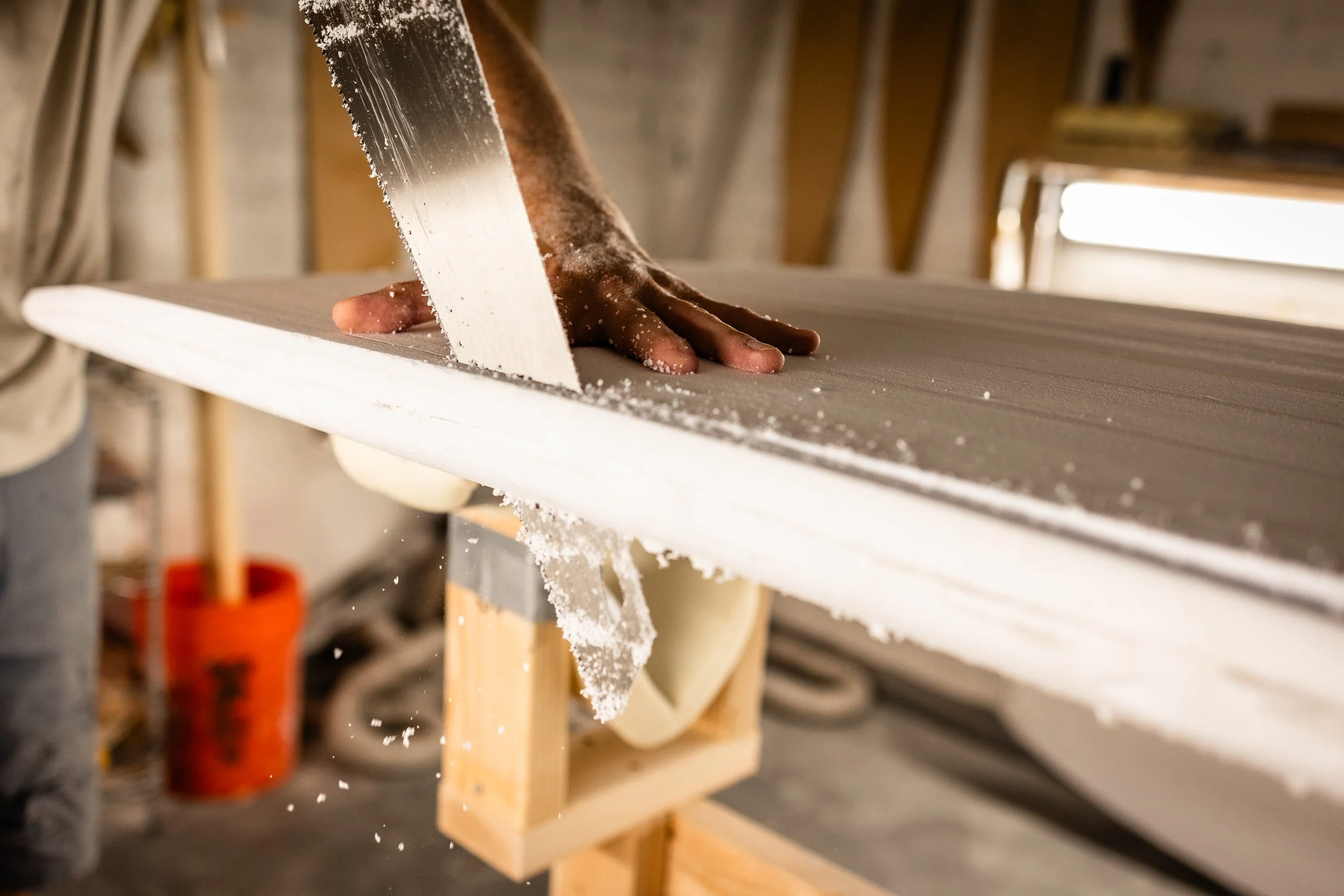
Skinning the blank during the shaping process
For the shaping process, I’m referring to everything that goes into transforming a piece of foam into a shaped but unglassed, surfboard.
For this process, you’ll need 1) a foam blank and 2) a few tools. All of the tools are available at your local hardware/big box store except for one (the sanding block):
Materials:
Blank: $95–$200
Tools:
WEN electric planer: $50
Stanley trim plane: $10
Flexpad sanding block (hard and soft block in one): $38
Sandpaper (80/120 grits): $11
Handsaw: $15
Shaping stand (built from 2x4s, buckets, concrete): $35
N95 dust mask: $10
Your garage: $0 + significant other approval for making a mess
Shaping Total: $264.00 – $369.00
This list assumes you can source a blank locally. Shipping blanks is pricey (I need to order at least four blanks to make it worth it where I am). Factor in at least $300 for shipping polyurethane blanks by freight if you can’t source locally.
I order my PU blanks from Foam EZ. Brad and the team are great to work with.
If you want to save some money on shipping and are ok with shaping an EPS board (and the extra cost for epoxy glassing), Greenlight will ship you a single deconstructed blank you can glue up yourself.
What to cut if money is tight
If you’re on a budget, the only thing on this list I’d even consider trying to save money on is the sanding block. You can make your own for sure, but the Flexpad is basically a cheat code to a better board for not that much money.
Do not skip the planer if you want to make a halfway decent board. A planer is your most accurate tool. And if money is a consideration, they make cheaper planers than $50. But $50 buys you a quality planer that’s ready to go right out of the box.
Glassing costs
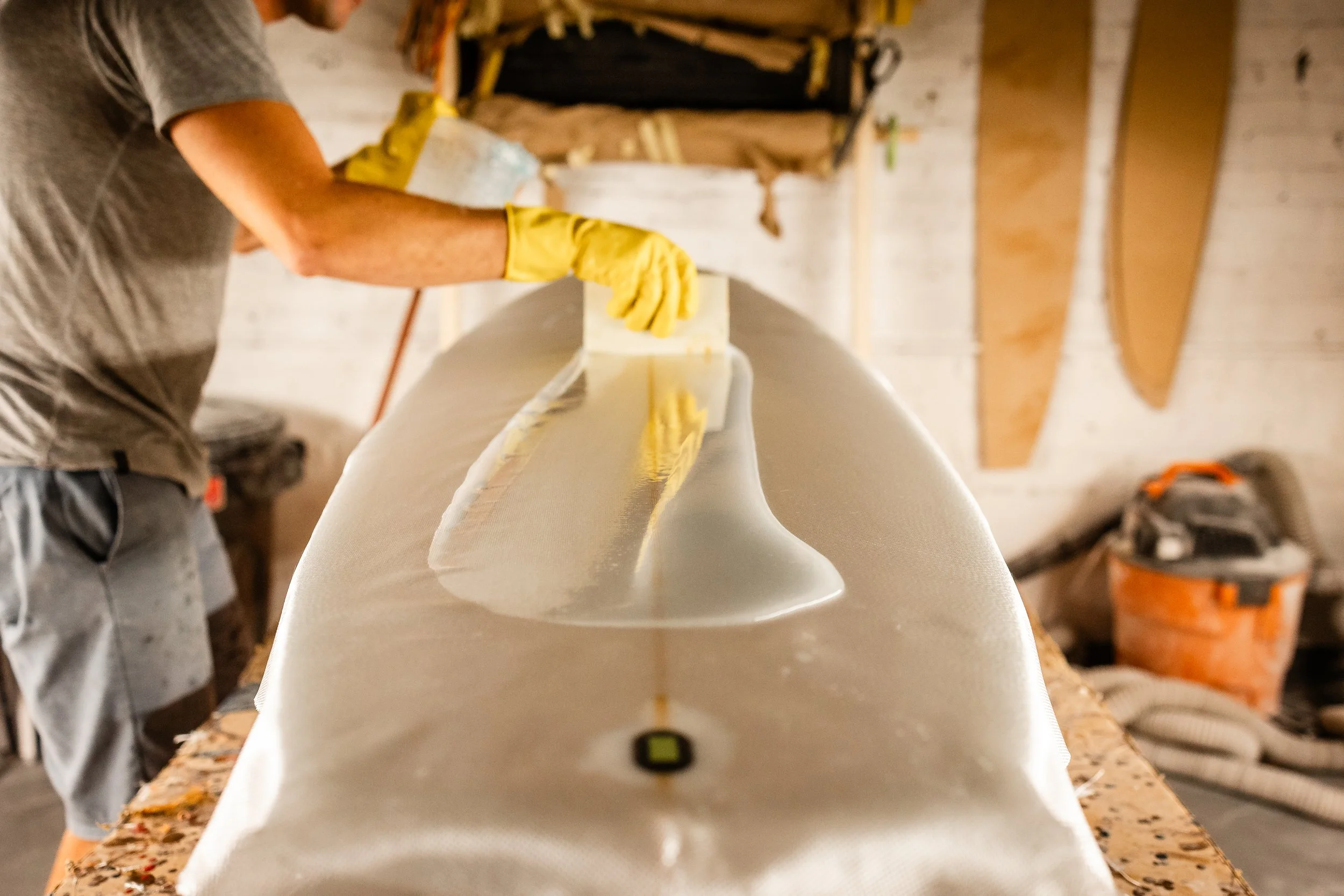
Laminating the deck during the glassing process
Depending on where you live, you can either glass the board yourself, or hand it off to a professional glass shop. Both are legitimate options, and the costs are closer than you might think on your first board (assuming you don’t have any of the tools).
Cost vary depending on how you want to set your board up and how big it is (bigger board, more materials). Here’s what to expect if you choose to do it yourself.
Materials:
Fiberglass cloth: $15–$50
Resin (poly): $30–$60
Fin boxes + leash plug: $20–$50
Tools:
Trim Router: $60
Orbital sander: $40
Fin router jig (Futures): $80–$120
Router bit (Futures): $60
Squeegee: ~$1.50
Glassing total: $306.50 – $441.50
Glassing costs vary significantly by size, fin configuration, whether you glass your own fins on, etc. There’s just no way to nail down a specific figure unless you know what you’re glassing, how you’re setting it up, and what tools you already have.
Most glass shops charge somewhere between $250 and $500 for a poly glass job, depending on the size of the board and the options you choose, like fin setups, resin color, gloss and polish, etc.
So on your first board, if you don’t have the tools already and don’t want to buy them, the difference between DIYing the glass job and outsourcing it is practically zero — largely because you'll be paying for a few expensive tools you'll only buy once. But on your second or third board, DIY glassing starts saving you $150–$200 per board.
The only thing you’ll pay extra in by outsourcing your glassing is time. Lead time on a glass job at a shop is often 1-3+ months.
What to cut if money is tight
The best way to save yourself some money on glassing is to make your own fins from plywood and glass them on. The bulk of the DIY glassing costs are tied up in fin jigs, routers, router bits, etc.
Same goes for the leash plug — you can build a leash loop with the leftover fiberglass and resin you’re already purchasing.
Choosing a PU blank will save you some money on glassing as well, assuming you can source one locally. Polyester resin does not work with EPS — it melts the foam — and epoxy is 2x more expensive than poly.
Is building your own surfboard worth it?
If you end up with a surfboard you actually enjoy surfing, absolutely. Otherwise you just paid a couple hundred dollars to make a mess in your garage.
Here’s the thing: the gap between those two has nothing to do with anything on the lists above. You can spend all that money (and more) and still end up with a sh*t board (I’ve done it).
But you can also absolutely build a board you’ll love surfing on your first try. It’s not that hard, it just takes the right knowledge.
Think about it this way. When you go to a restaurant, you're not just paying for the ingredients or the kitchen tools they use to prepare your meal. You're mostly paying for the chef’s ability to create something delicious with them.
Surfboards work the same way.
What makes a board worth the money is the design knowledge and craftsmanship that went into building it.
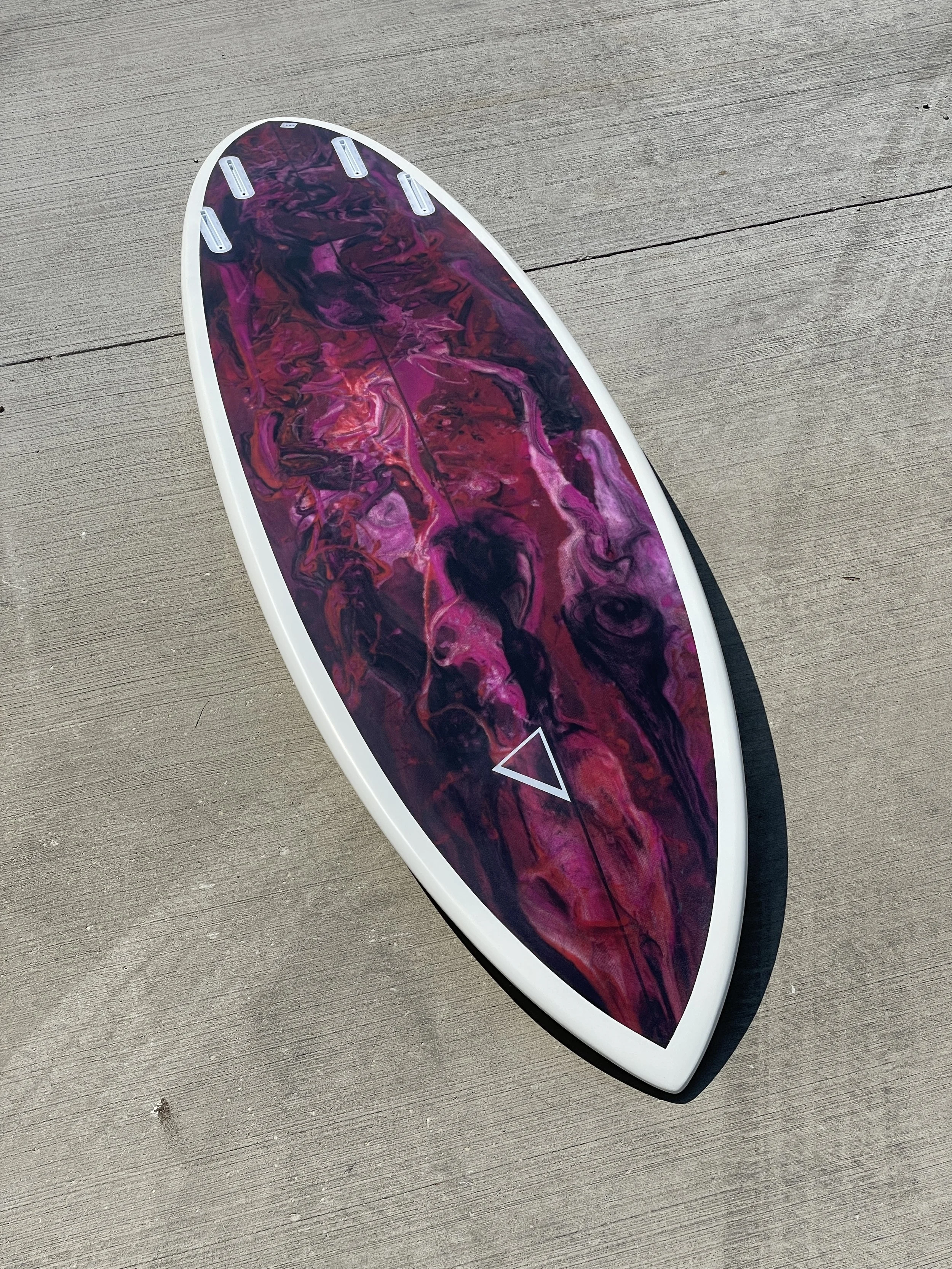
A board I made for myself recently.
Knowing where to start and stop the edge in the tail, how to set the rail apex, how much curve to put in the template, when to trim the laps for a clean lap line, etc. etc. etc.
That's what a shaper is really selling.
And when you build your own surfboard, you’re relying on your own expertise to ensure your investment in tools and materials pays off.
How to build a surfboard that’s worth it on your first try
Most people will tell you your first board is going to suck. Cosmetically, there’s truth to that — being a better craftsman is a lifelong pursuit. But you can absolutely build a surfboard that surfs well and looks great on your first try.
You just need three specific pieces of knowledge.
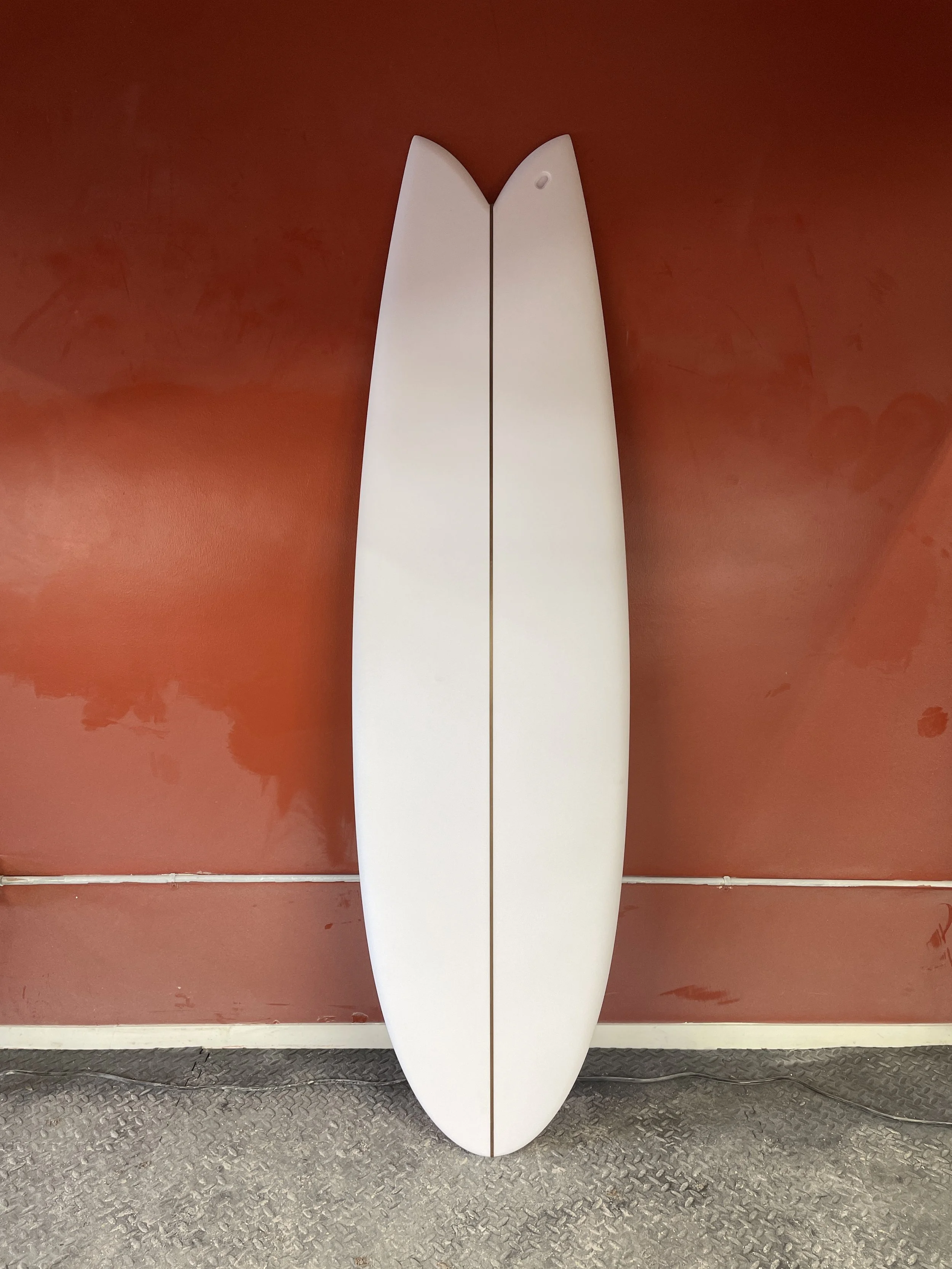
The first board my handshaping workshop participant ever shaped.
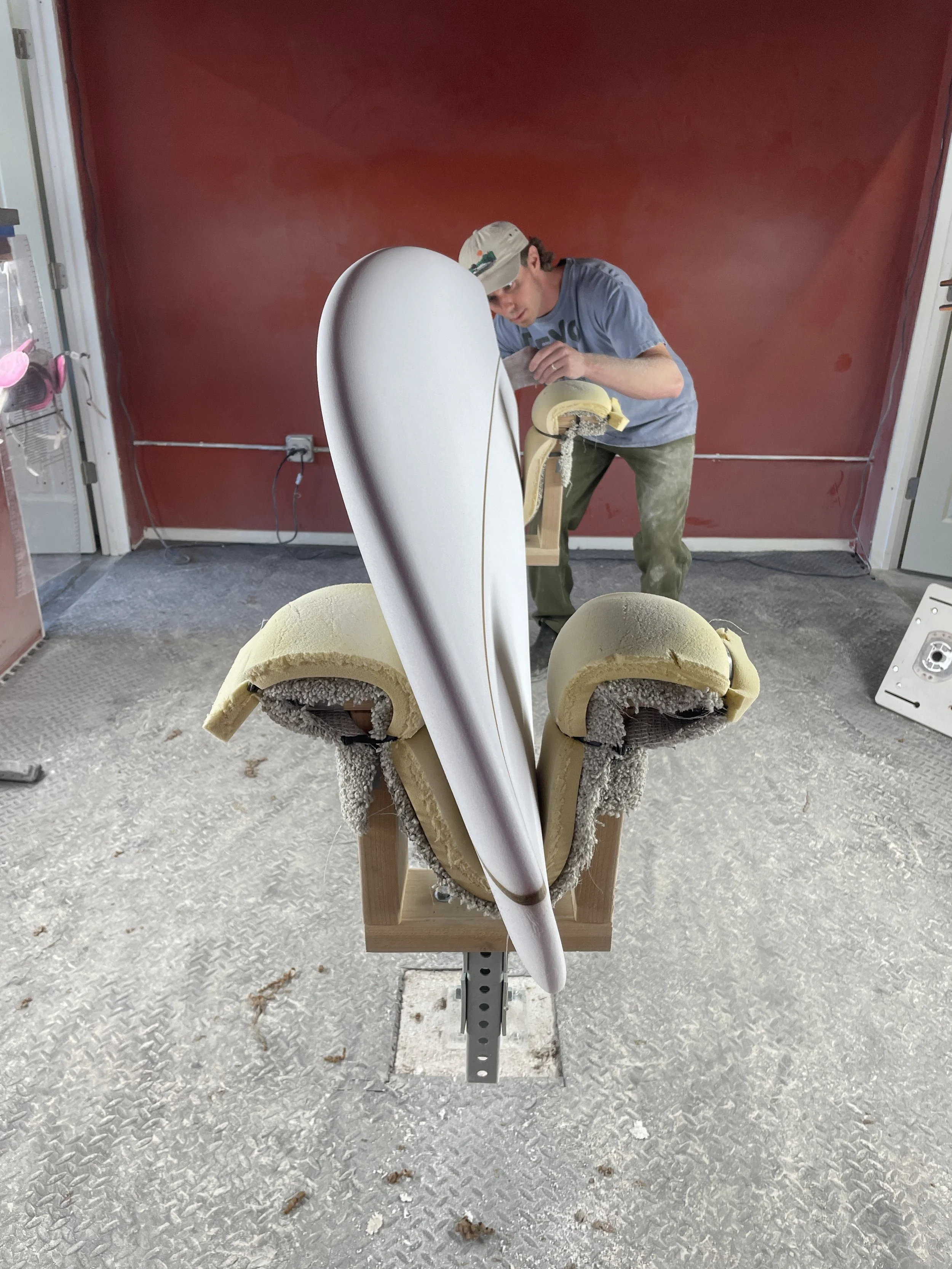
Super clean rails for a first handshape.
First, you need to know what you're trying to build and why.
Not just the overall dimensions, but what you're actually trying to achieve with the design — how you want the board to feel, what waves you're building it for, and what design decisions will get you there.
Second, you need a system for translating that design into foam and resin.
Shaping and glassing are cumulative processes — every step builds on the one before it. Get the outline wrong and the rails will never come out right. Get the lamination wrong, and sanding will be a nightmare.
Knowing how to execute each step correctly is what separates a board that is built well from one that isn’t.
Third, you need to know how to use the tools.
One swipe of the planer the wrong spot can ruin a board. But planers aren’t complicated, it’s just that no one shows you the technique for using it in the detail you need at each step of the process.
This information isn’t on YouTube
I’ve watched every shaping video on YouTube and read every “shape your first surfboard” guide twice trying to figure this out (literally) — I can tell you first hand that these resources leave out so much of what you need to know.
That said, none of the knowledge you need to build a surfboard you’ll love takes years of practice to learn. You just need someone to explain it to you clearly before you get started.
That’s why I've built a course that covers everything in a level of detail no one has ever shared before:
How each part of a surfboard works and how to think through your design to get what you want
A step-by-step system for translating that design into foam
The tools and specific techniques explained up close and in detail at each stage of the process
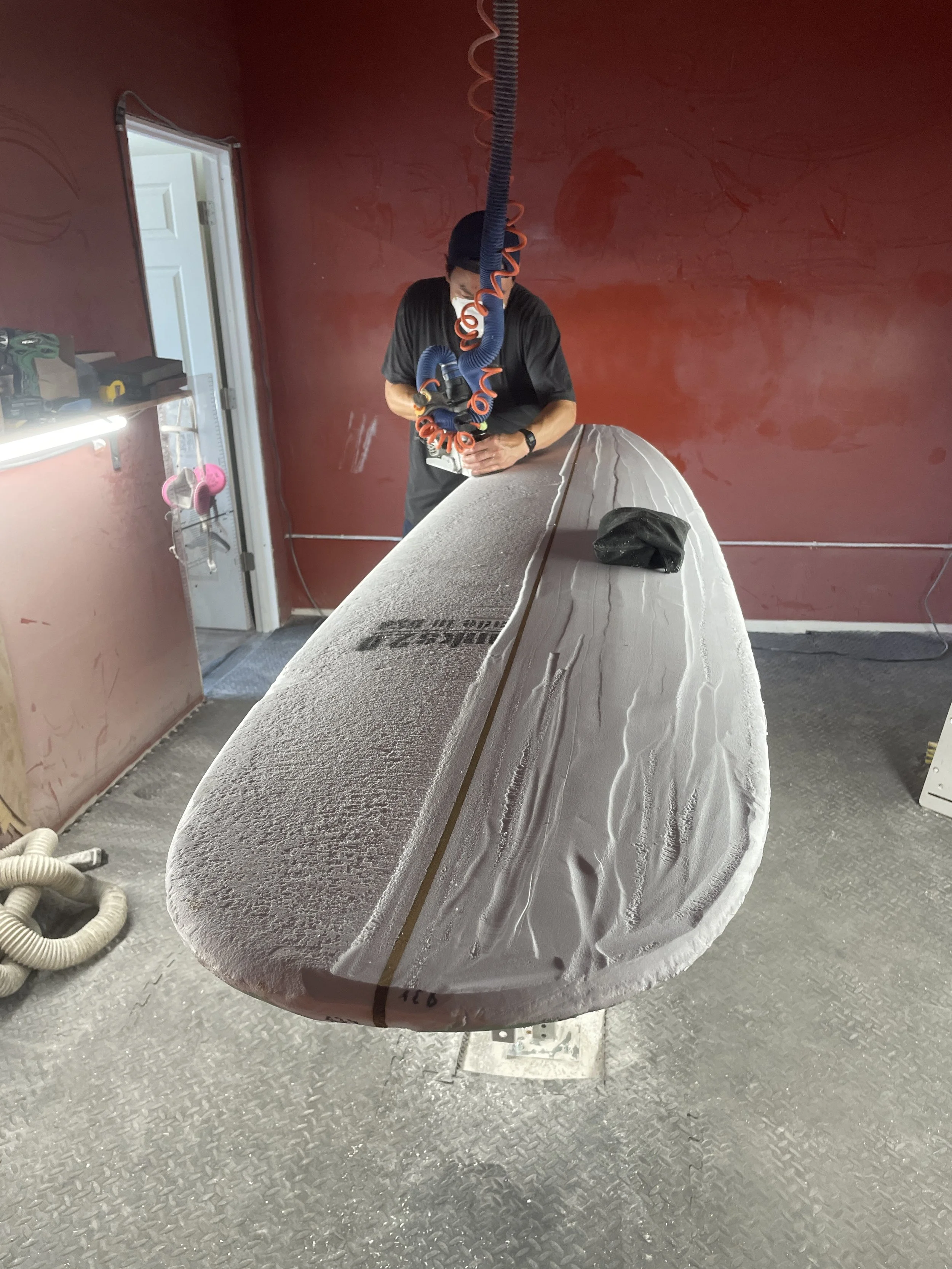
My handshaping workshop participant’s first time ever using a planer.
The goal is to give you what nobody gave me when I started: a clear foundation so that the money you spend on materials and tools actually produces a board you’ll enjoy.
Because the first time you catch a wave on something you built yourself and it actually works, it's a completely different feeling than anything you'll get from a board you bought.
And that feeling doesn’t get old. It’s why I’m still shaping years later, even though I’ve tried to quit more times than I can count.
Learn more about the course here.
Cheers,
Scott