

Yes, you can surf in Chicago. A local shaper’s guide to surfing the Windy City.
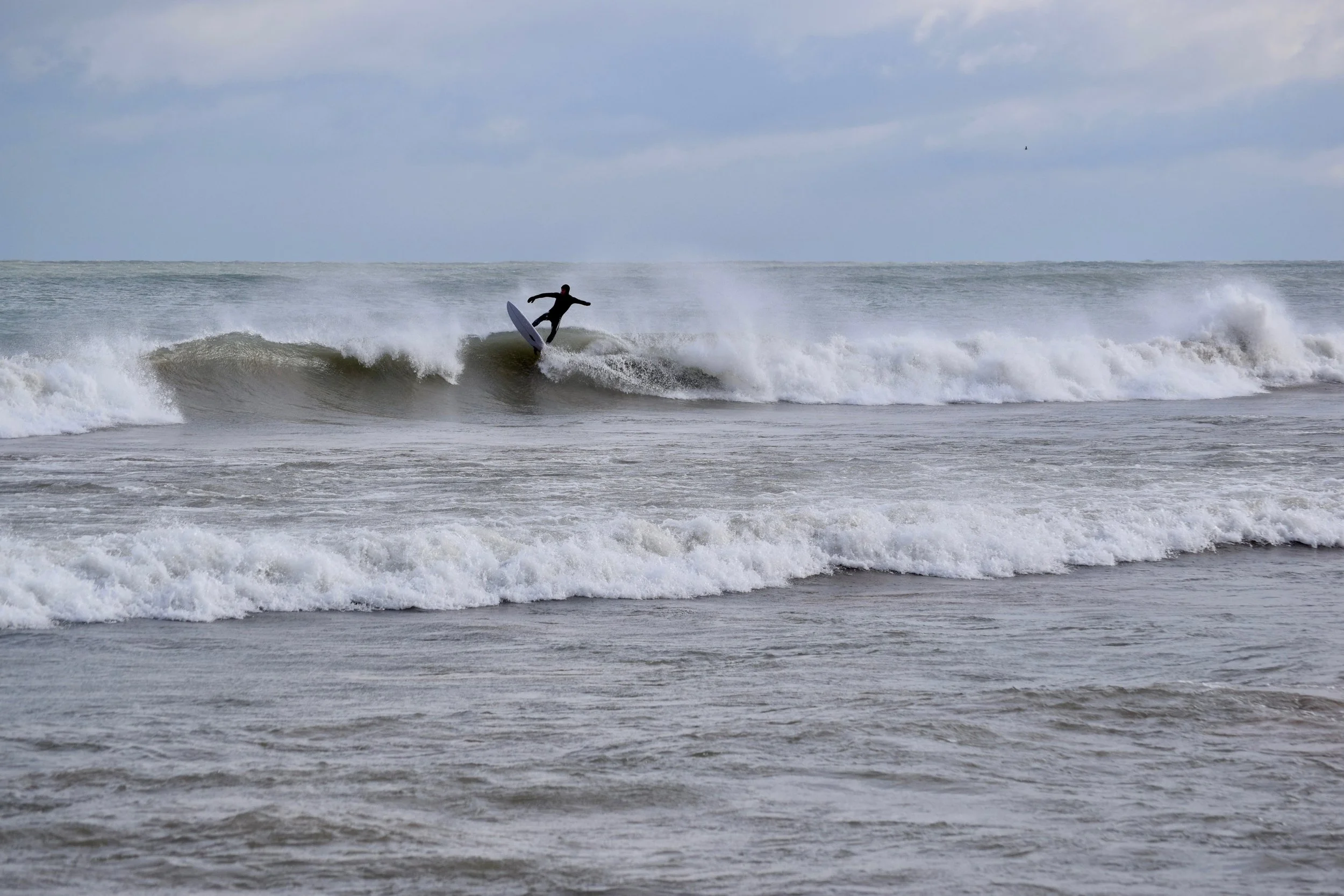
When I moved back to Chicago from San Diego, I had no idea if I was going to meet anyone else who surfed in the city. The idea of surfing in the midwest seemed… counterintuitive?
Even people who have lived in Chicago their entire lives don't know that this city has a surf scene. But it does — a real one, with hundreds of surfers who take it completely seriously and show up in conditions that would keep most people firmly on the couch.
And when the conditions come together — and they do come together — there is nothing quite like it. Surfing a world-class city with the skyline at your back and open, fresh water in front of you is genuinely hard to describe to someone who hasn't experienced it.
I wouldn't call Chicago a surf destination. The waves are a bit different here if you’re used to the ocean. But if you're visiting and hoping to squeeze in a session, it's possible. And if you live here, surfing doesn’t have to be something you only do on a trip.
Here is everything you need to know about surfing in and around the city.
Surfing is (mostly) legal in Chicago.
Surfing hasn’t always been legal in Chicago. In fact, the city officially banned it in 1988 — and only lifted that ban in 2009 after nine months of campaigning the Surfrider Foundation did in response to a few surfers being arrested.
Surfers in the city still feel the hangover from this ban every season.
Technically, surfing is permitted at four beaches in the city — and only two beaches during the summer months:
Montrose Beach (year round)
57th Street Beach (year round)
Rainbow Beach
Osterman Beach
However, in practice, it’s not that simple.
Every summer, the Park District hires a fresh crop of lifeguards. And every summer, at least a few of them will whistle you out of the water at Montrose or 57th because they have no idea surfing is allowed there.
The Surfrider Chicago Chapter actually had to formally remind the Park District of its own policy as recently as 2023 for this reason. And while the city agreed to uphold the agreement — again — Surfrider is still pushing to get the policy codified into official park district rules so this stops being an annual conversation.
So while the likelihood of being arrested is much lower than in the past, be aware that some people aren’t aware it’s technically permitted.
Chicago’s Surf Seasons
Like the ocean, there are certain seasons in Chicago where the waves tend to be better than others. Here is what to expect in each part of the year wave-wise.
Prime Season: Fall (September – November)
Fall is the best time to surf in Chicago. The waves are the most consistent this time of year, with good days head high and above (1–4ft+). The water is typically warm (50°F-75°F) and the vibe is on point. Everyone is stoked to be out!
Air temps range from the mid-60s in September down to the low 40s by November. And most of the time, the water is warmer than the air itself, which is the ideal recipe for waves on the Lakes.
September and October are my favorite months to surf in Chicago.
Best Waves: Winter (December – March)
While fall is the best season for surfing, winter is often the season with the best waves. Some of the best days I've ever seen on the lake have been in January and February, with solid swells pushing 5-6ft+ on the good days.
However, you're going to earn every single session this time of year, because the water temperature is usually hovering right around freezing. And quite often, the lake is actually frozen solid, prohibiting surfing altogether.
So while you don’t get to surf as often in the winter as you do in the fall, it’s generally pretty solid when you do. You just have to keep an eye on it and take your sessions when you can get them.
Shoulder Season: Spring (April – June)
Spring is essentially the inverse of fall, and not in a good way. It's not that you can't find waves in the spring, it's more that you only get them on days that still feel like winter (we call that “Third Winter”).
While air temps are climbing toward the 60s by May, the water is still usually cold enough to require a solid wetsuit well into what passes for spring around here. Which is a bad recipe for waves on the lakes (more on that later).
Best Vibes: Summer (July – August)
Ask anyone who lives here about summer in Chicago and they will tell you how epic it is.
Unfortunately, that doesn’t usually translate to surfing. Waves are typically non-existent — if you’re lucky, you're getting waist high at best. But the plus side is, when there is something to surf, you’re in boardshorts and the vibe is solid because everyone is stoked to be out (and not freezing their ass off).
Don't come in the summer expecting to rip. Do come in the summer if you want good vibes, warm water, and a reminder of why living in a city with a beach is actually kind of incredible.
Surf conditions and forecasting
If you’re used to surfing in the ocean, you’ll find the waves in Chicago to be quite a bit softer.
We only get windswells. On a really good day, we might get an 8 second swell period, even when it’s overhead. And that’s because of how waves are formed here.
Where ocean waves are generated by storms far out to sea and travel thousands of miles before they arrive at your break, waves on the Lakes are generated in real time by the wind. When the wind kicks up, the waves show up downwind. When the wind dies, the waves die.
So to forecast surf on the Lakes, you need to forecast the wind — not the waves.
I created a guide explaining how to accurately forecast the lake if you’re interested in a full breakdown. But the short version is, ditch Surfline and pull up NOAA's GLERL Wave Watch III model instead.
Surf spots in and around Chicago
Chicago's surfable coastline is more extensive than most people realize. But as I mentioned above, there are only a handful of spots you can legally surf. Here’s a breakdown of each and what to expect, as well as a few spots worth checking out just outside the city limits.
Montrose Beach
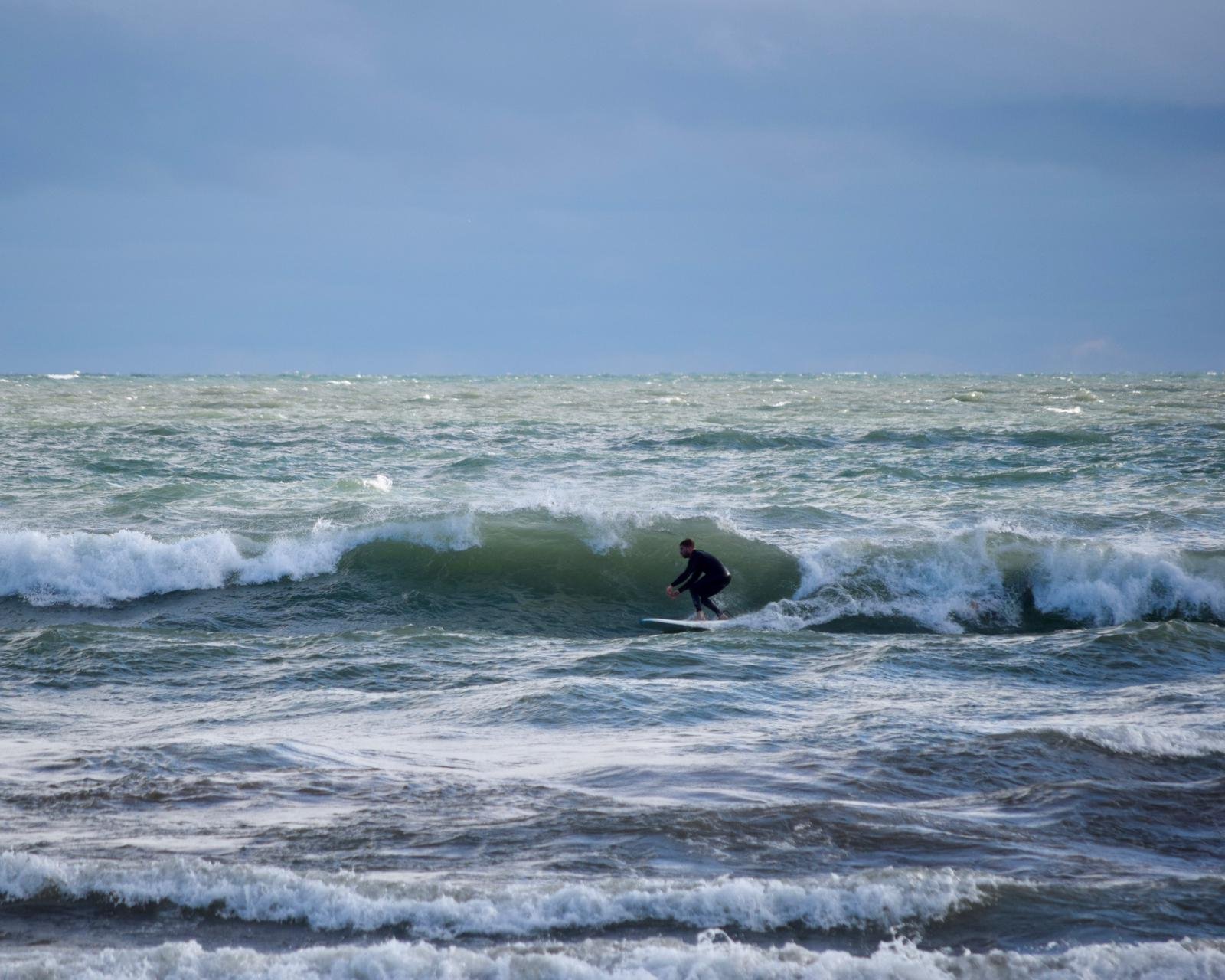
Milos Atz finding a gem at Montrose
Montrose is the most popular and widely known surf spot in the city. It's legal year-round, it's easy to get to, and on the right day it can be a genuinely fun wave.
The catch is that Montrose is pretty much always blown out when there's any real size because it faces almost due north. Which means the wind that's generating the waves is also hitting the beach directly anytime there is swell.
The exception is a big east swell, or if you get lucky and the wind shifts mid-session and the surface cleans up. Those windows happen, and when they do, Montrose can be surprisingly good. But you have to be paying attention and ready to paddle out the moment conditions change.
Expect cross shore conditions at best anytime you head to Montrose.
57th Street Beach
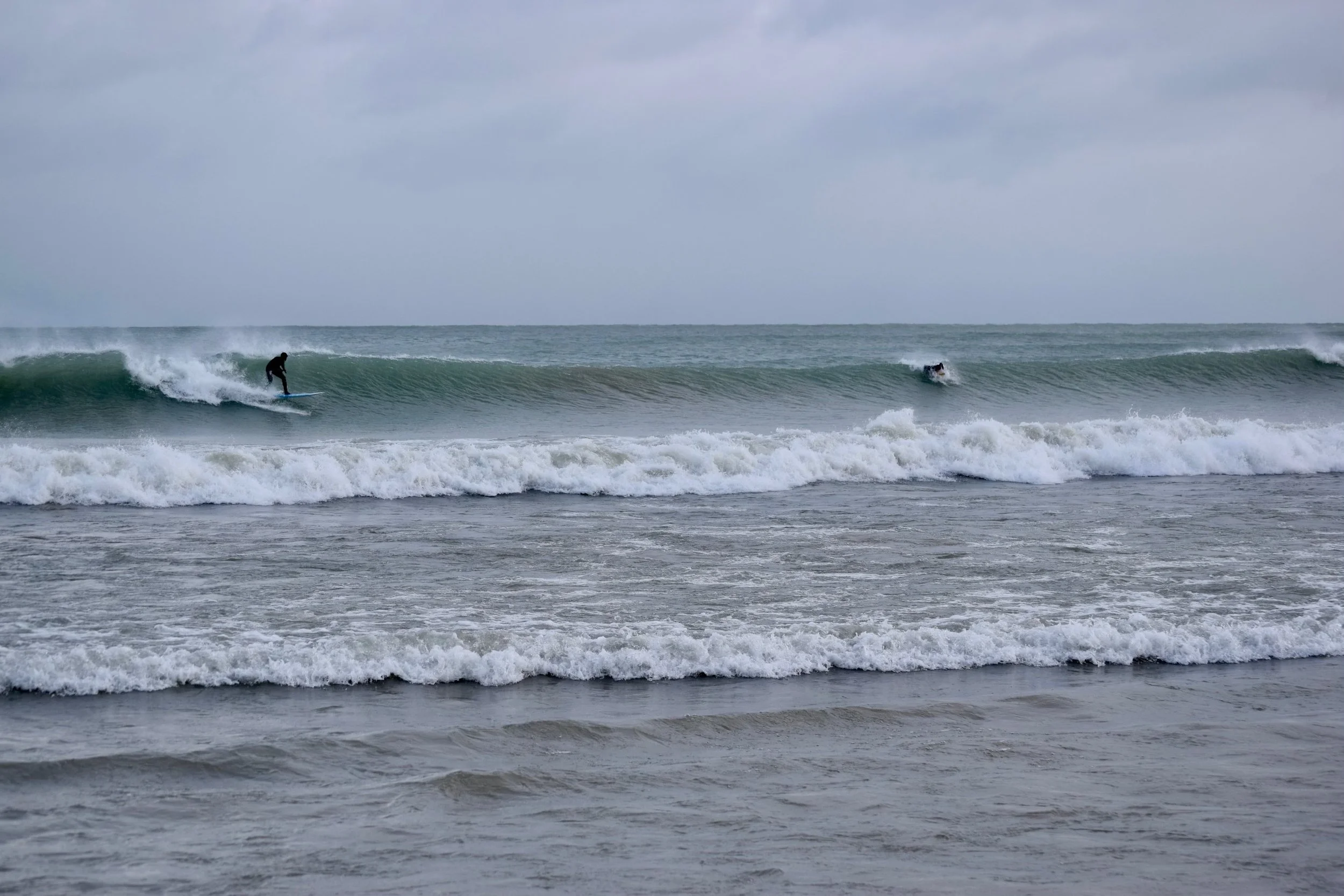
@iamvolitant and @markmoli at 57th Street
57th Street is the best surf spot in the city, full stop. It's more protected than Montrose, which means the surface conditions tend to be cleaner when there's swell — and the wave shape is legit.
The tradeoff is that 57th is finicky. It really only turns on in the dead of winter on a really big north swell and those days only come around a handful of times a season — maybe 3–6 days a year if you're lucky. But when it's on, it's as good as Chicago surfing gets.
Note: if you’re going to paddle out at 57th during the winter, be aware that the residents in the nearby high rises might call the cops on you out of concern for your safety. It’s just part of the experience.
Rainbow Beach and Osterman Beach
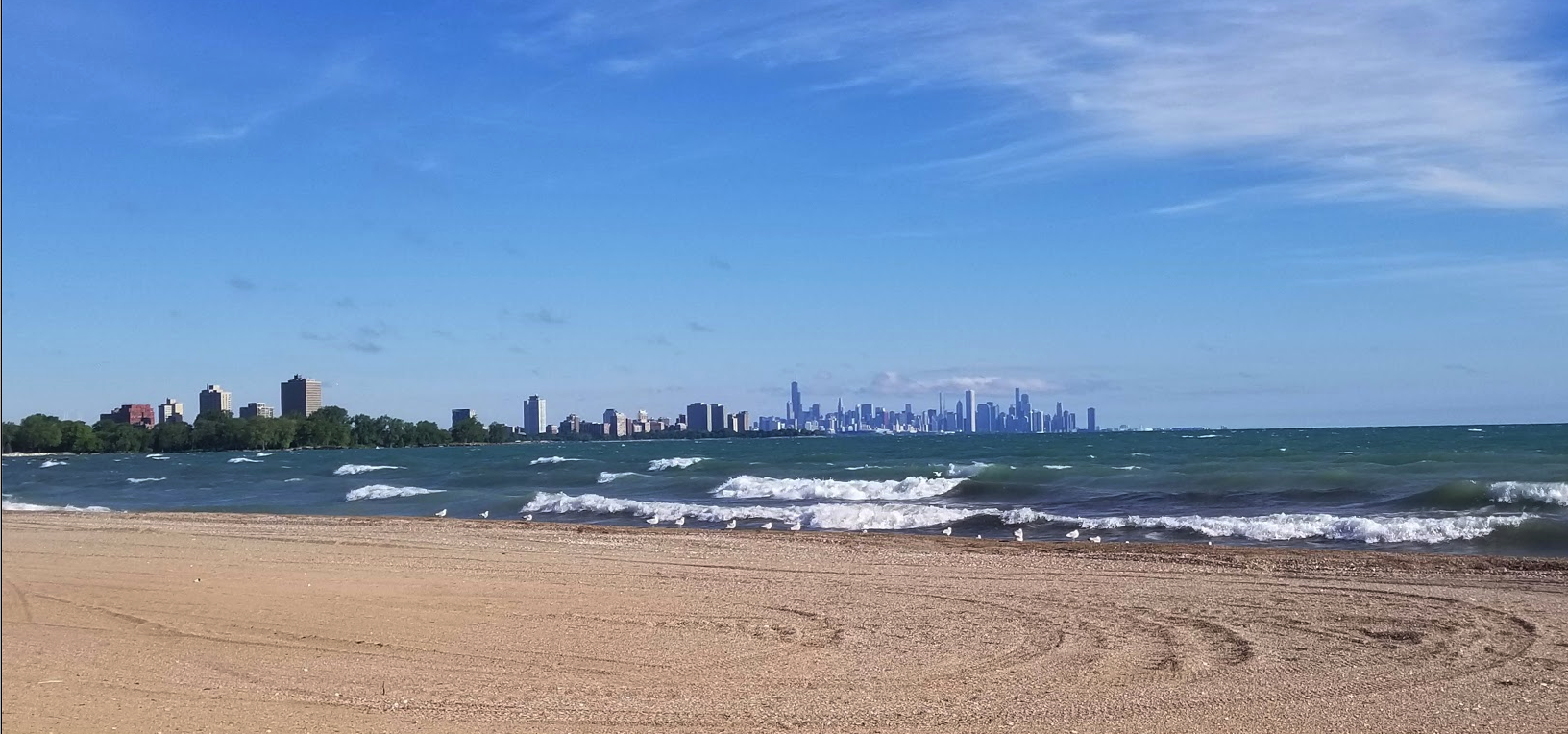
Rainbow beach
Both of these beaches also allow surfing outside of the summer months. I haven’t surfed either of them, but here are some things to know/consider.
Osterman is right by Montrose beach and faces more east than Montrose. So on days when Montrose is big and cross shore, it can produce slightly cleaner waves. It’s worth checking out if there’s swell in the water and the wind is a little out of the northwest.
Rainbow beach is pretty far south of the city, and like Montrose, faces almost due north. People do surf this beach, but if you’re headed this far south, you’re better off continuing on to Indiana in my opinion, as the setup is a bit better there (more on this below).
Beyond the city limits
The four official spots in Chicago are a solid starting point. But if you want to consistently find the best waves that the Chicago area has to offer, you’ll need to travel beyond the city at some point.
Out of respect for the crews that call these spots their local, I'm not going to name specific breaks — but here's a general lay of the land.
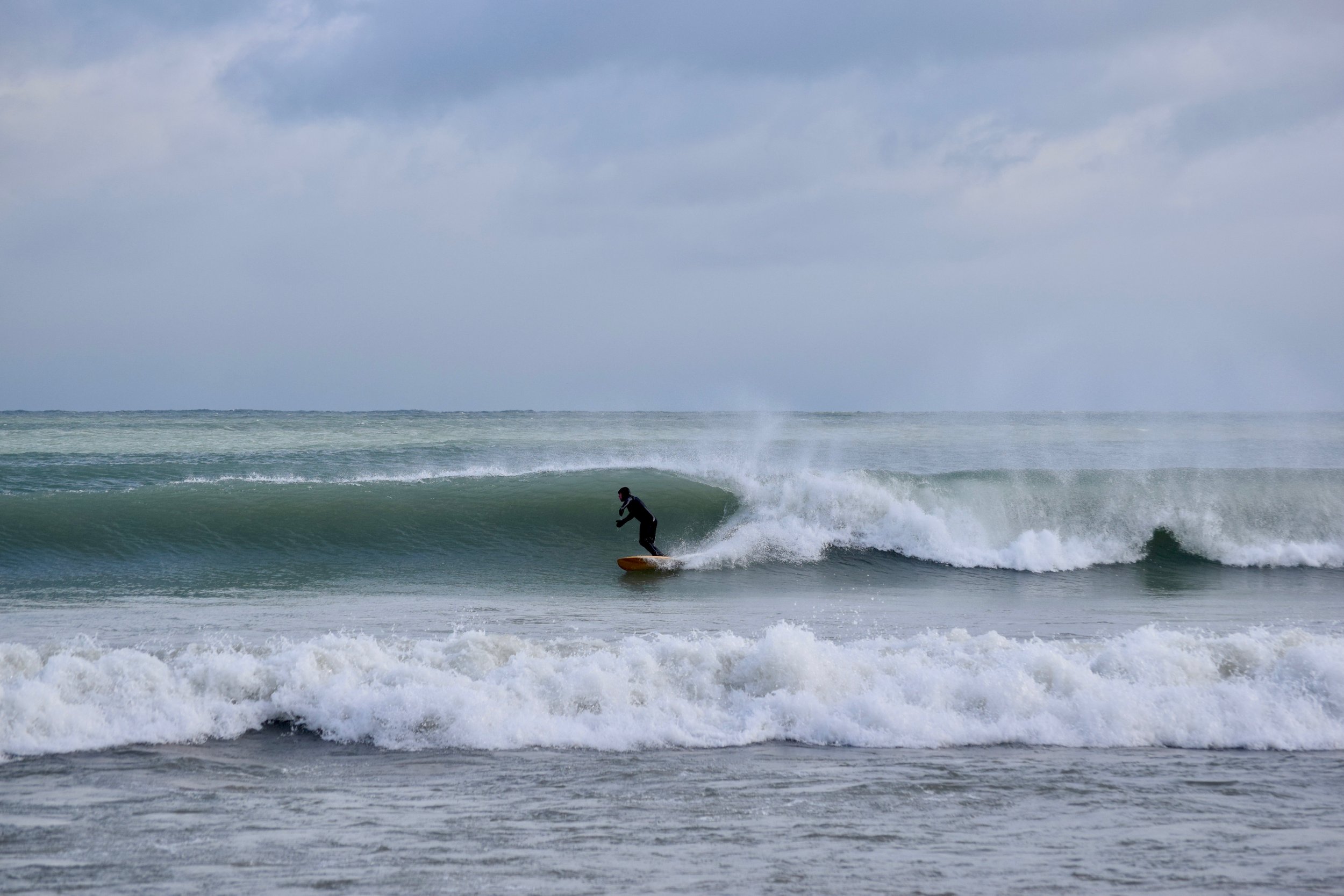
Solid day at my favorite spot in NW Indiana.
Northwest Indiana: This is my preferred area to surf and it's worth the drive if you have the time. The beaches here produce the cleanest and most consistent waves in the area because most spots have better wind protection than Chicago beaches. North swells produce fun left hand wedges/points. Water quality is suspect.
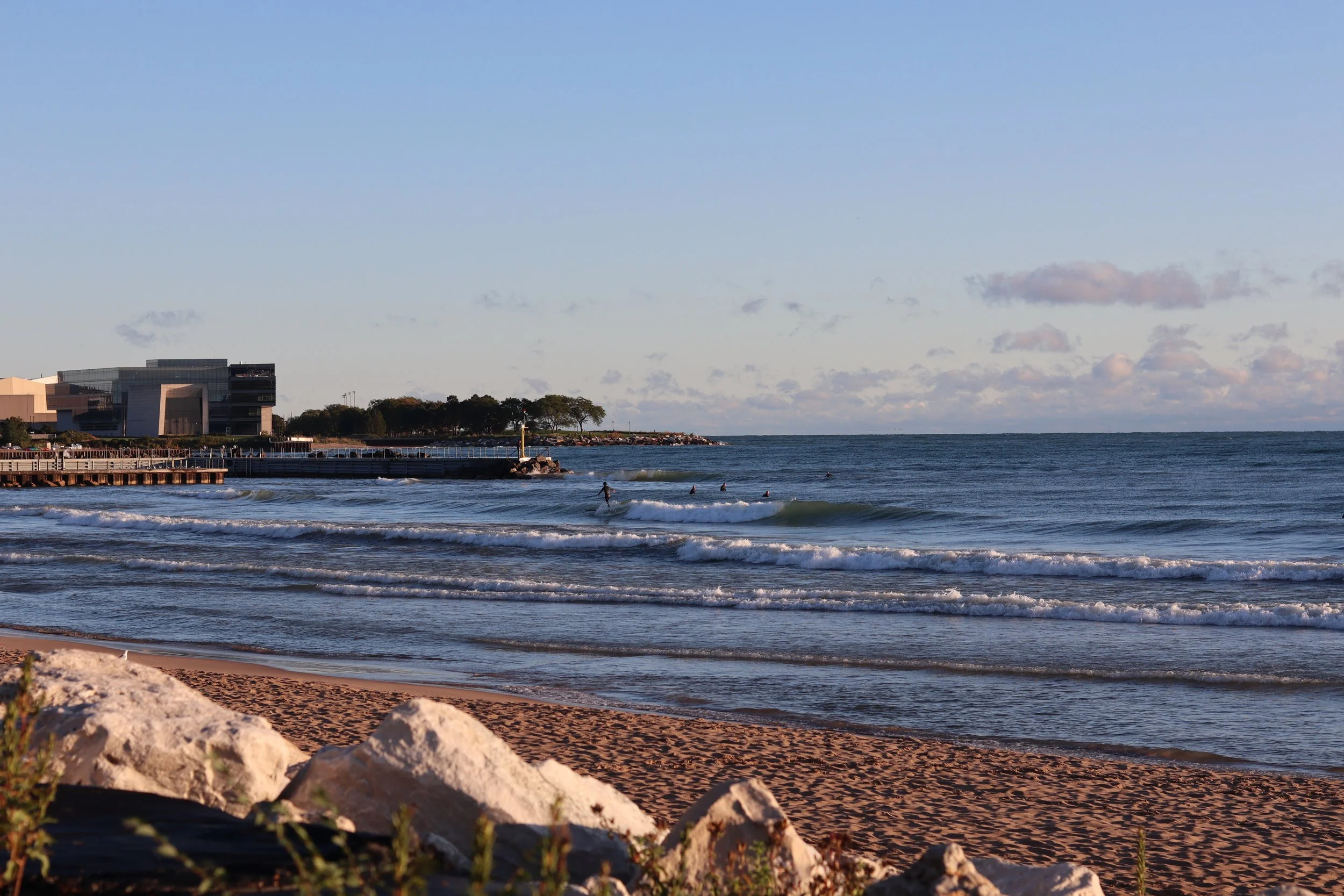
One of the more popular surf spots in Evanston on a mellow day
Evanston: Just north of the city, Evanston has some popular, high-quality surf spots and a legitimate surf community of its own. There are even a few hidden beaches I’ve surfed that very few people ever check out, so it’s worth exploring a bit. Evanston is generally best on a north swell, but still works on a good south/east.
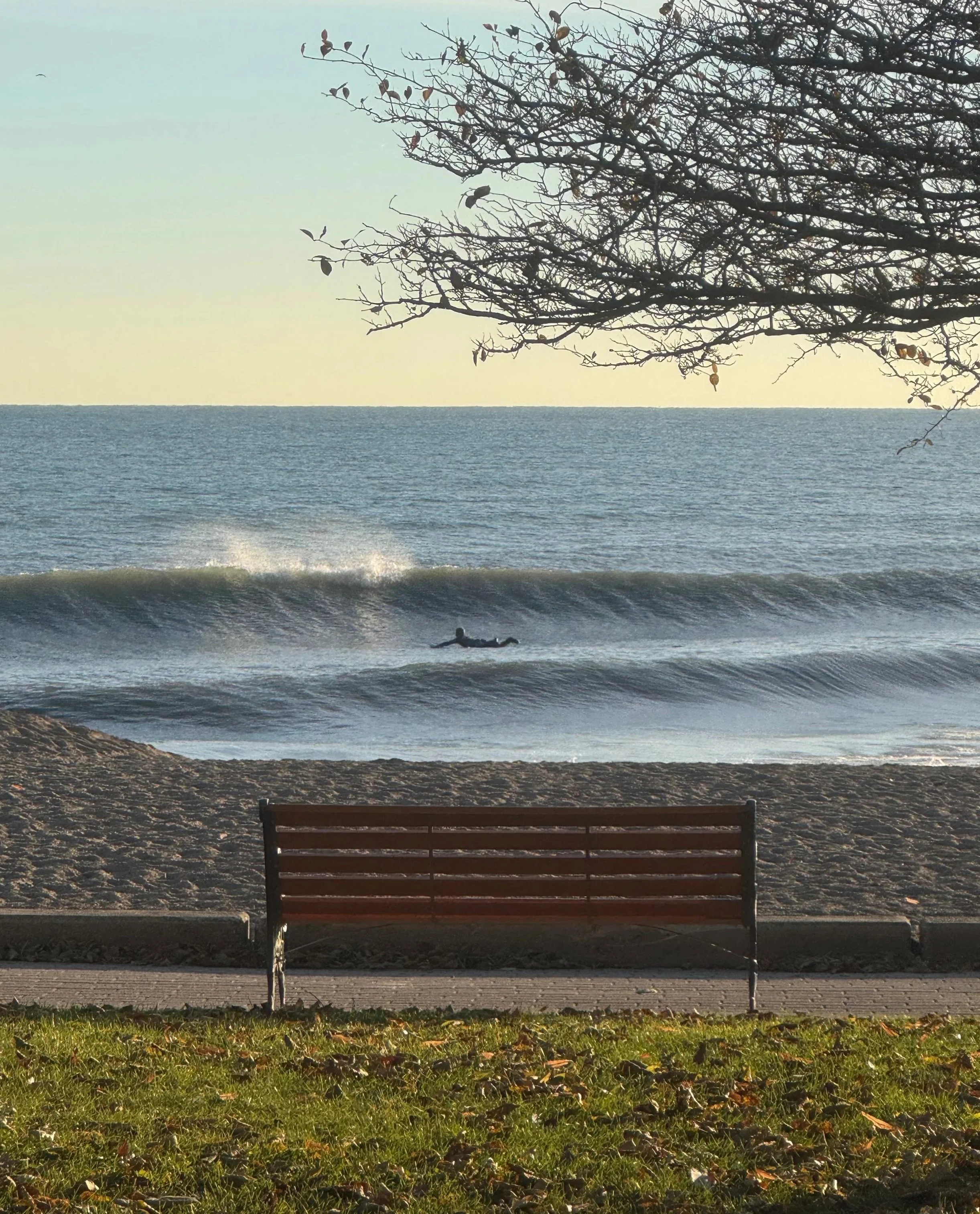
North Shore photo courtesy of @blake__ek
North Shore: Continue north of Evanston and there's more good surf to be found on the way to Wisconsin if you know where to look. I have not personally surfed up this way, but have customers who surf there regularly.
Surf culture and localism
Surf culture in Chicago is a breath of fresh air. I have yet to encounter a single drop of localism in the 3 years I’ve surfed here.
Honestly, I think everyone is just stoked to find out that they’re not the only ones who surf. We're all surfing a freshwater lake in the midwest in conditions that most of the world doesn't even know exist. The shared absurdity of it all tends to put everyone in a good mood.
Show up, introduce yourself, and smile like you would anywhere else. People will be glad to see you.
Wetsuits and survival
The gear you need to surf in Chicago depends almost entirely on what time of year you're paddling out. From board shorts in August to what amounts to a full suite of neoprene armor in January — if you want to surf year-round here, you're going to need a quiver of wetsuits to match.
Here’s what I wear throughout the season:
Summer (July – August): Board shorts/rash guard. The water is warm enough that you won't ever need anything more than a 1mm top. Enjoy it while it lasts.
Early fall (September – October): A 2mm top → 3/2mm will get you through early October when the water is warm but the air is not.
Late Fall and Early Spring (October – November, April – May): A 4/3mm with a hood, 3mm gloves, and 5mm booties.
Winter (December – March): Ice beard season. You need a 6/5mm hooded wetsuit, 7mm wetsuit boots, and 7mm wetsuit gloves.
One of the most important things to keep in mind when you’re selecting gear is that the wind chill is a real factor here.
Even water temperatures similar to what you’d experience in Southern California during the winter feel colder in Chicago due to the fact that there is always wind — and that the wind is almost always colder than the water itself.
When in doubt, pack extra rubber.
Ice shelf safety
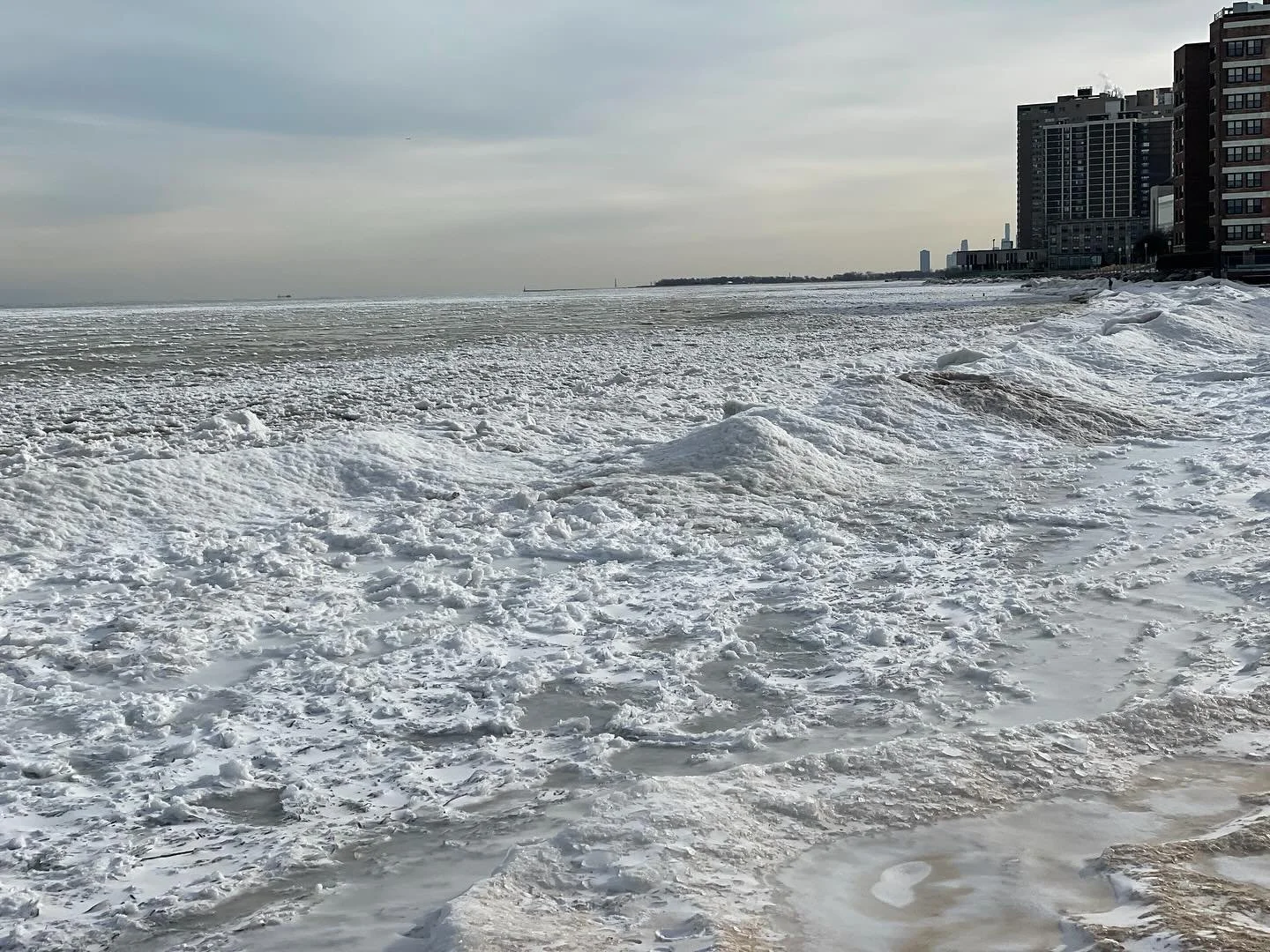
If you're surfing Chicago in the winter, ice shelves are something you need to understand before you set foot on the beach. They can be legitimately dangerous if you’re not careful.
As temperatures drop, small chunks of ice freeze on the open lake and get pushed toward shore by wind and waves. Over time, these fragments accumulate and fuse together along the shoreline, building outward from the beach into a floating ledge that can extend surprisingly far into the water.
It looks solid. But it’s often hollow underneath:
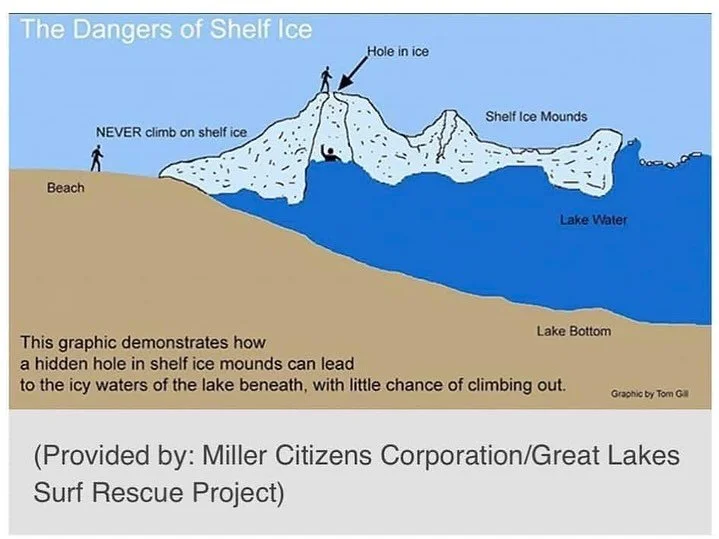
So while your first instinct might be to scramble over the shelf to paddle out — or trying to clamber back up after a session when you're cold, tired, and your hands don't work properly, don’t do it.
Look for a clear entry and exit point where you can get in and out of the water without crossing significant shelf ice.
Surfboards for Chicago waves
I’ve spent a few years now figuring out what types of boards work best in the softer waves we have around Chicago and wrote a guide here breaking it down in detail.
There’s no hard and fast rule on what you should ride — people ride all kinds of boards here. But generally speaking, I’ve found that for most surfers on most days, a midlength or longboard in the 7'6"–9'+ range is the best all-around choice for the Lakes.
These shapes have the volume, surface area, and rocker profiles that suit our conditions well, and boards in this category can genuinely be one-board quivers for everything the lake throws at you across the seasons.
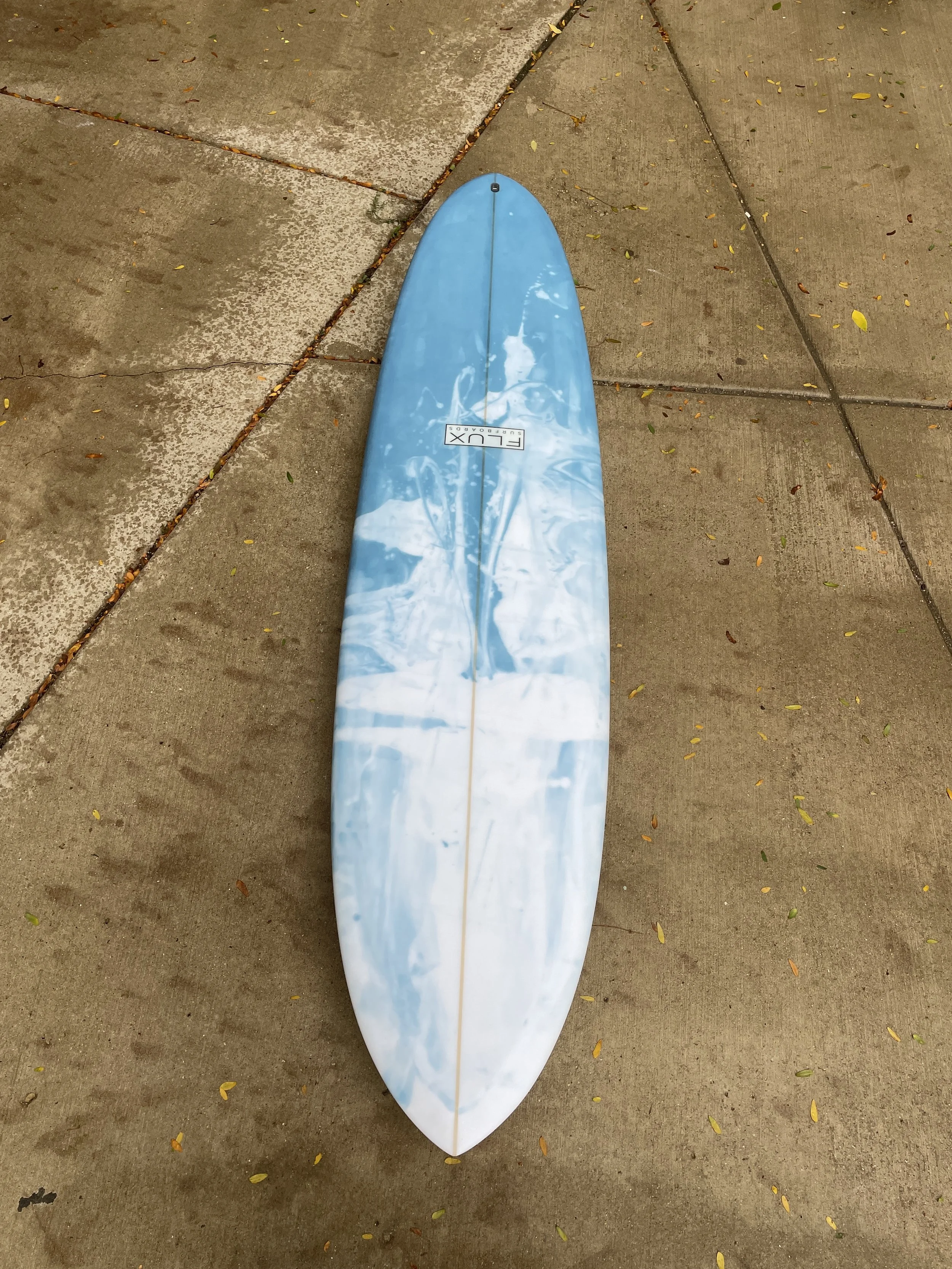
Flux Classic Egg
I generally recommend something like a classic egg as the single most versatile option for intermediate to advanced surfers — wide enough to handle the small stuff, but with enough performance built in to be fun on the better days.
If you’re a better surfer, hybrids, fishes, or ultra grovelers also work well.
I’ve never had a session ruined by bringing too much board. But I’ve had plenty ruined by not having enough. Foam is your friend on the lake.
Can you rent boards in Chicago?
Unfortunately, there aren’t any surf shops in the city itself. There has been talk about opening one within the community for quite some time, but the reality is, there’s not enough demand to support one yet. So if you’re planning to surf, you’ll need to bring your own equipment/gear.
How to connect with the Chicago surf community
When I first moved back to the city, the surf community was fragmented and spread out. But that’s changed thanks to some of the work that folks like @montrosebeachsurfclub have put in to connect everyone.
If you live in Chicago and are interested in joining the community, reach out to MBSC or myself and we’ll get you connected via WhatsApp (currently a group with a couple hundred surfers, mostly based in Chicago).
Cheers!
Scott